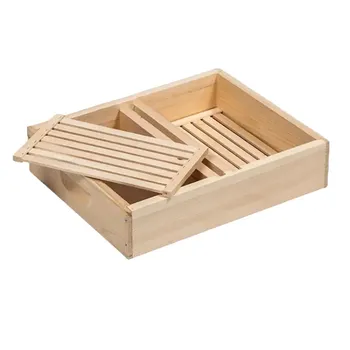
Hive feeders provide immediate carbohydrates and protein supplements when forage is unavailable, while pollen traps help collect reserve pollen for later use. Together, they support the rapid increase in brood rearing during late winter and early spring, when colonies can consume stores faster than bees can replace them. Used correctly, they reduce starvation risk, stabilize colony strength, and help prepare colonies for the first major nectar flow.
Core takeaway: Feeders bridge the gap between rising brood demand and the arrival of reliable natural forage. Pollen traps can build a reserve of natural pollen, but they must be managed carefully so collection does not deprive the colony of essential protein.
Why Early Season Colonies Face Starvation Risk
Brood production increases before forage does
In late winter and early spring, queens often resume laying and brood production accelerates. The expanding brood nest requires substantial carbohydrate and protein resources before nectar and pollen plants are consistently available.
This creates a critical timing problem: colony consumption rises before natural food availability becomes dependable.
Stored honey is not the only concern
Honey or sugar syrup supplies carbohydrates for adult bee activity, brood heating, and wax production. Developing brood also requires protein, lipids, vitamins, and minerals obtained primarily from pollen or suitable substitutes.
A colony may therefore appear to have adequate honey while still experiencing nutritional stress if pollen is scarce.
Starvation can develop quickly
Cold weather restricts foraging, while prolonged rain or poor bloom conditions can prevent bees from replenishing stores. If the colony cannot maintain access to food near the cluster, population decline, brood loss, and eventual colony collapse may follow.
Early-season monitoring should focus on food stores, cluster location, brood expansion, weather, and local bloom conditions rather than calendar dates alone.
How Hive Feeders Support Colony Management
Feeders provide controlled carbohydrate access
Top feeders, frame feeders, and entrance feeders allow beekeepers to supply sugar syrup when natural nectar is absent or unreliable. This helps maintain normal colony activity and reduces the risk that expanding brood will exhaust stored carbohydrates.
Internal feeders deliver syrup within the hive, while top feeders provide larger capacity and convenient access for refilling.
Top and internal feeders reduce disturbance
Hive-top feeders, including Miller-style designs, sit above the upper brood box and can hold a relatively large volume of syrup. Bees access the reservoir from inside the hive, allowing feeding with less exposure of the brood nest to cold air.
Frame feeders and division board feeders occupy space within the hive and provide a controlled feeding channel near the colony. These are useful where direct access to the cluster is important.
Feeding can support brood expansion
Small, consistent amounts of syrup can simulate the availability of incoming nectar and support normal spring buildup. This may encourage worker activity, queen laying, and wax production when natural nectar is not yet sufficient.
However, feeding is a management tool—not a substitute for evaluating colony health, available stores, disease pressure, and forage conditions.
Internal feeding helps limit robbing
Feeders that keep syrup enclosed within the hive reduce exposed food odors and spills. This can lower the likelihood of attracting neighboring bees, wasps, and other scavengers.
Robbing is particularly dangerous when stronger colonies exploit weaker colonies. Internal and top-hive feeders are generally preferable to open feeding for maintaining more uniform apiary strength.
How Pollen Traps Contribute to Nutritional Reserves
Traps collect natural pollen for later use
A pollen trap removes a portion of the pollen carried by returning foragers and directs it into a collection tray. The collected pollen can be dried or stored appropriately and later used as part of a supplemental feeding program.
This creates a source of natural pollen for periods when colonies face winter or seasonal pollen dearths.
Stored pollen supports protein management
Reserve pollen can be used to prepare pollen supplements or patties when natural pollen is unavailable. This helps support brood rearing during late winter, early spring, or other forage gaps.
Pollen collection is therefore best viewed as reserve management, not as a direct replacement for normal colony foraging.
Trapping must be used selectively
A pollen trap can reduce the amount of protein entering the hive. If it is left in place continuously or used when natural pollen is scarce, it may weaken brood development rather than support it.
Beekeepers should monitor brood pattern, incoming pollen, colony population, and local forage before deciding when to install, remove, or operate the trap.
Integrating Feeders and Pollen Traps
Feed carbohydrates before demand peaks
In regions with cold or temperate winters, syrup or another suitable carbohydrate source may be introduced several weeks before reliable spring bloom. The objective is to prevent stores from reaching a critical level as brood production expands.
Feeding should continue only while the colony needs support and should be reviewed regularly once workers consistently return with natural nectar and pollen.
Add protein support when pollen is inadequate
Pollen substitutes, protein patties, or powders can supplement syrup when natural pollen is absent or nutritionally insufficient. They are especially relevant when the goal is to build a strong population before a major nectar flow.
Protein feeding should be matched to actual colony demand. Excess feed can spoil, attract pests, or encourage brood production beyond what the colony can safely support.
Collect reserves during suitable bloom periods
Pollen traps are most appropriate when colonies are strong and natural pollen is abundant. Collection can then build inventory without placing excessive nutritional pressure on the colony.
The trap should be removed or bypassed when forage declines, brood demand is high, or the colony shows signs of nutritional stress.
Match equipment to apiary scale
Commercial and distributed apiary operations benefit from maintaining a coordinated range of feeder types, pollen traps, replacement parts, and supplemental feed products. This allows equipment to be matched to hive design, climate, colony size, and feeding volume.
Reliable availability matters because early-season feeding decisions are often time-sensitive. Fast fulfillment and responsive technical support can be as important as the product specification itself when weather changes quickly.
Understanding the Trade-offs
Feeding does not eliminate the need for inspections
Syrup can prevent carbohydrate starvation, but it does not correct queen failure, disease, inadequate bee population, poor ventilation, or insufficient protein. Feeding decisions should be based on inspection findings and forage conditions.
A strong feeding program supports sound management; it cannot replace it.
Syrup is not suitable for every temperature
Liquid syrup is most practical when bees can access and process it safely. In colder conditions, solid fondant or hard sugar placed above the cluster may be more appropriate because it supplies carbohydrates without adding as much internal moisture as liquid feed.
The choice should consider temperature, colony location, feeder design, and the bees’ ability to reach the food.
Pollen traps can reduce colony intake
The central limitation of a pollen trap is that it removes food the colony might otherwise consume. Continuous trapping, poorly timed trapping, or trapping weak colonies can undermine the very brood development the equipment is intended to support.
Use collection periods strategically and prioritize colony nutrition over harvest volume.
Poor feeder design can create operational problems
Feeders should provide safe bee access and minimize drowning, leakage, exposed syrup, and difficult refilling. Equipment that requires excessive disturbance or produces scent leaks can increase robbing risk and labor requirements.
For wholesalers and resellers, product quality should therefore be evaluated on capacity, compatibility, bee safety, durability, cleaning requirements, and ease of fulfillment—not only on purchase price.
Feeding can encourage uneven colony management
If only the strongest colonies receive effective support, weaker colonies may remain vulnerable to starvation and robbing. A consistent monitoring and feeding protocol helps maintain more uniform colony strength across an apiary.
How to Apply This to Your Operation
Select equipment and feed supplies according to the colony’s immediate nutritional need, local climate, hive configuration, and operating scale.
- If your primary focus is preventing early-season starvation: Use enclosed top or internal feeders to provide controlled carbohydrate access, and monitor stores and cluster position frequently.
- If your primary focus is stimulating spring buildup: Introduce syrup and, where necessary, protein supplements before dependable natural forage begins, then reassess as bees bring in natural food.
- If your primary focus is building pollen reserves: Operate pollen traps only during strong bloom periods and remove or bypass them when colony nutrition or brood demand requires unrestricted pollen intake.
- If your primary focus is commercial apiary efficiency: Maintain a full range of feeder styles, pollen-collection equipment, supplements, and replacement components supported by dependable stock, rapid response, and efficient order fulfillment.
- If your primary focus is reducing robbing and labor: Prioritize hive-enclosed feeders with safe access, adequate capacity, minimal leakage, and convenient refilling.
With careful timing and monitoring, feeders bridge early forage gaps while pollen traps help build reserves without compromising colony health.
Summary Table:
| Equipment | Primary Use | Best Timing | Key Benefit | Management Consideration |
|---|---|---|---|---|
| Hive Feeders | Supply carbohydrates when nectar is scarce | Late winter to early spring | Prevents starvation and supports brood rearing | Avoid overfeeding; monitor syrup consumption to prevent robbing |
| Pollen Traps | Collect natural pollen for reserves | Strong bloom periods | Builds protein stash for dearth periods | Use selectively; remove when pollen is limited or brood demand is high |
| Combined Use | Integrate feeding plan | Coordinate with colony needs | Stabilizes nutrition and strengthens colonies | Monitor colony strength and adjust equipment as forage changes |
Ready to optimize your early-season management? At HONESTBEE, we supply commercial beekeepers and distributors with a complete range of hive feeders, pollen traps, and protein supplements. Benefit from wholesale pricing, fast fulfillment, and expert support. Contact us today to secure your supply and keep your colonies thriving.
Related Products
- 30 cm Plastic Entrance Hole Bee Pollen Trap and Collector
- Removable Plastic Pollen Trap With Ventilated Tray for Bees Pollen Collector
- Professional Hive Top Bee Feeder for Beekeeping
- HONESTBEE Professional Hive Top Bee Feeder Feeding Solution
- HONESTBEE Square Top Hive Bee Feeder Top Bee Feeder
People Also Ask
- What are the design principles and advantages of pollen traps in the collection of bee pollen? Boost Your Apiary Yield
- Why is frequent harvesting of bee pollen from traps necessary for quality control? Ensure Freshness and Prevent Mold.
- How often should bee pollen be harvested from a trap and why? Master Freshness and Prevent Spoilage
- What function do pollen traps serve in quantitative collection? Boost Your Apiary's Data & Production Efficiency
- What is the primary function of bee pollen traps? Optimize Your Pollen Harvest with Advanced Extraction Efficiency