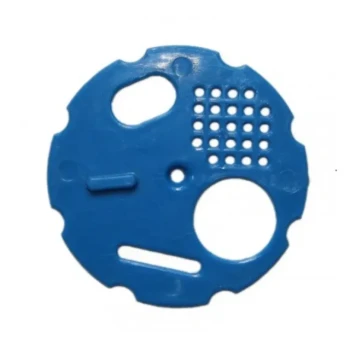
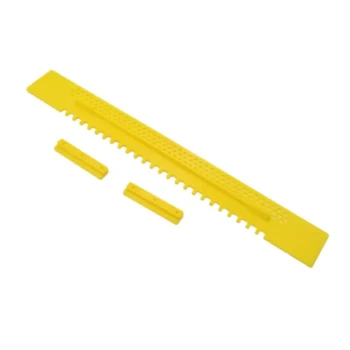
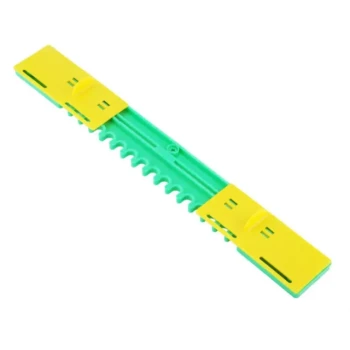
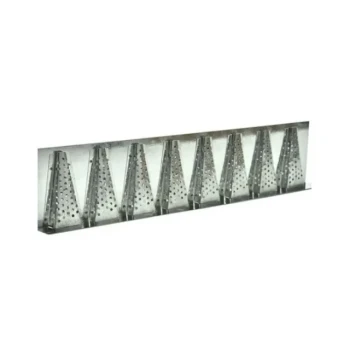
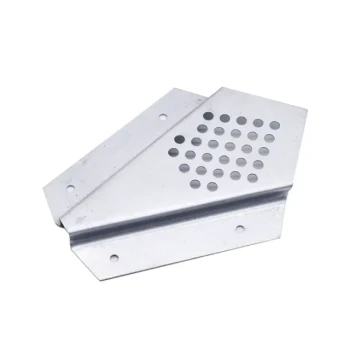
Precision hive entrance restrictors operate on the principle of physical exclusion. They function by narrowing the hive's aperture to a specific dimension that permits the passage of honeybees while creating an impassable barrier for larger predators like Vespa crabro (European hornet). This effectively turns the size difference between the bee and the predator into a primary defense mechanism.
These devices leverage the size difference between honeybees and predators to create a secure perimeter. By physically blocking entry, they prevent internal colony destruction while simultaneously acting as a "force multiplier" that allows guard bees to defend a smaller, more manageable breach.
The Mechanics of Exclusion
Physical Isolation
The primary function of an entrance restrictor is mechanical isolation. Whether made of wood or metal, these devices act as a screening barrier installed directly at the hive entrance.
Because Vespa crabro is significantly larger than a honeybee, the restrictor physically denies them access. The device effectively filters traffic, allowing the colony to forage while keeping large-bodied intruders on the outside.
Protecting Critical Resources
By blocking the hornet's entry, the restrictor prevents the most catastrophic forms of damage. If a hornet breaches the interior, it can plunder honey stores and destroy larval combs.
Protecting the combs is essential for colony survival. The restrictor ensures that the predation remains external, preventing the predator from reaching the colony's brood and food reserves.
Tactical Advantage for Guard Bees
Beyond being a passive barrier, restrictors actively improve the colony's self-defense capabilities. A wide entrance requires a large number of bees to patrol and defend effectively.
By narrowing the entrance, the restrictor forces intruders into a strategic bottleneck. This allows guard bees to concentrate their defensive efforts at a single point, significantly improving their ability to repel attacks without being overwhelmed.
Understanding the Trade-offs
While effective against large predators, entrance restrictors can introduce logistical challenges for the colony. The most common issue is traffic congestion during peak foraging hours.
If the entrance is restricted too severely during a heavy nectar flow, returning foragers may struggle to enter quickly. This can reduce overall efficiency and potentially alter hive ventilation, requiring the beekeeper to balance protection against operational flow.
Making the Right Choice for Your Goal
When deciding how to implement entrance restrictors, consider the current threat level against the colony's activity level.
- If your primary focus is Maximum Defense: Install restrictors immediately when predator sightings increase to prevent Vespa crabro from establishing a feeding pattern on the hive interior.
- If your primary focus is Foraging Efficiency: Monitor the entrance for "bearding" or congestion; if the threat is low, consider a slightly wider setting to allow faster pollen and nectar deposit.
By controlling the entrance, you transform the hive from an open target into a fortress that leverages the honeybee's small size as its greatest asset.
Summary Table:
| Feature | Defensive Mechanism | Impact on Colony |
|---|---|---|
| Physical Isolation | Mechanical screening based on body size | Denies entry to large predators like Vespa crabro |
| Strategic Bottleneck | Narrows the entrance aperture | Concentrates guard bees to repel attacks efficiently |
| Resource Protection | Keeps predators out of the interior | Prevents destruction of honey stores and larval combs |
| Traffic Control | Regulated aperture size | Balances defensive security with foraging efficiency |
Secure Your Apiary with HONESTBEE Precision Equipment
Protecting your commercial honey production starts at the hive entrance. At HONESTBEE, we empower commercial apiaries and distributors with the high-quality tools needed to safeguard colonies and maximize yield.
Our comprehensive wholesale range includes everything from precision hive entrance restrictors and hive-making machinery to advanced honey-filling systems and cultural merchandise. Whether you are outfitting a large-scale operation or stocking your distribution network, we provide the durability and innovation your business demands.
Enhance your colony protection and operational efficiency today—Contact our specialists now to discuss our wholesale beekeeping solutions!
References
- Т. В. Коновалова. The species composition of wasps-pests of honeybees Apis mellifera L.. DOI: 10.30917/att-vk-1814-9588-2018-1-8
This article is also based on technical information from HonestBee Knowledge Base .
Related Products
- Beehive Entrance Reducer Guardian Metal Hive Entrance for Bees
- Steel Round Disc Entrance Reducer for Flexzion Bee Hive Nuc Box Gate
- Multi-Functional Rotary Hive Entrance Disc for Beekeeping
- Professional Reversible Beehive Hive Entrance
- Professional Hive Front Entrance Bee Feeder
People Also Ask
- Why are entrance reducers used to counter hornet infestations? Protect Your Hive with Strategic Choke Points
- What is the purpose of an entrance reducer for a beehive? Strengthen Colony Defense and Prevent Robbery
- What are the proper guidelines for using hive entrance reducers? Master Temperature Control & Colony Defense
- Why is it critical to maintain a smaller entrance for a newly established bee hive? Boost Colony Growth and Security
- What is the physical mechanism behind the use of hive entrance reducers? Protect Your Bees from Vespa velutina