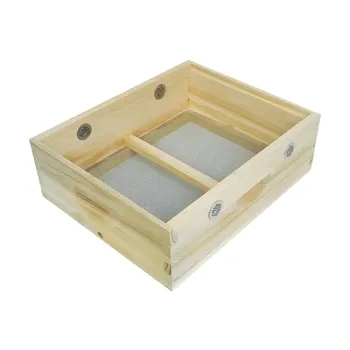
In full-sun apiaries, screened bottom boards and correctly selected ventilation accessories help bees move heat and moisture out of the hive before temperatures become dangerous. A screened bottom board creates continuous airflow beneath the colony, reducing the energy bees must spend fanning and evaporatively cooling the hive. This can lower heat stress and reduce the risk of excessive comb softening or collapse, although ventilation should be combined with shade, sound hive construction, and adequate colony management.
The key benefit is passive airflow: screened floors and removable ventilation components help the colony regulate temperature and humidity, especially when a smaller or weaker colony cannot cool a full-sun hive efficiently on its own.
Why Full-Sun Hives Face Greater Heat Risk
Solar exposure raises the cooling demand
Full sun helps a hive warm earlier and remain dry, but it also increases the heat load on the hive body, roof, and comb. When internal temperatures rise above approximately 95°F (35°C), bees must devote more labor to fanning and evaporative cooling.
That energy is diverted from other colony activities, including foraging, brood care, and honey production.
Excessive heat can damage comb stability
Bees may respond to high temperatures by bearding, clustering outside the entrance, and increasing airflow through fanning. If heat and humidity remain excessive, wax can become soft and structurally vulnerable.
Ventilation does not replace proper hive management, but it helps reduce the conditions that contribute to comb deformation, collapse, or melting, particularly in poorly ventilated setups.
How Screened Bottom Boards Improve Hive Cooling
They create continuous bottom-to-top airflow
A screened bottom board replaces a solid hive floor with a durable mesh surface open to the space beneath the hive. This supports vertical ventilation, allowing warm, humid air to move out while fresh air enters from below.
The passive airflow reduces the colony’s reliance on constant bee-powered fanning.
They reduce humidity as well as heat
Heat stress is often worsened by trapped moisture. By allowing humid air to escape, screened bottoms help maintain a drier internal environment during hot, active weather.
This is especially useful in full-sun locations where the hive is exposed to both solar heating and elevated internal humidity.
They are particularly useful for weaker colonies
Strong colonies can often ventilate a hive through coordinated fanning, even with a solid bottom board. A smaller colony—such as one occupying less than a full box—may not have enough bees to cool the hive as effectively.
For these colonies, a screened bottom board provides passive ventilation without requiring additional labor from the bees.
How Ventilation Accessories Support the System
Removable inserts provide seasonal control
Many screened bottom boards accept a slide-in solid or sticky-board insert. The insert can be removed during hot weather to maximize airflow through the mesh.
During cold weather, the same insert can partially or fully close the bottom opening, reducing drafts and helping the colony maintain brood temperature.
Sticky boards support temperature-season management
A removable tray beneath the screen can serve as an inspection or sticky board. This allows beekeepers to monitor Varroa mite drop levels, debris, and colony activity without opening the hive.
The tray therefore adds operational value beyond ventilation, particularly for distributors and resellers supplying integrated pest management equipment.
Compatible hive hardware improves airflow management
Depending on the hive design, ventilation accessories may include screened floors, closure panels, removable trays, and other components that regulate air movement. The important requirement is adjustability: maximum airflow is useful during extreme heat, while a more closed configuration is necessary during winter or severe weather.
Accessories should be selected as a compatible system rather than as isolated parts.
Why Ventilation Helps Prevent Comb Damage
It lowers the colony’s thermal workload
When airflow removes heat and moisture through the bottom of the hive, bees can maintain brood and storage areas with less fanning and water-based cooling. This helps preserve colony energy for productive work.
The result is not a guaranteed temperature target, but a reduction in the intensity and duration of heat stress.
It helps preserve comb integrity
Comb is most vulnerable when high temperatures combine with soft wax, heavy honey stores, weak attachment, or poor structural support. Better airflow helps moderate the surrounding hive environment and reduces the likelihood that heat alone will destabilize comb.
However, ventilation cannot correct poorly supported comb or physically overheated equipment.
It can reduce overcrowding at the entrance
Excessive bearding is a visible sign that many bees are helping ventilate or cool the colony. Additional airflow from a screened bottom board may reduce the need for some of this behavior, although bearding can also indicate crowding or other management issues.
Additional Full-Sun Measures to Consider
Use shade when practical
Ventilation should not be treated as the only defense against solar heating. A roof shade, afternoon shade, or carefully selected apiary location can reduce the heat entering the hive in the first place.
Shade is particularly important where the hive receives intense afternoon sun or where air movement around the hive is restricted.
Maintain adequate hive stability
A screened bottom board must be installed on a stable stand that allows unobstructed airflow beneath the mesh. Blocking the underside with vegetation, equipment, or an unsuitable base reduces its effectiveness.
The hive should also remain level and structurally secure, especially when using removable trays or elevated stands.
Match ventilation to colony strength and season
A ventilation configuration suitable for a strong summer colony may be inappropriate for a small colony during cool weather. Beekeepers should be able to open, restrict, or close ventilation as conditions change.
This is why removable inserts and compatible accessory systems are valuable in commercial product portfolios.
Understanding the Trade-offs
Screened bottoms are not a complete mite-control solution
Falling mites may pass through the mesh, and a tray can help measure mite drop. However, screened bottom boards alone do not reliably control a serious Varroa infestation.
They should be used with regular monitoring and an appropriate integrated pest management program.
Too much openness can be harmful in cold or severe weather
The same opening that improves summer airflow can expose the colony to cold drafts, wind-driven rain, or excessive winter heat loss. A closure insert provides essential seasonal flexibility.
Leaving the bottom fully open year-round is not a universal best practice.
Ventilation cannot replace colony management
Heat stress may also result from overcrowding, poor water availability, inadequate shade, weak comb support, or restricted entrances. A screened bottom board can reduce thermal load, but it cannot solve every cause of overheating or prevent all comb failures.
Product compatibility matters
Mesh size, tray fit, closure design, hive dimensions, material durability, and stand clearance all affect performance. For B2B buyers, reliable specifications and cross-compatible product lines are as important as the ventilation concept itself.
Making the Right Choice for Your Goal
Select ventilation products based on the operating conditions, colony strength, and level of seasonal control required.
- If your primary focus is full-sun heat management: Choose a durable screened bottom board with unobstructed under-hive airflow, and combine it with shade or other measures that reduce direct solar heating.
- If your primary focus is weaker colonies: Prioritize passive ventilation and adjustable closure inserts so smaller colonies receive cooling support without being permanently exposed to drafts.
- If your primary focus is integrated pest management: Select a screened bottom board with a removable sticky-board or inspection tray, while treating it as a monitoring aid rather than a standalone mite treatment.
- If your primary focus is wholesale or distribution value: Build a compatible product range around screened bottoms, trays, closure panels, and related hive accessories so customers can source a complete seasonal ventilation system from one supplier.
With the right combination of passive airflow, adjustable accessories, shade, and colony management, full-sun beehives can remain cooler, drier, and less vulnerable to heat-related comb damage.
Summary Table:
| Feature | Benefit |
|---|---|
| Screened bottom board | Enhances passive airflow, reduces humidity, and lessens bee workload |
| Ventilation accessories | Provide adjustability for seasonal needs and support IPM monitoring |
| Full-sun hives | Increased heat risk; ventilation helps mitigate, but shade is crucial |
| Weak colonies | Benefit most from passive ventilation; closures prevent drafts |
| Comb preservation | Reduced heat/humidity helps maintain wax integrity |
| Year-round management | Adjustable closures ensure hive health across seasons |
Ready to enhance your hive's resilience with premium screened bottom boards and ventilation tools? HONESTBEE offers a full range of beekeeping equipment designed for commercial apiaries and distributors. Our products support efficient heat management and integrated pest monitoring, with fast delivery and dedicated service. Contact us today to discuss your wholesale needs and ensure your colonies thrive—get in touch!
Related Products
- Australian Pine Wood Langstroth Screen Bottom Board for Wholesale
- Langstroth Screen Bottom Board for Beekeeping Wholesale
- Solid Bottom Board Australian Pine Wood Langstroth Bottom Board for Wholesale
- Professional Beekeeping Quilt Box with Multi Vent Moisture Control
- Langstroth Solid Bottom Board for Beekeeping
People Also Ask
- How are screen bottom boards and sticky boards utilized to detect Varroa mites? Master Passive Apiary Monitoring
- What is the primary function of a screen bottom board? Achieve Accurate Varroa Mite Assessment in Your Apiary
- Why is the combination of a screen bottom board and a sticky trap board essential for monitoring Varroa mite? Guide
- What is the primary function of a standard screen bottom board when assessing honeybee grooming behavior? - Key Mite Data
- What role do screen bottom boards and monitoring inserts play in assessing Varroa mite mortality and maintaining hive hygiene in Langstroth hives?