Strict pesticide-residue regulations can determine whether bulk honey is exportable at all. Carbendazim, organophosphates, and other agricultural or veterinary chemical residues may trigger shipment holds, rejection, export bans, recalls, and major financial losses when levels exceed the destination market’s maximum residue limits (MRLs). Processing machinery cannot reliably remove dissolved pesticide residues, so commercial producers must combine forage and apiary controls, laboratory testing, traceability, and sanitary equipment.
Core takeaway: Compliance begins before extraction. Select machinery that prevents added contamination, supports hygienic and consistent processing, and preserves traceability—but do not treat filtration or processing as a solution for pesticide-contaminated honey.
How Residue Regulations Affect Bulk Honey Production
Export eligibility becomes a production requirement
Major honey-importing markets apply strict rules to pesticide residues, veterinary medicines, purity, adulteration, and hygiene. A batch that fails the importing country’s requirements may become commercially unusable for that market, even if it appears normal in color, aroma, and taste.
The relevant limit is not universal. Producers and exporters must verify the current requirements of the destination market, because permitted substances and MRLs can differ by jurisdiction.
Contamination can enter through multiple pathways
Residues may originate in forage plants, agricultural treatments, approved or improperly used bee medicines, contaminated equipment, or old comb wax. Chemicals can transfer into nectar and may also accumulate in wax, where they can later migrate into newly stored honey.
Converting nectar into honey does not reliably eliminate pesticide residues. This makes upstream controls—rather than downstream processing—the primary defense.
Bulk production magnifies small process weaknesses
High-volume operations combine honey from many colonies, apiaries, or harvest areas. One non-compliant source can therefore affect a large pooled batch and make it more difficult to isolate the origin of the problem.
Commercial operators need lot segregation, supplier records, apiary mapping, harvest documentation, and representative laboratory sampling before blending or export preparation.
What Machinery Can—and Cannot—Do
Processing equipment prevents additional contamination
Food-grade honey machinery reduces contamination risks caused by human contact, unsuitable materials, dirty surfaces, and uncontrolled transfers. Properly designed systems also make cleaning, inspection, and repeatable batch handling easier.
This is particularly important when multiple honey lots pass through the same extraction, filtration, storage, and filling line.
Filtration removes physical impurities, not most dissolved residues
Honey filtration can remove wax particles, bee fragments, comb debris, and other suspended matter. It should not be presented as a dependable method for removing Carbendazim or other dissolved pesticide residues.
A producer should never use filtration, heating, moisture reduction, or blending as a substitute for residue testing and source control. Non-compliant honey must be managed according to applicable laws and customer requirements, not diluted into compliance.
Equipment supports consistent quality parameters
Modern machinery can help control moisture, cleanliness, temperature exposure, transfer conditions, fill weight, and packaging hygiene. These controls support product consistency and reduce the risk that a compliant batch fails for a separate quality or sanitation issue.
Machinery Requirements for Export-Oriented Honey Operations
Mechanical honey extractors
Extractors should use food-contact materials, hygienic construction, smooth surfaces, and designs that allow effective cleaning and inspection. Mechanical extraction reduces unnecessary manual handling while enabling efficient processing of bulk harvests.
The equipment should also be matched to expected throughput so that honey does not remain unnecessarily long in open or poorly controlled process areas.
Multi-stage filtration systems
A multi-stage filtration arrangement can remove progressively smaller physical impurities while protecting downstream pumps, storage vessels, and filling equipment. The selected filtration level should reflect the customer’s specification and the desired honey characteristics.
Filtration systems must be easy to disassemble or clean in place where appropriate. Retained residues and wax particles can become a cross-contamination source if filters are poorly maintained.
Sanitary storage and transfer equipment
Storage tanks, pipes, valves, pumps, and hoses should be food-grade, corrosion-resistant, cleanable, and appropriately sealed. Closed transfer reduces exposure to dust, foreign matter, and unnecessary human contact.
Separate or thoroughly validated cleaning procedures may be needed when handling different honey lots, especially where residue concerns or customer-specific specifications apply.
Moisture-control systems
Moisture reduction equipment can help meet stability and shelf-life specifications by controlling excess water. It does not remove pesticide residues and should therefore be regarded as a quality-control tool, not a decontamination system.
Moisture equipment should be selected to avoid excessive heat or processing conditions that could unnecessarily affect honey quality.
Automated filling and packaging machines
Automated filling equipment improves hygiene, consistency, throughput, and fill-weight control. It also reduces manual contact during the final stage, where contamination can undermine an otherwise well-managed batch.
Choose machines compatible with the intended container sizes, closure systems, viscosity range, cleaning program, and export packaging requirements.
How to Build a Compliance-Focused Processing System
Control the apiary and forage environment first
Map apiary locations and identify nearby agricultural activity, crop-treatment schedules, and potential chemical exposure. Coordination with farmers and careful selection of forage areas can reduce the risk of contaminated nectar entering the supply chain.
Bee medicines must be used strictly according to approved instructions and withdrawal requirements. Clean wax foundations and disciplined comb management are also important where wax may carry historical chemical residues.
Test before blending or shipping
Residue testing should be based on a documented sampling plan that reflects the risk of the source region, crop, season, and supplier. Testing individual lots before pooling is generally more informative than testing only the final blended product.
Records should connect test results to apiary, harvest date, extraction lot, storage tank, and shipment. This makes it possible to quarantine or investigate a problem without automatically stopping the entire operation.
Design for hygienic separation
Equipment layouts should support a logical flow from extraction to filtration, storage, and filling. Avoid unnecessary backtracking, shared tools, dead legs, difficult-to-clean joints, and open exposure points.
Where different grades or sources are processed, clearly defined cleaning and changeover procedures help prevent cross-contamination and protect traceability.
Use suppliers who understand the full system
For distributors, wholesalers, and commercial beekeepers, machinery selection is not only a purchase decision. The supplier should be able to support capacity planning, food-contact specifications, spare parts, technical response, installation requirements, and after-sales service.
A one-stop sourcing partner can simplify procurement across extractors, filtration, storage, filling, packaging, and related handling equipment. The value is greatest when rapid delivery and responsive technical support help prevent production interruptions during the harvest season.
Understanding the Trade-offs
More automation increases the need for process discipline
Automation reduces manual contact and improves repeatability, but it does not replace trained operators. Poor cleaning, incorrect settings, weak sampling, or inadequate maintenance can still compromise an automated line.
Operators need documented sanitation procedures, inspection routines, calibration checks, and batch-release controls.
High throughput can conflict with segregation
Large tanks and high-capacity lines improve efficiency, but pooling more honey can increase the commercial impact of a single failed source. Maximum capacity is not always the same as best risk management.
Producers exporting to demanding markets may benefit from flexible tank sizing and lot segregation, even when this increases handling and storage costs.
Advanced filtration can affect product characteristics
Very fine filtration may improve visual clarity, but processing choices can also affect pollen content and customer specifications. Some buyers value minimally processed honey, while others require a defined level of clarity and impurity removal.
The filtration system should therefore be selected against the buyer’s specification—not simply for the highest possible filtration rate.
Equipment cannot compensate for contaminated inputs
A sophisticated processing line can produce hygienically handled honey, but it cannot guarantee that pesticide-contaminated raw honey becomes compliant. Investing heavily in machinery without investing in residue monitoring, clean wax management, and source controls leaves the central risk unresolved.
Making the Right Choice for Your Goal
Select machinery as part of an integrated residue-control and export-quality program.
- If your primary focus is export compliance: Prioritize apiary monitoring, destination-specific residue testing, lot traceability, sanitary food-contact construction, and equipment that prevents cross-contamination.
- If your primary focus is bulk throughput: Choose properly sized extractors, filtration systems, storage tanks, pumps, and filling machines that maintain a controlled flow without sacrificing cleaning access or batch separation.
- If your primary focus is premium honey quality: Match filtration, moisture control, temperature management, and packaging equipment to the buyer’s specifications and desired product characteristics.
- If your primary focus is reliable procurement: Work with a supplier capable of providing a coordinated equipment portfolio, fast fulfillment, technical expertise, spare parts, and responsive service.
The strongest export strategy combines clean inputs, verified testing, traceable batches, and machinery engineered for hygienic, repeatable handling.
Summary Table:
| Aspect | Impact | Machinery Role |
|---|---|---|
| Export eligibility | Non-compliant batches rejected | Supports hygienic, consistent processing |
| Contamination pathways | Forage, medicines, wax | Prevents added contamination |
| Filtration | Cannot remove dissolved residues | Removes physical impurities only |
| Quality consistency | Moisture, hygiene, fill weight | Enables control and repeatability |
| Traceability | Lot segregation and records | Facilitates clear batch flows |
Ensure your honey meets global export standards. HONESTBEE offers a comprehensive range of food-grade processing equipment, from extractors to filling lines, designed for hygienic, traceable bulk production. With fast delivery and expert support, we help you maintain compliance and efficiency. Contact us today to discuss your requirements!
Related Products
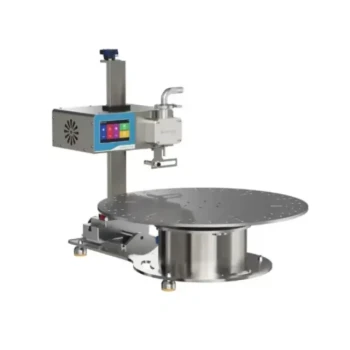
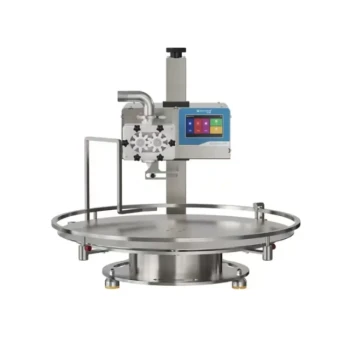
- Fully Automatic Honey Filling Packaging Machine for Processing Line
- Electric Double Wall Honey Filtering Machine Purifier Equipment for Honey Processing Plant
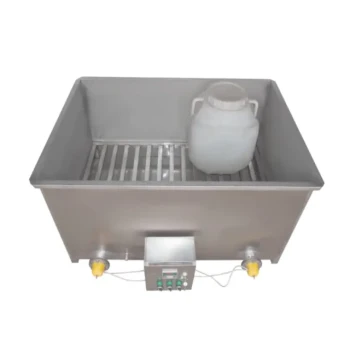
- Heavy Duty Stainless Steel Honey Processing Machine Decrystallizing Tank
- Economy Honey Homogenizer Mixer and Melting Machine for Beekeeping
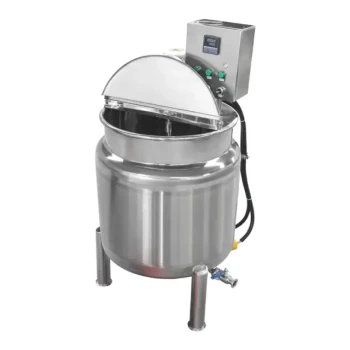
- Double Wall Honey Heating Stirring Homogenizer Mixing Machine with Various Capacity
People Also Ask
- Why are fully automatic honey filling and packaging lines essential? Boost Your Honey's Market Value and Quality
- What is a fully-automatic honey filler? Streamline Your Production with High-Precision Automation
- How do automated honey filling and packaging machines affect profitability? Boost Margins with HONESTBEE Technology
- How do automated honey filling and packaging machines contribute to the market value of honey products? Maximize Your ROI
- How do industrial-grade automated honey filling and packaging machines mitigate the risk of physical contamination?