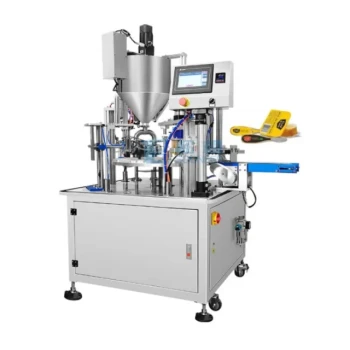
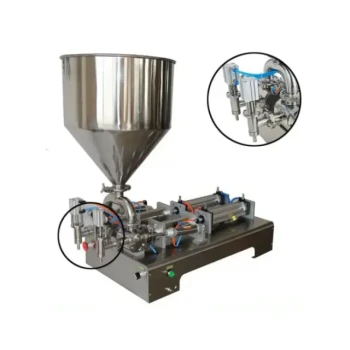
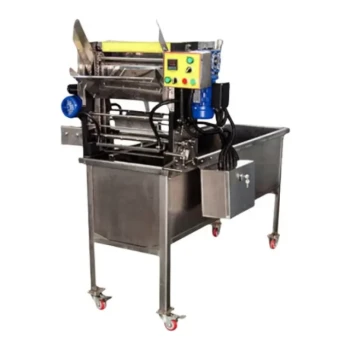
Industrial-grade automated honey filling machines mitigate physical contamination through a multi-layered defense strategy centered on isolation and filtration. By utilizing fully enclosed production lines and precision filtration systems, these machines physically bar impurities like glass, metal, or debris from entering the product stream. Furthermore, the automation of the process drastically minimizes human interaction, which is the most common vector for introducing foreign objects.
Core Insight: Automated systems replace vulnerable manual handling with hermetically sealed, monitored environments. This transition ensures that from bulk processing to final sealing, the honey remains isolated from external pollutants, preventing both immediate physical contamination and long-term spoilage.
The Mechanisms of Physical Exclusion
Enclosed Production Lines
The primary defense against contamination is the physical separation of the product from the factory environment. Industrial machines operate within fully enclosed production lines, creating a controlled environment that isolates the honey.
This enclosure prevents the entry of airborne particulates, dust, and larger foreign objects such as industrial debris or insect pests.
Precision Filtration Systems
Before filling occurs, honey is passed through advanced filtration units integrated directly into the processing line.
These filters are designed to capture specific physical impurities, such as glass shards, metal fasteners, or crystallized particulates, ensuring they are removed before the honey ever reaches the container.
Hermetic Sealing Technology
Once the honey is dispensed, the machine immediately applies a hermetic seal.
This process not only locks in freshness to prevent fermentation but also creates an immediate barrier against post-filling contamination, ensuring no foreign matter can enter the jar during downstream packaging or transport.
Material Safety and Equipment Integrity
Corrosion-Resistant Construction
Physical contamination can sometimes originate from the machinery itself. Industrial-grade fillers are constructed using high-grade stainless steel or food-grade polymers.
These materials are resistant to corrosion and electrochemical reactions, preventing the equipment from degrading, flaking, or leaching rust and metal particles into the honey over time.
Anti-Drip Mechanisms
Modern machines employ precise volumetric controls and anti-drip nozzles.
By preventing spillage and sticky residue on the exterior of bottles or conveyor belts, these mechanisms eliminate a major attractant for dust, dirt, and pests, keeping the immediate processing zone physically clean.
Reducing the Human Variable
Minimizing Human Contact
Manual filling operations inherently carry high risks of "secondary contamination," where hair, clothing fibers, or jewelry may fall into open containers.
Automated monitoring and filling systems virtually eliminate direct human contact with the open product, removing the most unpredictable source of physical contaminants.
Automated Quality Monitoring
Integrated sensors and monitoring systems oversee the filling process continuously.
These systems can detect irregularities in the fill volume or the sealing process that might indicate a breach in containment or a mechanical failure, allowing for immediate corrective action before contaminated batches are produced.
Critical Considerations: The Trade-offs
Maintenance and Wear
While automation reduces external contamination, the moving parts within the machine introduce a risk of internal physical contamination (e.g., metal shavings from wear).
Rigorous preventative maintenance schedules are required to ensure that mechanical components do not degrade and introduce debris into the honey stream.
Cleaning Validation Challenges
Enclosed systems are excellent for protection but can be difficult to inspect visually.
Operators must rely on strict Clean-In-Place (CIP) protocols and validation systems to ensure that no physical residue or cleaning agents remain in the piping or filtration units between batches.
Making the Right Choice for Your Goal
When selecting equipment to mitigate contamination risks, prioritize features based on your specific operational threats:
- If your primary focus is preventing foreign object debris (FOD): Prioritize machines with multi-stage, accessible precision filtration systems to catch glass and metal early.
- If your primary focus is long-term product stability: Select equipment with advanced hermetic sealing capabilities to prevent ingress during storage and shipping.
- If your primary focus is regulatory compliance: Ensure the machinery is constructed of certified food-grade stainless steel to negate the risk of equipment corrosion and material migration.
Investing in industrial automation is not just about speed; it is the most effective method for establishing a standardized, physical firewall between your product and the outside world.
Summary Table:
| Contamination Barrier | Mechanism of Action | Benefit to Honey Quality |
|---|---|---|
| Enclosed Production | Isolates honey from the factory atmosphere | Prevents airborne dust, debris, and pests |
| Precision Filtration | Integrated multi-stage filter units | Removes glass shards, metal, and crystals |
| Hermetic Sealing | Immediate airtight closure post-fill | Prevents post-filling ingress and spoilage |
| Food-Grade Materials | High-grade stainless steel & polymers | Eliminates rust, flaking, and material leaching |
| Automation | Minimizes manual product handling | Removes human vectors (hair, fibers, jewelry) |
Secure Your Apiary's Purity with HONESTBEE
Maintaining product integrity is non-negotiable for commercial apiaries and distributors. At HONESTBEE, we specialize in providing high-performance honey-filling machines, specialized hardware, and essential beekeeping consumables designed to meet the highest safety standards.
Whether you are scaling your honey production with automated machinery or sourcing reliable wholesale tools, our portfolio ensures your product remains free from contamination and ready for the global market.
Ready to elevate your production standards?
Contact HONESTBEE Today to discover how our industrial solutions can optimize your facility's efficiency and safety.
References
- Fawzy Eissa, El-Kazafy A. Taha. Contaminants in honey: an analysis of EU RASFF notifications from 2002 to 2022. DOI: 10.1007/s00003-023-01460-x
This article is also based on technical information from HonestBee Knowledge Base .
Related Products
- Fully Automatic Honey Filling Packaging Machine for Processing Line
- Precision Automated Packaging Turntable Honey Spoon Filling Sealing Packing Machine
- Automatic Single-Dose Snap & Squeeze Honey Sachets Packing Machine
- Automatic Honey Filling and Filtering Machine for Beekeeping Bottle Filling
- Precision Durable Efficient HONESTBEE Rotary Honey Filling Machine
People Also Ask
- Why are fully automatic honey filling and packaging lines essential? Boost Your Honey's Market Value and Quality
- What is a fully-automatic honey filler? Streamline Your Production with High-Precision Automation
- How do automated honey filling and packaging machines affect profitability? Boost Margins with HONESTBEE Technology
- How do automated honey filling and packaging machines contribute to the market value of honey products? Maximize Your ROI
- What technical advantages do automated honey filling and packaging machines provide? Elevate Your Retail Compliance