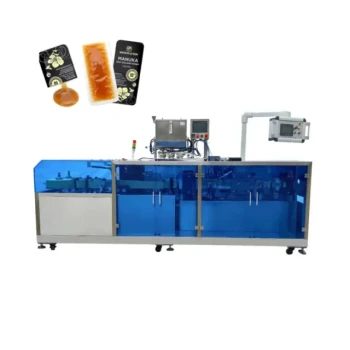
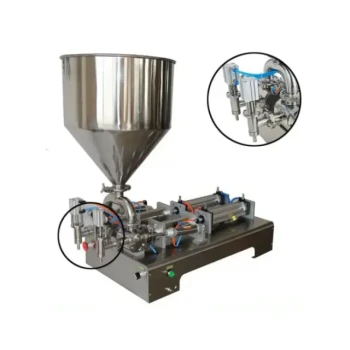
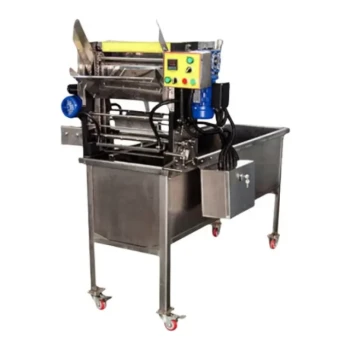
Fully automatic honey filling and packaging lines serve as the critical infrastructure for transforming raw, regional honey harvests into high-value commercial commodities. These systems are essential because they standardize the "deep processing" phase, ensuring that the final product is hygienic, consistent, and visually competitive enough to thrive in modern retail markets.
The Core Insight Automation in honey processing is not merely about speed; it is a strategic tool for economic and ecological sustainability. By enhancing brand competitiveness and product value, these systems provide the financial incentives necessary for local communities to maintain systematic bee protection and sustainable agricultural practices.
Elevating Commercial Value and Sustainability
The transition from a raw agricultural product to a shelf-ready consumer good requires more than just bottling; it requires a systematic upgrade in value.
Enhancing Brand Competitiveness
Raw honey collected from diverse regions often lacks consistency. Automatic lines homogenize the packaging presentation, instantly elevating the perceived value of the product.
This transformation allows producers to move away from bulk commodity pricing. Instead, they can position their honey as a premium, high-value item suitable for competitive domestic and international markets.
The Economic Engine for Conservation
There is a direct link between processing efficiency and ecological protection. When deep processing increases the market value of honey, it generates stronger economic incentives for stakeholders.
This increased profitability motivates local communities to invest in systematic bee protection. Consequently, the machinery supports a cycle of sustainable agricultural development by making apiculture a financially viable profession.
Ensuring Hygiene and Biological Integrity
Honey is a biologically active substance. Manual processing introduces risks that automated deep processing eliminates.
Preventing Secondary Contamination
Automated systems utilize enclosed filling environments. This physical isolation is critical for preventing secondary contamination from dust, human contact, or airborne microbes.
By maintaining a closed loop, the machinery prevents fermentation risks during storage. This directly extends the product's shelf life, making it safe for long-distance transport and export.
Preserving Natural Enzymes and Aromas
Standardized automation protects the unique chemical profile of honey. Enclosed systems limit contact with air, which is vital for maintaining natural enzyme activities such as amylase and catalase.
Furthermore, precise handling prevents the volatilization of delicate aromatic compounds. This ensures the consumer experiences the full flavor profile intended by the producer.
Precision and Market Perception
In the eyes of the modern consumer, the quality of the packaging is often equated with the quality of the product inside.
High-Precision Quantitative Filling
Automated machines use advanced metering (often piston or weighing systems) to ensure absolute consistency. This guarantees that every bottle meets strict net content standards.
This precision significantly reduces material loss, specifically the overflow of high-viscosity fluids. For large-scale operations, eliminating this waste is a key factor in profitability.
Visual Presentation as a Sales Driver
A significant portion of consumers relies on packaging quality to make purchasing decisions. Industrial-grade encapsulation ensures professional, clean sealing that manual methods cannot match.
By delivering a polished, pharmaceutical-grade aesthetic, these machines validate premium pricing strategies. They signal to the consumer that the product is safe, traceable, and high-quality.
Understanding the Trade-offs
While essential for deep processing, adopting full automation comes with operational considerations that must be weighed.
Capital Intensity vs. Scalability
Implementing a fully automatic line requires a significant upfront capital investment. While this reduces labor costs per unit over time, the initial financial barrier can be high for smaller apiaries.
Maintenance and Technical Expertise
These systems are complex. They require operators with technical skills to manage calibration and maintenance. Neglecting the mechanical upkeep of high-precision piston systems can lead to downtime that negates efficiency gains.
Making the Right Choice for Your Goal
When integrating automatic filling lines into your honey processing strategy, consider your specific market objectives.
- If your primary focus is Premium/Medicinal Branding: Prioritize machines with enclosed systems and gentle handling to maximize enzyme retention and justify high price points.
- If your primary focus is Mass Market Export: Prioritize high-speed metering and standard-compliant sealing to ensure volume consistency and durability during shipping.
Ultimately, automated processing is the key to converting a raw natural resource into a sustainable, profitable economic asset.
Summary Table:
| Key Feature | Benefit for Honey Producers | Impact on Product |
|---|---|---|
| Enclosed Filling | Prevents secondary contamination | Extended shelf life & purity |
| Piston Metering | Reduces product waste & material loss | Accurate net content & compliance |
| Automated Sealing | Professional, pharmaceutical-grade finish | High perceived brand value |
| Enzyme Protection | Limits air exposure & volatilization | Preserves natural flavor & activity |
Scale Your Apiculture Business with HONESTBEE
Are you ready to transform your raw honey into a premium, market-leading commodity? HONESTBEE provides the industry-leading tools and machinery needed to achieve global standards.
We specialize in supporting commercial apiaries and distributors with a comprehensive wholesale portfolio, including:
- Advanced Machinery: High-precision honey-filling and hive-making machines.
- Full Spectrum Hardware: Durable beekeeping tools and industrial-grade equipment.
- Essential Consumables: A wide array of high-quality industry supplies and cultural merchandise.
By partnering with us, you gain more than just equipment; you gain a strategic advantage in efficiency and brand competitiveness. Let us help you protect the biological integrity of your harvest while maximizing your economic returns.
Contact HONESTBEE Today for a Professional Consultation
References
- Konstantinos Kougioumoutzis, Theodora Petanidou. Assessing Climate Change Impacts on Island Bees: The Aegean Archipelago. DOI: 10.3390/biology11040552
This article is also based on technical information from HonestBee Knowledge Base .
Related Products
- Fully Automatic Honey Filling Packaging Machine for Processing Line
- Precision Automated Packaging Turntable Honey Spoon Filling Sealing Packing Machine
- Automatic Single-Dose Snap & Squeeze Honey Sachets Packing Machine
- Automatic Honey Filling and Filtering Machine for Beekeeping Bottle Filling
- Double Nozzle Small Honey Filling Machine Honey Sachet Packing Packaging Equipment
People Also Ask
- What is a fully-automatic honey filler? Streamline Your Production with High-Precision Automation
- How do automated honey filling and packaging machines affect profitability? Boost Margins with HONESTBEE Technology
- How do automated honey filling and packaging machines contribute to the market value of honey products? Maximize Your ROI
- How do industrial-grade automated honey filling and packaging machines mitigate the risk of physical contamination?
- What technical advantages do automated honey filling and packaging machines provide? Elevate Your Retail Compliance