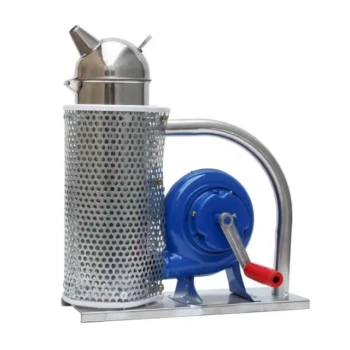
A bee smoker is the fundamental safety device for preventing defensive colony behavior. It functions by emitting cool smoke that calms honeybees, directly reducing their aggression and minimizing the likelihood of the beekeeper being stung during inspections.
The smoker operates by chemically masking alarm signals and triggering a natural feeding instinct. This creates a temporary window of docility, allowing beekeepers to perform maintenance without escalating the colony into a defensive state.
The Biological Mechanisms of Safety
To understand how a smoker ensures safety, you must understand how it alters bee behavior on a biological level.
Disrupting Chemical Communication
Honeybees rely on a sophisticated chemical communication system to identify threats. When guard bees perceive danger, they release alarm pheromones to signal the rest of the colony to attack.
Smoke physically interferes with and masks these pheromones. By blocking this "scent" of danger, the smoker prevents the transmission of the alarm, ensuring that a defensive reaction from a few bees does not escalate into a coordinated colony-wide attack.
Triggering the Survival Instinct
The presence of smoke simulates the environmental signal of a forest fire. This triggers a deep-seated survival instinct within the hive.
Instead of defending the hive, the bees prioritize consuming honey in preparation to potentially flee the location. When bees are engorged with honey, they enter a docile, lethargic state, making them significantly less prone to stinging or aggressive flight.
Operational Benefits
The safety provided by a smoker extends beyond simple sting prevention; it enables the actual mechanics of beekeeping.
Creating a Stable Environment
Safe inspections require precise movements. A smoker reduces general agitation, creating a stable physical environment.
This allows the beekeeper to open hive covers, extract frames, and perform health checks without dealing with a swarm of defensive bees. This stability is critical for preventing accidental harm to the queen or workers during manual interventions.
Reducing Colony Loss
High-stress inspections can lead to lasting aggression or colony loss. By using smoke to keep the bees calm, you prevent the chaotic behavior that often results in bees being crushed or lost during reassembly.
Understanding the Trade-offs
While essential, the bee smoker is not a "magic wand." Misuse can compromise safety rather than enhance it.
The Importance of "Cool" Smoke
The smoke generated must be cool. Hot smoke can physically burn the bees or melt their wings.
Causing pain or injury to the bees will override the calming effect and trigger an immediate, intense defensive reaction. You must ensure the fuel is burning correctly to produce cool, white smoke rather than heat or sparks.
Limitations on Agitated Colonies
Smoke is primarily a preventative tool. If a colony has already escalated into a state of excessive agitation, the smoker may no longer be effective.
Once the alarm pheromones have fully saturated the hive and the colony is on high alert, adding more smoke rarely helps. In these instances, the only safe option is to cease the inspection and allow the bees to settle.
Making the Right Choice for Your Goal
How you utilize the smoker depends on your specific objective for the inspection.
- If your primary focus is preventing stings: Apply cool smoke gently at the entrance before opening the hive to disrupt alarm pheromones before they start.
- If your primary focus is thorough colony management: Use the smoker to induce the feeding response, which keeps bees on the combs and out of your way during frame manipulation.
- If your primary focus is crisis management: Recognize when smoke is failing; if the bees ignore the smoke and remain aggressive, close the hive immediately to ensure safety.
Effective use of a bee smoker transforms a hazardous intrusion into a managed, low-stress interaction for both the beekeeper and the colony.
Summary Table:
| Mechanism | Impact on Bee Behavior | Safety Benefit |
|---|---|---|
| Pheromone Masking | Blocks alarm pheromones (Isopentyl acetate) | Prevents colony-wide defensive escalation |
| Feeding Response | Triggers honey consumption (survival instinct) | Makes bees lethargic and less likely to sting |
| Environmental Control | Reduces general colony agitation | Allows stable frame extraction and health checks |
| Cool Smoke Output | Simulates forest fire without causing harm | Maintains bee health while inducing docility |
Elevate Your Apiary Safety with HONESTBEE
At HONESTBEE, we understand that high-quality tools are the foundation of a productive and safe commercial apiary. As a premier partner for distributors and commercial beekeepers, we provide a comprehensive range of professional-grade smokers and specialized beekeeping machinery designed for durability and efficiency.
Why partner with HONESTBEE?
- Wholesale Expertise: We supply everything from stainless steel smokers and protective gear to advanced hive-making and honey-filling machines.
- Scalable Solutions: Our portfolio supports large-scale operations with industry consumables and honey-themed cultural merchandise.
- Global Reliability: We empower our partners with robust equipment that ensures every hive inspection is handled with professional precision.
Ready to upgrade your inventory or operational capacity? Contact us today to discuss our wholesale offerings and discover how HONESTBEE can drive your beekeeping success.
Related Products
- Professional Bee Smoker with Elongated Spout and Durable Bellows for Beekeeping
- Stainless Steel Honey Bee Smoker Hive and Honeycomb Smoker for Beekeeping
- European Stainless Steel Bee Smoker for Honey Bee Hive
- Premium Traditional Copper Bee Smoker with Bellows
- Heavy-Duty Bee Smoker with Durable Plastic Bellows for Beekeeping
People Also Ask
- What roles do bee smokers and precision tools play in honey harvesting? Master Safety and Quality Control
- Why is a professional bee smoker considered an essential tool for hive management and safety? Master Colony Control.
- Why is the use of professional bee smokers and specialized fuel essential? Protect Honey Purity & Colony Safety
- Why is a professional Smoker essential during routine apiary inspections? Enhance Safety and Operational Efficiency
- How do professional bee smokers facilitate bee management? Enhancing Forest Beekeeping Safety and Efficiency