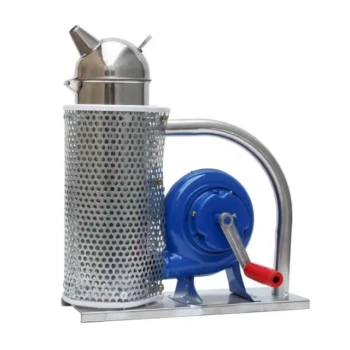
A bee smoker improves safety and efficiency by producing cool smoke that fundamentally disrupts the colony's defensive mechanisms. It works by masking alarm pheromones and triggering an instinctual feeding response, which renders the bees docile and allows beekeepers to manage the hive without inciting a mass attack.
The bee smoker is not merely a tool for convenience; it is a bio-hack for hive communication. By severing the chemical signal for "danger" and inducing a survival feeding response, it transforms a potentially aggressive colony into a manageable one, ensuring physical safety for the keeper and biological stability for the hive.
The Biological Mechanism of Smoke
Disrupting Chemical Communication
Honeybees rely heavily on scent cues to communicate threats. When a guard bee identifies an intruder, it releases alarm pheromones to alert the rest of the colony.
The cool smoke produced by the smoker effectively masks these pheromones. Without this chemical signal spreading through the hive, the chain reaction of aggression is broken, preventing other bees from detecting the danger.
Triggering the Feeding Response
Smoke triggers a deep-seated survival instinct in bees, mimicking the presence of a forest fire. In response, bees instinctively consume stored honey to prepare for a potential evacuation.
This physiological response has a sedating effect. Bees with full bellies are significantly calmer and less defensive, making them far less likely to sting during physical interventions.
Enhancing Operational Efficiency
Facilitating Complex Maneuvers
Because the colony is sedated, beekeepers can perform necessary but intrusive tasks with minimal disturbance. This includes merging colonies, harvesting honey, and conducting thorough health inspections.
Reducing Stress and Loss
Efficiency in beekeeping is closely tied to colony health. By reducing the colony's defensive reaction, the smoker minimizes the number of bees lost to stinging (which kills the bee) and reduces stress-induced losses within the hive.
Improving Output Quality
The use of professional tools like smokers allows for more frequent and scientific hive maintenance. This direct control leads to higher honey output rates and ensures the purity of the harvested raw materials.
Understanding the Trade-offs
The Limitations of Alternatives
While alternatives to traditional smokers exist, they often lack effectiveness or introduce new problems.
- Water Mist: Spraying bees can reduce flying, but it makes them wet, uncomfortable, and does not induce the critical feeding response.
- Liquid Smoke: Mixtures of liquid smoke may work partially but fail to direct bees as effectively as real smoke. Furthermore, they carry a risk of staining and contaminating the honey.
- Brushes: Relying solely on mechanical tools like bee brushes tends to agitate the bees rather than calm them.
Maintenance Requirements
A smoker is a combustion tool that requires care to function safely. Creosote and residue will eventually build up inside the firebox and on the lid.
To ensure longevity, you must clean the smoker annually or as needed. Using a hive tool to scrape out residue ensures the lid closes properly, which is vital for extinguishing the fuel and storing the tool safely.
Making the Right Choice for Your Goal
To maximize the benefits of a bee smoker, tailor your usage to your specific objective:
- If your primary focus is Safety: Ensure your fuel produces a dense, cool smoke; hot smoke can singe bees' wings and trigger an aggressive response rather than a calm one.
- If your primary focus is Honey Quality: Avoid using chemical alternatives or liquid smoke sprays, as these can contaminate the final harvest; stick to natural fuel sources in a traditional smoker.
- If your primary focus is Tool Longevity: Store your smoker and fuel in a dry place during winter and scrape the firebox lip regularly to prevent mechanical failure.
Mastering the smoker is the first step toward moving from a reactive beekeeper to a proactive hive manager.
Summary Table:
| Feature | Biological Impact | Operational Benefit |
|---|---|---|
| Pheromone Masking | Disrupts alarm signals | Prevents mass defensive attacks |
| Feeding Response | Induces honey consumption | Makes bees docile and less likely to sting |
| Stress Reduction | Minimizes colony agitation | Lowers bee mortality and hive stress |
| Manual Control | Directs bee movement | Enhances efficiency in honey harvesting |
Elevate Your Apiary Operations with HONESTBEE
At HONESTBEE, we understand that professional beekeeping requires precision tools that ensure both safety and productivity. As a premier provider for commercial apiaries and global distributors, we offer a comprehensive wholesale range designed to scale your business.
From high-performance bee smokers and specialized beekeeping tools to industrial honey-filling machines and hive-making equipment, our portfolio covers every facet of the industry. We also supply essential consumables and unique honey-themed cultural merchandise to help your brand stand out.
Ready to optimize your yield and streamline your hive management?
Contact HONESTBEE Today to access our full wholesale catalog and expert equipment solutions!
References
- Aniketa Horo, J.M. Singh. An Economic Analysis of Stationary Beekeeping in the Northern States of India. DOI: 10.55446/ije.2023.1136
This article is also based on technical information from HonestBee Knowledge Base .
Related Products
- Professional Bee Smoker with Elongated Spout and Durable Bellows for Beekeeping
- Stainless Steel Honey Bee Smoker Hive and Honeycomb Smoker for Beekeeping
- European Stainless Steel Bee Smoker for Honey Bee Hive
- Premium Traditional Copper Bee Smoker with Bellows
- Heavy-Duty Bee Smoker with Durable Plastic Bellows for Beekeeping
People Also Ask
- What roles do bee smokers and precision tools play in honey harvesting? Master Safety and Quality Control
- Why is a professional bee smoker considered an essential tool for hive management and safety? Master Colony Control.
- Why is the use of professional bee smokers and specialized fuel essential? Protect Honey Purity & Colony Safety
- Why is a professional bee smoker essential for hive maintenance? Master Colony Control & Safety
- Why is a professional Smoker essential during routine apiary inspections? Enhance Safety and Operational Efficiency