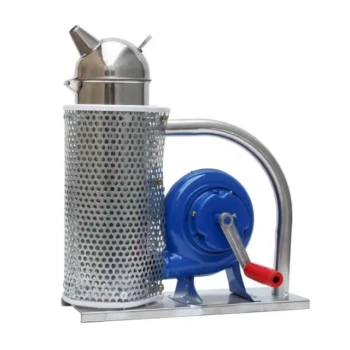
A portable beekeeping smoker functions as a specialized combustion chamber designed to extract and deliver acaricidal compounds from plant matter. Instead of simply burning fuel, it operates under semi-anoxic (low oxygen) conditions to convert specific volatile ingredients—such as alpha-pinene and 1,8-cineole—into a high-permeability smoke that physically coats bees and penetrates the hive structure to neutralize Varroa mites.
Core Insight: The smoker is not just an applicator; it is a chemical converter. Its primary value lies in generating controlled pressure to drive medicated aerosols into microscopic gaps, ensuring contact with mites that standard topical treatments might miss.
The Science of Volatile Conversion
To understand how a smoker controls Varroa mites, you must look at the chemical transformation occurring inside the canister.
Semi-Anoxic Combustion
The device does not rely on open flames, which could destroy active compounds. Instead, it creates a semi-anoxic environment.
This controlled, low-oxygen burn allows the dry plant materials (such as stinging nettle) to smolder rather than incinerate.
Releasing Active Agents
Under these specific thermal conditions, the plant material releases volatile active ingredients.
Key compounds like alpha-pinene and 1,8-cineole are liberated from the plant structure and bound to tiny smoke particles, effectively turning the smoke into a carrier for these natural miticides.
Mechanisms of Delivery and Penetration
Once the chemical agents are airborne, the physical mechanics of the smoker ensure they reach the target.
High-Permeability Aerosols
The combustion process converts the active substances into tiny aerosol particles.
Because these particles are microscopic, they possess high permeability, allowing them to remain suspended in the air and travel deep into the colony structure.
Pressurized Distribution
The smoker utilizes physical pressure (generated by the bellows) to force this medicated smoke through the hive.
This pressure is critical for driving the smoke into all gaps and crevices, ensuring uniform distribution rather than just surface-level application.
Surface Coating
The ultimate goal is direct contact. The smoke physically covers the body surfaces of the bees.
This facilitates direct interaction between the plant-derived active substances and the Varroa mites, whether they are phoretic (attached to adult bees) or hidden within the hive.
Understanding the Trade-offs
While effective, this method relies heavily on the operator's ability to maintain specific physical conditions.
Material Condition is Critical
The references emphasize the use of dry plant materials.
Moisture in the fuel can lower the combustion temperature or prevent the semi-anoxic state required to properly volatilize compounds like alpha-pinene, potentially reducing efficacy.
The Necessity of Pressure
Passive smoking is likely insufficient for mite control.
The system relies on the active generation of pressure to penetrate capped brood areas and tight spaces; a weak application may fail to reach mites hiding in the hive's periphery.
Optimizing Your Control Strategy
To maximize the effectiveness of plant-based smoke treatments, focus on the mechanics of your application.
- If your primary focus is Chemical Efficacy: Ensure your plant materials are thoroughly dried to support the semi-anoxic combustion required to release alpha-pinene and 1,8-cineole.
- If your primary focus is Colony Coverage: Utilize the smoker's pressure mechanism to force smoke into deep crevices, ensuring the aerosol coats both the bees and the hive structure.
Effective Varroa control requires treating the smoker as a precision tool for chemical delivery, not just a source of smoke.
Summary Table:
| Mechanism | Function | Key Benefit |
|---|---|---|
| Semi-Anoxic Combustion | Smolders plant material in low-oxygen | Preserves active miticidal compounds like alpha-pinene |
| Volatile Conversion | Releases 1,8-cineole and essential oils | Turns smoke into a potent carrier for natural miticides |
| Pressurized Delivery | Bellows force smoke into hive crevices | Ensures deep penetration and uniform colony coverage |
| Aerosol Coating | Microscopic particles coat bee surfaces | Provides direct contact to neutralize phoretic mites |
Scaling Your Apiary Operations with HONESTBEE
Maximize your hive health and operational efficiency with professional-grade solutions from HONESTBEE. As a premier partner for commercial apiaries and distributors, we provide more than just tools; we offer a comprehensive wholesale ecosystem designed to fuel your growth.
Our Value to You:
- Industrial Machinery: From high-precision honey-filling machines to automated hive-making equipment.
- Premium Supplies: A full spectrum of beekeeping tools and essential industry consumables.
- Retail & Culture: Expand your brand with our diverse array of honey-themed cultural merchandise.
Whether you are stocking a distribution network or managing thousands of colonies, HONESTBEE delivers the quality and scale you require. Contact us today to discuss your wholesale needs!
References
- Münire Turhan, Turgay ŞENGÜL. Bal Arısı Kolonilerinde Varroa Mücadelesinde Mersin Bitkisinin (Myritus communis L.) Kullanılma İmkânları. DOI: 10.30910/turkjans.760897
This article is also based on technical information from HonestBee Knowledge Base .
Related Products
- Miniature Stainless Steel Bee Smoker for Beekeeping
- Stainless Steel Honey Bee Smoker Hive and Honeycomb Smoker for Beekeeping
- Electric Bee Smoker European Style Bee Hive Smoker for Beekeeping
- Stainless Steel Electric Beehive Smoker for Beekeeping and Bee Keeper Use
- Professional Bee Smoker with Elongated Spout and Durable Bellows for Beekeeping
People Also Ask
- What are bee smokers made out of? Choose the Right Material for Your Apiary
- How should a beekeeping smoker be used when inspecting a hive? Master Calm Hive Management Techniques
- What is the mechanism by which a beekeeping smoker controls honeybee aggression? Unlock Calm Hive Inspections
- What is the function of a beekeeping smoker? Enhance hive safety and specimen collection with professional precision.
- What is a beekeeping smoker and what are its components? A Guide to Essential Hive Management