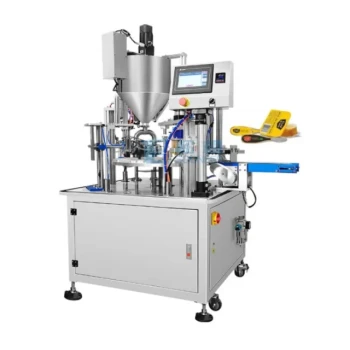
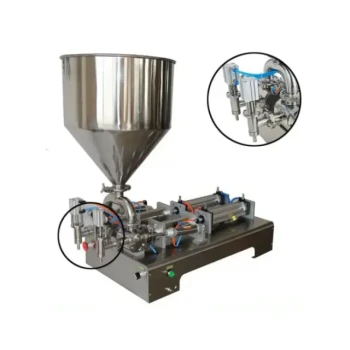
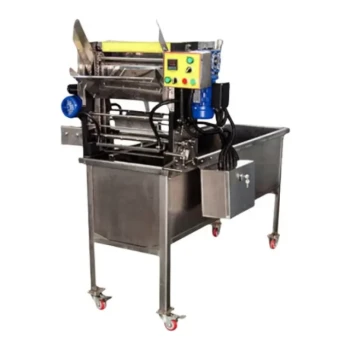
The automatic honey-filling machine acts as the bridge between raw agricultural production and high-value retail commerce. It transforms bulk honey into standardized, hygienically sealed, and precisely measured units that meet the strict regulatory and aesthetic requirements of supermarkets, international exporters, and large-scale procurement networks.
Core Takeaway: By automating the transition from raw material to branded commodity, these machines ensure the consistency, hygiene, and scalability necessary for honey products to qualify for professional retail channels and command premium market prices.
Standardizing the Product for Modern Retail
Achieving Precise Weight and Volume
Commercial retailers and institutional buyers require absolute consistency in every unit they stock. Automatic filling machines utilize high-precision volumetric or weight sensors to ensure every jar meets exact specifications, eliminating the legal and financial risks of under-filled or over-filled containers.
Enhancing Visual Appeal and Professionalism
Hand-filled jars often suffer from messy spills and inconsistent fill levels, which can damage a brand’s reputation on a store shelf. Automation provides a clean, uniform finish that signals professional quality to both distributors and end consumers, allowing for higher price premiums.
Transitioning from Bulk to Branded Commodity
These machines allow producers to move beyond selling raw honey in bulk drums. By facilitating the creation of market-ready, pre-packaged goods, the equipment enables producers to enter high-end domestic markets and international export streams.
Ensuring Food Safety and Regulatory Compliance
Maintaining High Hygiene Standards
Retail markets, particularly large supermarket chains, demand rigorous adherence to food safety protocols. Automated systems provide a closed packaging environment that minimizes human contact, significantly reducing the risk of secondary contamination and ensuring the product meets official health standards.
Extending Shelf Life and Quality
Precise, reliable sealing processes prevent honey from fermenting or absorbing moisture during transport and storage. This protection preserves the natural biological activities of the honey, such as its antibacterial properties, and extends its shelf life—a critical factor for distributors managing long supply chains.
Meeting International Export Requirements
For wholesalers looking to move product globally, automated filling is often a prerequisite. The equipment ensures that packaging meets international specifications regarding hygiene and quantitative accuracy, clearing the path for entry into high-standard markets like Europe and North America.
Optimizing Distribution and Scalability
Meeting High-Volume Procurement Demands
Manual filling is a bottleneck that prevents small-to-medium apiaries from fulfilling large-scale orders for schools or retail chains. Automated machines provide the rapid response times and efficient fulfillment capabilities required to service high-volume B2B contracts reliably.
Reducing Labor Costs and Product Loss
Automation reduces the reliance on manual labor, which can be inconsistent and expensive. By eliminating errors and spills, the machinery reduces product waste, allowing distributors to maintain better margins and more competitive pricing for their retail partners.
Enabling Rapid Market Response
In a fast-paced trading environment, the ability to scale production quickly is a competitive advantage. Sophisticated filling lines allow for quick changeovers between different bottle sizes, enabling distributors to react swiftly to changing market trends and buyer demands.
Understanding the Trade-offs
Initial Capital Investment and Maintenance
The primary hurdle for many operations is the upfront cost of high-quality automated equipment. Additionally, these machines require a commitment to regular technical maintenance and staff training to ensure long-term operational efficiency and food safety compliance.
The Need for Technical Expertise
Operating a high-precision filling line requires more specialized knowledge than manual methods. Distributors must ensure they have access to professional industry expertise to troubleshoot mechanical issues and optimize the machinery for different honey viscosities and temperatures.
Making the Right Choice for Your Goal
To successfully integrate automated filling into your supply chain, consider your primary commercial objective:
- If your primary focus is entering premium retail markets: Invest in machines with high-precision sensors and integrated capping to ensure the visual and weight consistency demanded by high-end stores.
- If your primary focus is international export and compliance: Prioritize equipment that offers a fully closed, easy-to-sanitize environment to meet the most stringent global food safety certifications.
- If your primary focus is maximizing volume and B2B fulfillment: Look for high-speed, multi-head filling systems that can integrate seamlessly into a one-stop sourcing and packaging line.
By leveraging automated filling technology, honey producers and distributors can transform a raw agricultural product into a professional, retail-ready commodity that meets the highest global standards.
Summary Table:
| Key Feature | Impact on Retail Readiness | Business Value |
|---|---|---|
| Precise Filling | Ensures weight/volume consistency for legal compliance. | Eliminates under-fill risks & product waste. |
| Automated Sealing | Maintains high hygiene standards & extends shelf life. | Meets strict food safety & export regulations. |
| Professional Finish | Provides clean, uniform packaging for store shelves. | Increases brand perceived value & price premiums. |
| High-Speed Output | Enables fulfillment of large-scale B2B contracts. | Facilitates rapid market expansion & scalability. |
Elevate Your Honey Distribution with HONESTBEE
Are you a distributor or commercial apiary looking to dominate the retail market? HONESTBEE is your premier partner for one-stop sourcing of professional beekeeping machinery and tools.
We provide a comprehensive, full-spectrum product portfolio—from high-precision honey-filling machines and hive-making equipment to essential industry consumables. Partnering with us gives you a competitive edge through:
- Deep Industry Expertise: Our specialized hardware is designed for professional-grade reliability.
- Rapid Fulfillment: Benefit from ultra-fast delivery and rapid response times to meet urgent market demands.
- Scalable Solutions: We offer OEM/ODM support and premium trading services tailored for wholesalers and B2B resellers seeking high profit margins.
Ready to scale your production and enter high-value markets?
Contact HONESTBEE Today to explore our wholesale offerings and expert equipment solutions.
References
- Saowalak Thongkham, Nattapong Kusolwit. Beekeeping extension programs as supplementary livelihood support for smallholder farming communities. DOI: 10.33545/26180723.2024.v7.i6a.3177
This article is also based on technical information from HonestBee Knowledge Base .
Related Products
- Fully Automatic Honey Filling Packaging Machine for Processing Line
- Automatic Honey Filling and Filtering Machine for Beekeeping Bottle Filling
- Precision Durable Efficient HONESTBEE Rotary Honey Filling Machine
- Automatic Single-Dose Snap & Squeeze Honey Sachets Packing Machine
- Semi Automatic Small Honey Bottle Filling Machine Honey Filler
People Also Ask
- Why are fully automatic honey filling and packaging lines essential? Boost Your Honey's Market Value and Quality
- What is a fully-automatic honey filler? Streamline Your Production with High-Precision Automation
- How do automated honey filling and packaging machines affect profitability? Boost Margins with HONESTBEE Technology
- How do automated honey filling and packaging machines contribute to the market value of honey products? Maximize Your ROI
- How do industrial-grade automated honey filling and packaging machines mitigate the risk of physical contamination?