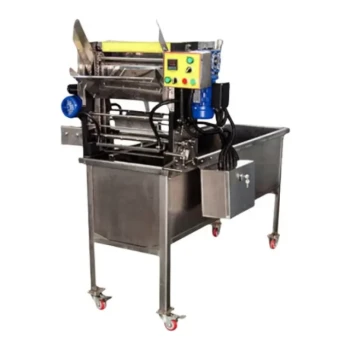
Industrial freezing equipment achieves the elimination of Small Hive Beetles (SHB) by strictly lowering the core temperature of beekeeping tools and products to a specific thermal threshold. By maintaining a temperature of -12°C or lower for a continuous 24-hour period, the equipment creates an environment that is lethal to the insect's physiology. This process targets the internal temperature of the material, rather than just the ambient air, ensuring total disinfection.
To successfully eradicate the Small Hive Beetle, the focus must be on achieving a core temperature of -12°C within the material itself. This threshold must be held for at least 24 hours to guarantee the neutralization of the pest across its entire lifecycle.
The Mechanism of Thermal Elimination
Reaching the Fatal Threshold
The primary mechanism at work is a physical thermal process. The industrial equipment is calibrated to drop the temperature significantly below the freezing point of water.
Specifically, the target is -12°C or lower. This temperature is critical because it exceeds the physiological tolerance of the beetle's biological systems, causing irreversible cellular damage.
The Requirement of Continuity
Achieving the temperature momentarily is insufficient. The freezing process requires a continuous duration of at least 24 hours at the target temperature.
This sustained exposure ensures that the cold penetrates dense materials, such as honeycomb, pollen, or royal jelly. It eliminates pockets of warmth where the pest might survive.
Scope of Effectiveness
Targeting All Life Stages
One of the distinct advantages of this method is its comprehensive lethality. Industrial freezing does not just kill adult beetles.
It effectively destroys eggs, larvae, and pupae as well. This prevents a resurgence of the population from hidden eggs or developing larvae inside the treated equipment.
Blocking Transmission
This method is essential for blocking long-distance mechanical transmission. By treating non-biological vectors—such as tools and harvested products—beekeepers can move equipment between sites without spreading the infestation.
It serves as a reliable disinfection step for logistics and equipment management in apiaries.
Understanding the Trade-offs
Core Temperature vs. Ambient Temperature
A common pitfall is confusing the air temperature of the freezer with the temperature of the tool or product.
If the equipment is densely packed, the center of the load may not reach -12°C immediately. You must allow extra time for the core temperature to reach the target before starting the 24-hour countdown.
Alternative Methods for Non-Living Materials
While freezing is highly effective, it requires time. In scenarios where temperature-based treatments are not feasible, industrial irradiation serves as a valid alternative.
Applying a radiation dose of 400 Gy achieves 100% mortality for adult beetles without altering the physical properties of the equipment. However, for most standard biological products like pollen, freezing remains the standard for preserving quality while ensuring safety.
Making the Right Choice for Your Operation
For beekeepers and apiary managers, selecting the right protocol depends on the material being treated and the urgency of the situation.
- If your primary focus is preserving biological products (pollen/royal jelly): Utilize the freezing method at -12°C for 24+ hours to disinfect without using radiation or chemicals.
- If your primary focus is sterilizing hardware quickly: Consider irradiation (400 Gy) if available, as it eliminates beetles immediately without the 24-hour thermal hold.
- If your primary focus is early detection and prevention: Rely on manual inspections using hive tools and smokers to identify infestation hot spots before treatment is even necessary.
By strictly adhering to the temperature and time requirements, you convert your freezing equipment into a definitive barrier against infestation spread.
Summary Table:
| Method | Target Threshold | Duration/Dose | Target Life Stages | Best For |
|---|---|---|---|---|
| Industrial Freezing | -12°C (Core Temp) | 24 Hours (Continuous) | Eggs, Larvae, Pupae, Adults | Biological products (Pollen, Royal Jelly) |
| Industrial Irradiation | 400 Gy | Immediate | All Life Stages | Rapid hardware sterilization |
| Manual Inspection | Visual/Physical | Routine | Adults, Larvae | Early detection & prevention |
Secure Your Apiary Investment with HONESTBEE
Don't let Small Hive Beetles compromise your commercial success. At HONESTBEE, we empower commercial apiaries and distributors with high-performance beekeeping tools, specialized machinery, and essential consumables designed to withstand rigorous disinfection protocols.
From advanced honey-filling machines to durable hardware that facilitates effective thermal treatment, our comprehensive wholesale offering ensures your operation remains pest-free and productive. Our team is dedicated to providing the specialized equipment needed to safeguard your biological products and maintain industry-leading quality standards.
Ready to scale your beekeeping business with reliable equipment?
Contact HONESTBEE Today to explore our full spectrum of professional beekeeping solutions.
References
- . Panel On Animal Health And Welfare. Survival, spread and establishment of the small hive beetle (Aethina tumida). DOI: 10.2903/j.efsa.2015.4328
This article is also based on technical information from HonestBee Knowledge Base .
Related Products
- Professional Plastic Honey Dipper for Easy Honey Drizzling
- Professional Water Cooled Induction Sealing Machine for Bottles and Containers
- Heavy Duty Stainless Steel Honey Processing Machine Decrystallizing Tank
- HONESTBEE Commercial Upright Honey Melter
- Professional Thermostatic Conical Honey Melter
People Also Ask
- What is a honey dipper and what is it used for? A Guide to Mess-Free Drizzling
- What is the proper method for cleaning a honey dipper? Maintain Pure Flavor with These Easy Pro Tips
- What is a honey taking spoon called? Discover the Tool for a Perfect, Mess-Free Drizzle
- What is a honey dipper? Master the Art of the Perfect Drizzle with This Essential Tool
- How do you clean and store a honey dipper? Simple Steps for Long-Lasting Performance