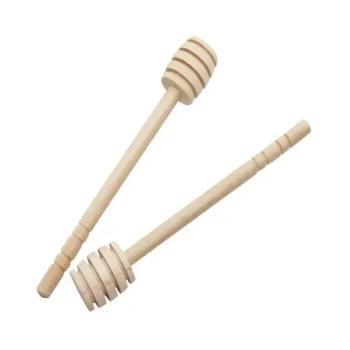
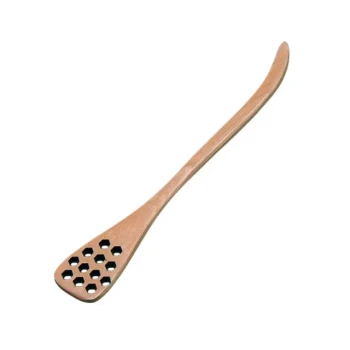
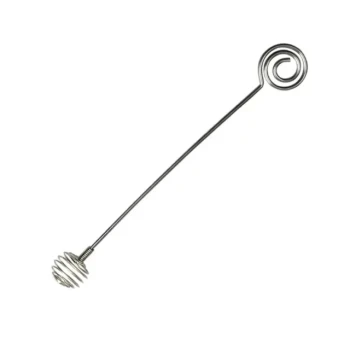
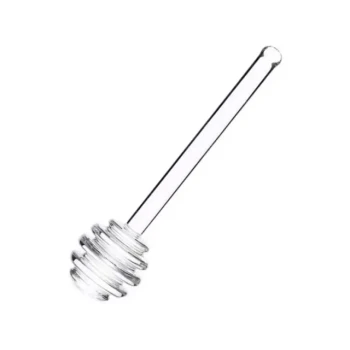
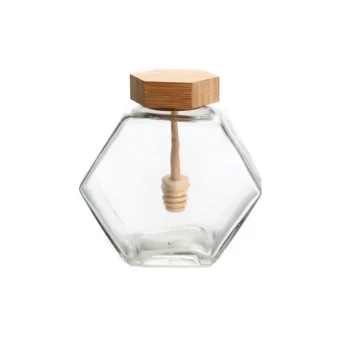
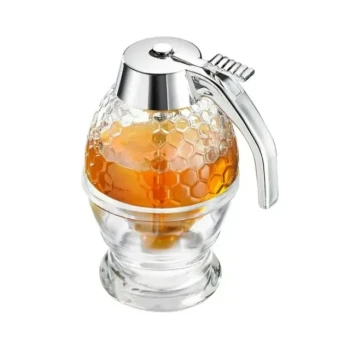
A honey dipper is a specialized tool designed for four primary applications: sweetening beverages, drizzling toppings over desserts, glazing savory main courses, and creating specialized honeycomb art. Unlike a spoon, which often causes messy drips, a dipper uses deep grooves to trap viscous liquids, allowing for a clean transfer and a controlled release.
The honey dipper utilizes surface tension and horizontal grooves to hold honey in suspension until you are ready to release it. Its value lies not just in aesthetics, but in the ability to provide a thin, continuous stream for even distribution rather than an inconsistent dollop.
Breaking Down the Applications
1. Precision Sweetening for Beverages
The most common application is sweetening hot drinks like tea, coffee, or hot chocolate.
The dipper allows you to transfer a substantial amount of honey without dripping on the counter between the jar and the cup. Once submerged in the hot liquid, the honey dissolves off the head more evenly than it would from a spoon.
2. Finishing Desserts with Even Distribution
A dipper is the ideal tool for topping porous or textured foods such as pancakes, waffles, ice cream, or yogurt parfaits.
By holding the dipper at an angle, you create a thin ribbon of honey. This ensures the sweetener covers a wider surface area without pooling in a single spot, preventing the dessert from becoming overly sweet in one bite and bland in another.
3. Glazing Savory Dishes
You can use a dipper to apply a glaze to savory foods, specifically roasted vegetables, chicken, or salmon.
The control offered by the dipper allows you to apply a thin, consistent layer of honey over the protein or vegetable before or after roasting. This helps create a uniform, sweet-and-savory crust that caramelizes evenly under heat.
4. Creating Culinary Art
A less common but specific application involves using a specialized honeycomb dipper to create honeycomb art.
This technique is used for decorative plating or food styling. The unique geometry of the dipper head can be used to imprint patterns or manipulate the honey into shapes that mimic the natural look of a honeycomb.
The Mechanics of Application
How the Tool Works
The functionality of the dipper relies on viscosity and rotation.
When you submerge the head, honey fills the grooves. As you lift it, you must spin the handle; this rotation uses centrifugal force and surface tension to keep the honey inside the grooves.
Releasing the Stream
To apply the honey, you simply stop spinning and angle the dipper downward.
Gravity pulls the honey out of the grooves in a steady stream. This mechanical advantage is why the dipper is superior to a spoon for tasks requiring a "drizzle" rather than a "dump."
Common Pitfalls to Avoid
The Cleaning Challenge
Because of the deep grooves, honey dippers—especially wooden ones—can be difficult to clean thoroughly.
Honey can harden in the crevices if not washed immediately. Furthermore, wooden dippers are porous and should generally be hand-washed to prevent warping or absorbing dish soap flavors.
The "Unitasker" Problem
While effective, the honey dipper is a classic "unitasker"—a tool with only one purpose.
If you do not consume viscous sweeteners (like honey, agave, or syrup) regularly, the dipper may take up unnecessary space compared to a multi-functional spoon.
Making the Right Choice for Your Goal
To get the most out of this tool, match your technique to your desired outcome:
- If your primary focus is consistency: Use the "spin and drip" method to ensure every bite of your waffle or yogurt gets an equal amount of honey.
- If your primary focus is cleanliness: Keep the dipper spinning until it is directly over your teacup to prevent sticky messes on your table.
- If your primary focus is cooking: Use the dipper to glaze meats, ensuring an even coat that promotes uniform browning.
Mastering the spin is the key to transforming a messy ingredient into a controlled culinary element.
Summary Table:
| Application | Best Used For | Key Benefit |
|---|---|---|
| Beverage Sweetening | Tea, Coffee, Hot Chocolate | No-drip transfer and even dissolving |
| Dessert Finishing | Pancakes, Waffles, Yogurt | Thin, even ribbon distribution |
| Savory Glazing | Roasted Meats & Vegetables | Consistent caramelization and crust |
| Culinary Art | Plating & Food Styling | Creating honeycomb patterns and shapes |
Elevate Your Honey Product Line with HONESTBEE
At HONESTBEE, we understand that the right tools are essential for the perfect honey experience. As a premier partner for commercial apiaries and distributors, we provide a comprehensive wholesale range designed to meet your business needs.
Our portfolio features professional-grade equipment including:
- Beekeeping Machinery: High-efficiency hive-making and honey-filling machines.
- Essential Tools: Durable honey dippers, smokers, and protective gear.
- Cultural Merchandise: Unique honey-themed retail products to captivate your customers.
Ready to scale your operations or enrich your inventory? Contact HONESTBEE today to discover how our industry-leading supplies can grow your business.
Related Products
- Natural Wood Honey Dipper for Tea Coffee and Desserts
- Modern Honeycomb Pattern Wooden Honey Dipper for Stirring and Drizzling
- Modern Stainless Steel Honey Dipper Stirrer
- Professional Plastic Honey Dipper for Easy Honey Drizzling
- Heavy Duty 304 Stainless Steel Honey Dipper
People Also Ask
- What is the proper method for cleaning a honey dipper? Maintain Pure Flavor with These Easy Pro Tips
- What is a honey dipper? Master the Art of the Perfect Drizzle with This Essential Tool
- What is a honey taking spoon called? Discover the Tool for a Perfect, Mess-Free Drizzle
- What is a honey dipper and what is it used for? A Guide to Mess-Free Drizzling
- How do you clean and store a honey dipper? Simple Steps for Long-Lasting Performance