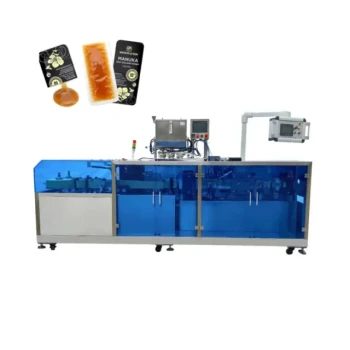
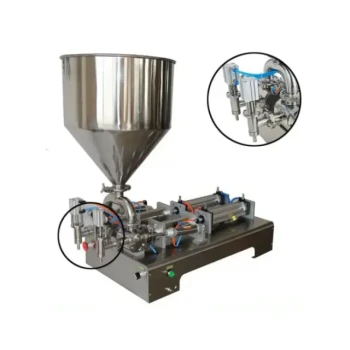
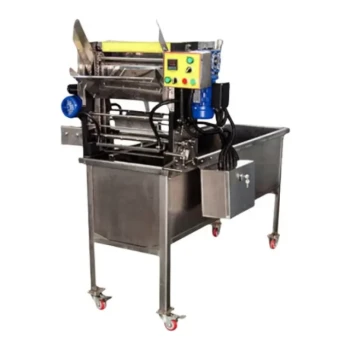
Scaling Through Precision and Efficiency. The introduction of automated honey-filling equipment transforms commercial production by replacing manual extraction and filling with high-speed, closed-loop systems. This transition significantly improves packaging efficiency, ensures the stability of high-value nutritional components by reducing air exposure, and provides the standardization necessary for products to enter formal retail and global supply chains.
Core Takeaway: Automated filling equipment is the technical foundation for modern honey distribution; it bridges the gap between artisanal harvesting and industrial scalability by ensuring hygiene, volume precision, and rapid order fulfillment.
Maximizing Operational Efficiency and Throughput
Industrial Speed and Rapid Market Response
Automated systems allow distributors and wholesalers to respond quickly to market fluctuations and seasonal production surges. By utilizing industrial-grade speeds, these machines drastically reduce the time required to transfer honey from bulk storage tanks to retail-ready packaging.
Minimizing Labor Costs and Product Loss
Manual filling is often labor-intensive and prone to human error, which can lead to costly spills or overfilling. Automation utilizes precision control systems to minimize raw material waste and lower overall operational overhead, directly increasing the profit potential for large-scale resellers.
Streamlining the Supply Chain
Integrated filling lines facilitate ultra-fast delivery and efficient order fulfillment. This capability is essential for distributors who require a comprehensive full-spectrum product portfolio that can move from the facility to the warehouse without bottlenecks.
Upholding Superior Product Integrity and Safety
The Closed-Loop Advantage
Maintaining the nutritional stability of premium products, such as stingless bee honey, requires minimal exposure to environmental contaminants. Closed-loop filling processes reduce the interaction between the honey and oxygen, which preserves the product’s high-value components and extends its shelf life.
Rigorous Hygiene Standards
Automated equipment operates in an enclosed environment, effectively preventing secondary contamination that often occurs during manual handling. This ensures that every batch meets the stringent food safety and hygiene requirements demanded by international supermarkets and health-conscious consumers.
Consistency Across Seasonal Batches
For wholesalers managing diverse honey varieties, maintaining a consistent quality standard is a primary challenge. Industrial filling machines ensure that regardless of the season or batch, the purity and presentation of the product remain uniform.
Achieving Market-Ready Standardization
Precision Volumetric Control
Commercial net weight standards are non-negotiable in the global retail market. Automated machines provide high-precision volumetric control, ensuring that every container is filled to the exact specification, which builds consumer trust and avoids regulatory issues.
Professional Aesthetic and Packaging
The visual appeal of a product is a key driver for retail success. Automation ensures a standardized and professional appearance, allowing honey brands to transition from home-based sales to premium retail shelves and international exhibitions.
Enhancing Commercial Value
By providing a technical foundation for high-quality packaging, these machines increase the market competitiveness of honey products. This standardization is critical for beekeepers and distributors aiming to scale their operations and enter sophisticated logistics networks.
Understanding the Trade-offs
The Initial Capital Investment
The transition to automation requires a significant upfront financial commitment compared to manual methods. While the long-term ROI is high due to labor savings and efficiency, smaller operations must carefully balance their initial expenditure against their projected growth.
Maintenance and Technical Expertise
Industrial-grade machinery requires regular maintenance and a certain level of technical proficiency to operate effectively. Relying on automation means the facility must have access to rapid response technical support to avoid downtime during peak production periods.
Reduced Flexibility for Niche Packaging
While automated lines are highly efficient for standard containers, they may lack the flexibility to handle highly irregular or artisanal bottle shapes without expensive custom tooling. Distributors must choose equipment that aligns with their most common packaging formats to maintain efficiency.
How to Apply This to Your Growth Strategy
Strategic equipment selection is vital for meeting the demands of modern B2B honey distribution and ensuring long-term profitability.
- If your primary focus is rapid market expansion: Prioritize high-speed, industrial-grade machines that enable fast delivery and the ability to handle seasonal surges in volume.
- If your primary focus is premium or medicinal honey: Invest in closed-loop, high-precision systems that emphasize hygiene and the preservation of nutritional components over raw speed.
- If your primary focus is entering retail chains: Ensure your equipment provides rigorous volumetric control and standardized packaging aesthetics to meet supermarket compliance.
The shift to automated filling is the definitive step toward building a professional, scalable, and highly profitable honey distribution enterprise.
Summary Table:
| Key Benefit | Technical Feature | Impact on Growth |
|---|---|---|
| Operational Speed | Industrial-grade throughput | Rapid market response and faster fulfillment |
| Cost Control | Precision volumetric systems | Minimized labor costs and reduced product waste |
| Product Integrity | Closed-loop processing | Preserved nutrition and extended shelf life |
| Market Readiness | Standardized packaging | Enhanced professional appeal and retail compliance |
Elevate Your Production with HONESTBEE’s Professional Solutions
At HONESTBEE, we understand that for distributors and commercial apiaries, efficiency is the heartbeat of profitability. We provide a comprehensive wholesale offering—from high-precision honey-filling and hive-making machines to a full spectrum of beekeeping tools and essential industry consumables.
Why Partner with Us?
- One-Stop Sourcing: Access everything from specialized hardware to honey-themed cultural merchandise under one roof.
- Rapid Fulfillment: Our ultra-fast delivery and rapid response times ensure you stay ahead of seasonal surges and market fluctuations.
- B2B Advantage: We empower our partners with competitive profit margins, professional OEM/ODM support, and deep industry expertise to help you build a professional, scalable brand.
Ready to transform your distribution capabilities? Contact us today to explore our wholesale catalog and expert services!
References
- นุกูล ชิ้นฟัก, ธีรชญาน์ ศิริชัชวาลวงศ์. การสรางกระบวนการเรยนรการเลยงและขยายพนธผงชนโรงเพอยกระดบศกยภาพของวสาหกจชมชนบนฐานทรพยากรทองถนในจงหวดสงขลา. DOI: 10.55164/ecbajournal.v17i2.269562
This article is also based on technical information from HonestBee Knowledge Base .
Related Products
- Fully Automatic Honey Filling Packaging Machine for Processing Line
- Automatic Honey Filling and Filtering Machine for Beekeeping Bottle Filling
- Precision Durable Efficient HONESTBEE Rotary Honey Filling Machine
- Precision Automated Packaging Turntable Honey Spoon Filling Sealing Packing Machine
- Semi Automatic Small Honey Bottle Filling Machine Honey Filler
People Also Ask
- Why are fully automatic honey filling and packaging lines essential? Boost Your Honey's Market Value and Quality
- What is a fully-automatic honey filler? Streamline Your Production with High-Precision Automation
- How do automated honey filling and packaging machines affect profitability? Boost Margins with HONESTBEE Technology
- How do automated honey filling and packaging machines contribute to the market value of honey products? Maximize Your ROI
- How do industrial-grade automated honey filling and packaging machines mitigate the risk of physical contamination?