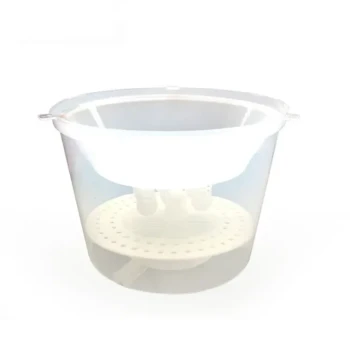
Internal Beetle Traps function by weaponizing the pest's own survival instincts. These devices create artificial "safe harbors"—specifically dark crevices—that mimic the hiding spots Small Hive Beetles (SHB) instinctively seek when fleeing aggressive honeybees. Once the beetles enter these narrow spaces to escape, they encounter physical killing media that traps and eliminates them, reducing the colony's pest load without introducing chemical agents.
The core principle of structural design in these traps is to offer a decoy refuge that capitalizes on the beetle's need to hide. By placing these mechanical devices between frames or on bottom boards, apiarists can maintain continuous physical control over pest populations while preserving the chemical purity of the hive.
The Mechanics of Physical Entrapment
Exploiting Behavioral Vulnerabilities
Small Hive Beetles possess a natural instinct to seek out dark crevices to avoid detection and attack by worker bees. Internal traps are structurally designed to replicate these exact conditions. By offering a precise gap that looks like a safe haven, the trap lures the beetle away from the comb and into a confined control zone.
Strategic Placement for Maximum Effect
To be effective, these traps are positioned in areas where beetles naturally congregate or travel. Common placement locations include the spaces between frames or directly on the bottom board. This positioning ensures that when bees harass the beetles, the nearest available "hiding spot" is the trap itself.
The Killing Mechanism
Once inside the device, the beetle encounters a physical killing media. Unlike chemical baits that rely on toxicity, this media (often oil or a similar viscous substance) physically restrains and drowns the pest. This mechanical action ensures the beetle cannot return to the hive ecosystem to breed or damage the honey stores.
Complementary Structural Controls
Entrance Regulation (Piquera)
Physical control extends to the hive's exterior boundaries through hive entrance control devices. These precision inserts reduce the entrance size to a width that permits worker bees but mechanically blocks the larger adult beetles. This creates a physical checkpoint that prevents new infestations from entering the core hive area.
Minimizing Natural Safe Harbors
Effective physical control also involves removing the beetle's alternative hiding spots. High-precision industrial manufacturing of hive components reduces the presence of accidental gaps and cracks. By eliminating these structural imperfections, you force the beetles out of natural crevices and increase the likelihood they will seek refuge in your traps.
Understanding the Trade-offs
Maintenance Intensity
Unlike chemical strips which are often "set and forget," physical traps require regular inspection. If the killing media becomes saturated with dead beetles or if the bees propolize (seal) the trap openings, the device becomes ineffective.
Scope of Control
Internal traps are excellent for reducing adult beetle populations, but they do not directly kill eggs or larvae already present in the comb. They are a population management tool, not an instant sterilization method for an already overwhelmed hive.
Making the Right Choice for Your Goal
To implement an effective physical control strategy, align your tools with your specific management objectives:
- If your primary focus is Chemical-Free Production: Prioritize Internal Beetle Traps placed between frames to manage populations without risking residue in your honey or wax.
- If your primary focus is Prevention and Biosecurity: Invest in precision-milled hive components and entrance reducers to physically block beetles and minimize breeding sites.
- If your primary focus is Regional Monitoring: Utilize contact traps as passive indicators to confirm if SHB has spread to a new apiary location.
By integrating structural traps that leverage beetle behavior, you secure your hives using biological principles and physics rather than chemistry.
Summary Table:
| Feature | Mechanism of Action | Primary Benefit |
|---|---|---|
| Decoy Crevices | Mimics natural hiding spots to lure beetles away from combs. | Behavioral exploitation |
| Oil/Viscous Media | Physically drowns and restrains beetles entering the trap. | Chemical-free elimination |
| Strategic Placement | Positioned between frames or on bottom boards where pests travel. | High encounter rates |
| Precision Milling | Reduces accidental gaps in hive components using industrial manufacturing. | Eliminates natural refuges |
| Entrance Controls | Mechanically blocks adult beetles while allowing bee passage. | Proactive infestation prevention |
Secure Your Apiary with HONESTBEE Professional Solutions
Protect your colony's health and maintain the chemical purity of your honey with high-precision physical control tools. HONESTBEE specializes in supporting commercial apiaries and distributors with a comprehensive wholesale range of beekeeping equipment. From precision-milled hive components that eliminate natural pest harbors to advanced specialized hardware and honey-processing machinery, we provide the industrial-grade tools you need to scale your operations.
Ready to upgrade your pest management strategy? Contact us today to explore our wholesale catalog and expert equipment solutions
References
- Peter Neumann, Patti J. Elzen. The biology of the small hive beetle (<i>Aethina tumida</i>, Coleoptera: Nitidulidae): Gaps in our knowledge of an invasive species. DOI: 10.1051/apido:2004010
This article is also based on technical information from HonestBee Knowledge Base .
Related Products
- Removable Washable Hive Beetle Trap Attractants for Small Hive Beetles
- Reusable Aluminium Beetle Trap for Small Hive Beetles Silver Bullet
- Black Plastic Beetle Barn Hive Beetle Trap for Beehives
- Reusable Clear Small Hive Beetle Traps for Beehives Beetle Trapping Tools
- Plastic Beetle Blaster Trap Beekeeping Tools and Supplies
People Also Ask
- How should powdered substances be used in beetle traps for hive beetle control? Expert Guide for Maximum Colony Protection
- What are the three main types of hive beetle traps? Expert Solutions for Protecting Your Bee Colonies
- What are the types of hive beetle traps available? Master Your Beetle Control Strategy
- What are the main types of hive beetle traps available? A Beekeeper's Guide to Effective Control
- What are the available chemical-free options for trapping hive beetles? Safe and Effective Pest Management Solutions