While a honey refractometer is not strictly mandatory for hobbyist beekeepers, it is a highly recommended, low-cost investment. Although traditional visual cues can help determine harvest timing, a refractometer removes the guesswork, providing the precision needed to ensure your honey cures properly and stores safely.
While visual indicators like capped honeycomb are useful, they are not infallible. A refractometer provides the objective moisture data required to prevent fermentation, effectively acting as an affordable insurance policy for your harvest.
Why Visual Cues Are Insufficient
Relying solely on visual inspection is a common practice, but it lacks scientific precision. Understanding why bees behave the way they do reveals why a measurement tool is superior to a simple glance.
The Myth of the Capped Cell
Beekeepers are often taught to wait for the colony to cap the honeycomb cells before harvesting. This is generally a good indicator that the honey is dehydrated and ready.
However, bees do not always cap the honey, even when it is fully cured.
Why Cells Remain Uncapped
The primary reference notes that bees may leave cells uncapped for specific biological reasons. They may intend to use that honey immediately as a food source, or the colony may simply have a limited wax supply.
In these scenarios, the honey inside the uncapped frame might be perfectly ready for harvest. Without a refractometer, you might skip a harvestable frame or, conversely, harvest wet nectar that spoils.
The Impact of Moisture on Quality
The core purpose of the refractometer is to measure water content. This metric is the single most important factor in the shelf stability of your product.
Preventing Fermentation
If you harvest honey with high water content, it is significantly more likely to ferment. Fermentation leads to spoiled honey that can sour and become inedible, wasting the effort of both the beekeeper and the bees.
Understanding Crystallization
Conversely, a low water reading suggests the honey will store well without spoiling. However, very low moisture content makes the honey more likely to crystallize. While crystallization affects texture, it does not spoil the honey, making lower moisture the safer target for storage.
Selecting the Right Tool
Not all refractometers are suitable for the apiary. Understanding the difference between available models saves time and money.
Suitable Models for Beekeepers
Analog and digital models are the most practical choices for hobbyists.
- Analog: You place a sample on a prism and hold the device up to a light source to read the scale.
- Digital: These use an internal light source to automatically calculate and display the moisture content.
Models to Avoid
Inline and laboratory refractometers are generally unnecessary for beekeeping. They are designed for complex industrial processes and are far too expensive and cumbersome for standard field use.
Understanding the Trade-offs
While the tool is valuable, it is important to understand its role objectively.
Commercial vs. Hobbyist Standards
For commercial apiaries, a refractometer is not optional; it is a necessary tool to meet strict industry standards for sale. For hobbyists, it is technically optional, but foregoing it increases the risk of product loss.
The Cost of Precision
The primary argument against buying one is cost, yet most models for beekeepers are low-cost tools. The "trade-off" is essentially a small financial output versus the high risk of losing jars of honey to fermentation later.
Making the Right Choice for Your Goal
Deciding whether to purchase this tool depends on what you intend to do with your harvest.
- If your primary focus is long-term storage or gifting: You should invest in a refractometer to ensure the water content is low enough to prevent fermentation in the jar.
- If your primary focus is immediate personal consumption: You may be able to rely on visual capping cues, as long as you consume the honey before spoilage can occur.
- If your primary focus is maximizing harvest yield: Use a refractometer to confirm if uncapped frames are dry enough to harvest, rather than leaving them in the hive unnecessarily.
Ultimately, accuracy is the key to quality; a simple measurement today guarantees a fresh, stable product tomorrow.
Summary Table:
| Feature | Visual Cues (Capping) | Honey Refractometer |
|---|---|---|
| Accuracy | Subjective / Estimated | Objective / Precise |
| Risk Level | High (Risk of Fermentation) | Low (Scientific Validation) |
| Determines | Readiness based on wax | Exact Water Content (%) |
| Efficiency | May skip harvestable frames | Maximizes total harvest yield |
| Cost | Free | Low-cost investment |
Elevate Your Honey Quality with HONESTBEE
Precision is the difference between a spoiled harvest and a premium product. HONESTBEE empowers commercial apiaries and distributors with high-performance beekeeping tools and machinery. From precise honey refractometers to advanced honey-filling machines and specialized hardware, we provide the full spectrum of equipment needed to scale your operations.
Whether you are stocking your retail shelves or upgrading your processing line, our comprehensive wholesale offerings ensure you deliver only the best to your customers. Partner with the industry experts today.
Contact HONESTBEE for Wholesale Solutions
Related Products
- Digital Honey Refractometer for Precision Measurement of Optimal Honey Quality
- Precision Honey Refractometer Instrument for Quality Assessment
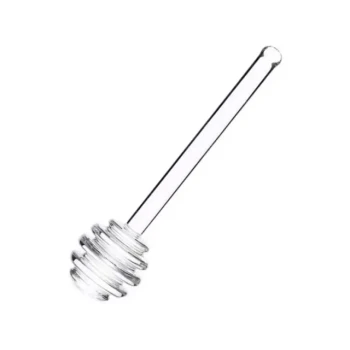
- Premium Heat-Resistant Glass Honey Dipper
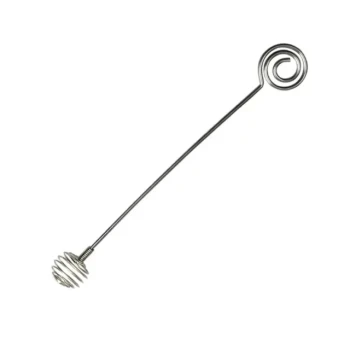
- Modern Stainless Steel Honey Dipper Stirrer
- Heavy Duty 304 Stainless Steel Honey Dipper
People Also Ask
- What role do high-precision refractometers play in determining the maturity and quality of honey? Ensure Honey Purity.
- Do the color and viscosity of honey affect its refractometer reading? Mastering Moisture Measurement Accuracy
- Why is a honey refractometer considered essential for commercial beekeepers? Ensure Honey Quality and Profitability
- How do refractometers ensure technical precision when measuring honey moisture? Secure Quality and Prevent Fermentation
- What is a honey refractometer? The Essential Tool for Perfect Honey Quality