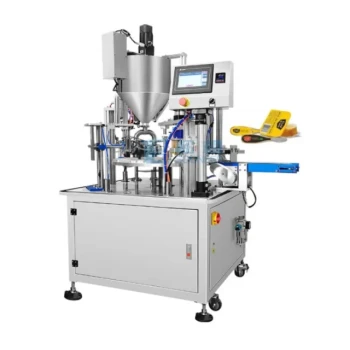
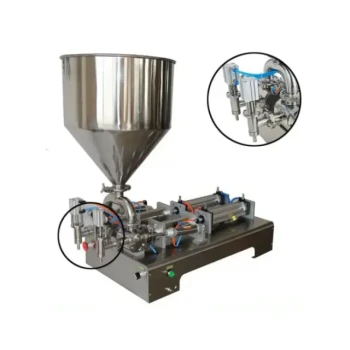
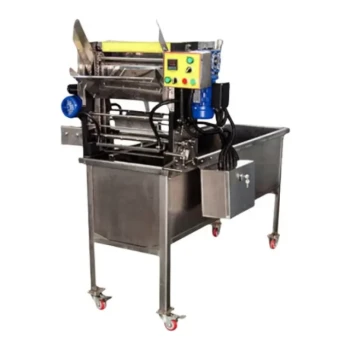
Industrial semi-automatic filling machines fundamentally transform honey packaging by replacing variable manual estimates with precise quantitative control. They offer three distinct advantages: guaranteed weight consistency via volumetric systems, a closed architecture that eliminates secondary contamination, and the significant throughput necessary to scale from bulk processing to commercial retail distribution.
Core Takeaway The shift to semi-automatic machinery is not just about speed; it is a requirement for commercial viability. By isolating the product in a closed system and enforcing strict weight standards, these machines bridge the gap between artisanal beekeeping and the stringent compliance demands of large-scale retail supply chains.
Achieving Commercial-Grade Consistency
The End of Variance
Manual filling inherently relies on visual estimation, leading to inconsistent net weights. This results in either product giveaway (financial loss) or underfilled bottles (regulatory non-compliance).
Precision Quantitative Control
Industrial machines utilize quantitative control systems and high-precision volumetric filling. This ensures that every container meets exact net weight specifications, a critical factor for maintaining brand reputation and meeting consumer protection standards.
Vacuum Anti-Drip Technology
To further enhance precision, these machines often incorporate vacuum anti-drip systems. This specific feature prevents the mess and waste common in manual transfers, ensuring the final package is clean and professional immediately upon filling.
Hygiene and Shelf-Life Preservation
Closed-Piping Architecture
The most critical technical advantage is the closed-piping architecture. Unlike manual ladling or pouring, which exposes honey to the open air, these machines operate in a sealed environment that effectively isolates the product from external pollution.
Preventing Secondary Contamination
Manual operations introduce a high risk of "secondary contamination"—pollutants introduced during the transfer from tank to bottle. Automated workflows maintain high hygiene standards by removing human contact from the liquid transfer process.
Controlling Moisture and Fermentation
Honey is hygroscopic, meaning it absorbs moisture from the air. A sealed piping system minimizes contact time between the honey and the environment.
The 20% Moisture Threshold
By strictly limiting exposure, these machines help keep honey moisture content below the critical 20 percent threshold. This inhibits yeast reproduction, effectively preventing fermentation and spoilage, which significantly extends the commercial shelf life of the product.
Operational Efficiency and Scaling
From Bulk to Retail
Scaling from bulk raw goods to branded retail products requires a shift in infrastructure. Semi-automatic machines improve production throughput, allowing producers to meet the volume demands of supermarkets and distribution chains.
Reducing Labor Constraints
Manual filling is labor-intensive and creates a bottleneck as production grows. High-efficiency automated workflows significantly reduce the time required to transfer honey from large storage tanks to packaging, lowering labor costs and freeing up personnel for other tasks.
Understanding the Operational Shift
The Necessity of Standardization
Adopting this technology implies a commitment to standardization. While manual methods allow for ad-hoc adjustments, industrial machines are designed for consistent, repeated workflows.
Meeting Compliance Demands
For producers aiming for large-scale distribution, this is not optional. The "professional industrial presentation" and strict weight consistency ensured by these machines are prerequisites for entering strict compliance environments like supermarket supply chains.
Making the Right Choice for Your Goal
To decide if this technology aligns with your current operation, consider your primary business objective:
- If your primary focus is Commercial Scaling: You require these machines to achieve the high-speed throughput and standardized presentation necessary for supermarket and retail supply chains.
- If your primary focus is Product Quality & Shelf Life: You need the closed-piping architecture to prevent moisture absorption and fermentation, ensuring your product remains stable below 20% moisture content.
- If your primary focus is Cost Control: You will benefit from the high-precision volumetric filling that eliminates physical product loss (overfilling) and reduces labor hours per unit.
Investing in semi-automatic filling is the definitive step that transitions a honey operation from a production activity into a scalable, professional manufacturing process.
Summary Table:
| Feature | Manual Filling | Semi-Automatic Filling |
|---|---|---|
| Accuracy | Visual estimation (high variance) | High-precision volumetric control |
| Hygiene | Open-air exposure (contamination risk) | Closed-piping architecture (sealed) |
| Moisture Control | High risk of absorption/fermentation | Minimal exposure (below 20% threshold) |
| Efficiency | Labor-intensive bottleneck | High throughput for commercial scaling |
| Product Loss | Common overfilling & dripping | Vacuum anti-drip technology |
| Compliance | Difficult to meet retail standards | Professional-grade standardization |
Transform Your Honey Production with HONESTBEE
Ready to scale from artisanal production to a professional manufacturing powerhouse? HONESTBEE is the premier partner for commercial apiaries and distributors, offering a comprehensive wholesale range of industrial honey-filling machines, hive-making equipment, and essential beekeeping consumables.
Our specialized machinery ensures your product meets strict retail compliance, maintains superior hygiene, and eliminates costly product waste. Contact HONESTBEE today to discover how our equipment and global supply expertise can optimize your efficiency and secure your place in the competitive retail market.
References
- K. Beula, A Anandhy. Beekeeping for Women Empowerment in India: An Overview. DOI: 10.5281/zenodo.3549312
This article is also based on technical information from HonestBee Knowledge Base .
Related Products
- Semi Automatic Small Honey Bottle Filling Machine Honey Filler
- Precision Durable Efficient HONESTBEE Rotary Honey Filling Machine
- Automatic Honey Filling and Filtering Machine for Beekeeping Bottle Filling
- Precision Automated Packaging Turntable Honey Spoon Filling Sealing Packing Machine
- Fully Automatic Honey Filling Packaging Machine for Processing Line
People Also Ask
- What is a semi-automatic honey filler? Scale Your Honey Production with Precision and Efficiency
- What are the application advantages of honey filling machines? Elevate Precision and Hygiene in Your Production Chain
- How does a honey filling machine benefit small-scale honey processing businesses? Boost Efficiency & Brand Quality
- Why are high-precision honey filling machines and labeling equipment necessary for the commercialization of stingless bee honey?
- What types of filling mechanisms are used in honey filling machines? Find the Best Tech for Your Viscosity