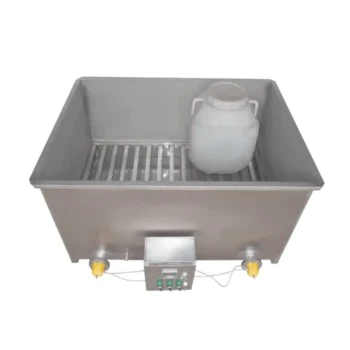
To handle medicinal-grade honey effectively, industrial filling machinery requires precise temperature compensation systems and specialized anti-stringing cutting mechanisms. These features allow the equipment to manage the product's unique viscoelasticity for high-speed processing without degrading its heat-sensitive antioxidant components or compromising dosage accuracy.
Core Takeaway The engineering challenge lies in balancing flow dynamics with biological preservation. The machinery must lower viscosity enough to fill containers efficiently while strictly maintaining a "low-temperature, short-time" thermal profile to prevent enzyme inactivation and the formation of Hydroxymethylfurfural (HMF).
Managing Viscosity and Rheology
Medicinal honey acts as a viscoelastic fluid—it resists flow and tends to string. Machinery must overcome these physical barriers without damaging the product.
Precise Temperature Compensation
The primary mechanism for managing honey's thickness is heat, but medicinal honey is highly sensitive. Filling machines must feature temperature compensation systems that adjust viscosity for flow while adhering to strict thermal limits.
The "Low-Temperature, Short-Time" Standard
To maintain medicinal grade, the heating process must be strictly controlled. Systems should prevent the honey from exceeding 65°C, as temperatures above this threshold can reduce the diastase value below international standards (8 units).
Anti-Stringing Cutting Mechanisms
Because honey is sticky and cohesive, it tends to "string" or drip between fills. Machines require efficient cutting mechanisms at the nozzle. This prevents material leakage and ensures clean, high-precision quantitative packaging.
Preserving Bioactivity and Chemical Stability
Beyond simple flow, the machinery must protect the complex chemical structure of the honey, including minerals, reducing sugars, and enzymes.
Pressure and Speed Regulation
Automated equipment must precisely control filling pressure and speed. This regulation is critical to minimize air bubbles, which can accelerate oxidation and degrade the honey's chemical stability during storage.
Sterile, Closed-Loop Systems
To prevent secondary contamination, machines often utilize high-precision piston or peristaltic pumps within sterile environments. This setup minimizes the honey's exposure to the manufacturing environment.
Moisture and Oxidation Control
Industrial fillers must limit the honey's contact with ambient air. This prevents the absorption of moisture (which can lead to fermentation) and inhibits oxidation, ensuring the final product retains the physicochemical indicators of the raw material.
Understanding the Trade-offs
When selecting machinery for medicinal honey, you must navigate specific operational risks.
Thermal Efficiency vs. Enzyme Integrity
Heating honey speeds up the filling line significantly. However, localized overheating is a common pitfall. Even brief spikes in temperature to improve speed can inactivate beneficial enzymes and spike HMF levels, rendering the honey non-compliant for medical use.
Speed vs. Aeration
High-speed filling increases the risk of turbulence and bubble formation. While faster production is desirable, it often requires a trade-off in pressure control. Excessive speed can introduce air that destabilizes the honey's antioxidant activity over time.
Making the Right Choice for Your Goal
The specific configuration of your machinery should depend on your final product requirements.
- If your primary focus is preserving bioactivity: Prioritize equipment with "low-temperature, short-time" control systems and closed-loop pressure regulation to prevent oxidation and heat stress.
- If your primary focus is patient compliance and dosage: Ensure the machine features high-precision piston pumps and anti-stringing mechanisms to guarantee exact standardized quantities in sachets or squeeze bottles.
Success in medicinal honey production relies on machinery that treats the product not just as a fluid, but as a biologically active compound.
Summary Table:
| Feature Required | Technical Purpose | Benefit for Medicinal Honey |
|---|---|---|
| Temperature Compensation | Maintains viscosity without overheating | Protects enzymes and prevents HMF formation |
| Anti-Stringing Nozzles | Clean cutting of viscous fluid | Ensures dosage accuracy and prevents leakage |
| Pressure & Speed Control | Minimizes turbulence and aeration | Inhibits oxidation and maintains chemical stability |
| Closed-Loop Systems | Sterile filling environment | Prevents fermentation and secondary contamination |
| High-Precision Pumps | Piston or peristaltic regulation | Guarantees standardized medicinal quantities |
Elevate Your Medicinal Honey Production with HONESTBEE
Processing medicinal-grade honey requires a delicate balance between industrial efficiency and biological preservation. At HONESTBEE, we specialize in providing commercial apiaries and distributors with advanced honey-filling machines and specialized hardware designed to meet the highest industry standards.
Whether you need precision machinery to maintain enzyme integrity or high-speed equipment for large-scale distribution, our comprehensive wholesale offering has you covered. From specialized hive-making tools to sophisticated honey-themed cultural merchandise, we empower your business to deliver premium quality every time.
Ready to optimize your facility? Contact HONESTBEE today to discover how our professional beekeeping equipment and industrial machinery can drive your success.
References
- Alessandra Durazzo, Luigi Lucini. Antioxidant Properties of Bee Products Derived from Medicinal Plants as Beekeeping Sources. DOI: 10.3390/agriculture11111136
This article is also based on technical information from HonestBee Knowledge Base .
Related Products
- Precision Durable Efficient HONESTBEE Rotary Honey Filling Machine
- Fully Automatic Honey Filling Packaging Machine for Processing Line
- Automatic Honey Filling and Filtering Machine for Beekeeping Bottle Filling
- Commercial Rotary Honey Filling Machine for Production
- Manual Honey Filling Machine Bottling Machine for Honey
People Also Ask
- How do honey filling machines work? Achieve Precision & Speed for Your Apiary
- What are the common types of bottling machines used for honey? Choosing the Right Solution for Your Apiary
- What is a key feature of the new generation of the honey filling machine? The Advanced Electronic Control Unit
- How do honey filling and processing machines aid native bee product conservation? Boost Value with HONESTBEE Technology
- How do high-precision honey filling machines ensure quality? Optimize Your Commercial Production with HONESTBEE