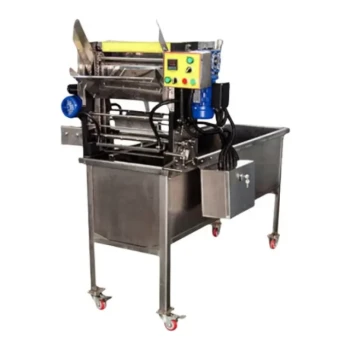
Automated honey filling machines ensure product quality primarily through precise mechanical control and rigorous hygiene standards. By utilizing advanced liquid level monitoring and anti-drip designs, these systems eliminate the variability of manual packaging to deliver a standardized, safe, and commercially viable product.
The Core Insight While increased speed is an obvious benefit, the deeper value of automation lies in standardization and biological safety. These machines transform honey from a raw agricultural variable into a consistent retail product by strictly controlling weight, eliminating human contact, and preserving the honey’s chemical integrity.
The Pillars of Automated Quality Control
Eliminating Microbial Contamination
The most critical function of an automated filler is the separation of the human operator from the product. Manual bottling introduces significant risks of bacterial and foreign particle contamination.
Automated systems employ a closed filling process. This significantly reduces the risk of microbial contamination, ensuring the product remains hygienic from the tank to the sealed jar.
Precision and Net Weight Uniformity
In commercial distribution, consistency is a legal and economic necessity. Manual filling often results in overfilled jars (giving away product) or underfilled jars (violating consumer protection laws).
Automated machines utilize liquid level controls and high-precision sensors. These ensure uniform net weight across every batch, meeting strict commercial circulation standards and preventing raw material loss.
Maintaining Packaging Hygiene
Sticky residue on the outside of a jar or bottle neck is a major quality defect in retail environments. It attracts dust and pests while degrading the brand's perceived professionalism.
These machines feature specialized anti-drip designs and no-drip nozzles. This technology ensures a clean cutoff after every fill, maintaining a pristine bottle neck and guaranteeing an airtight seal during the capping process.
Preserving Honey Integrity
Controlling Air and Moisture Exposure
Honey is hygroscopic, meaning it absorbs moisture from the air, which can lead to fermentation.
Automation minimizes the honey's exposure time to the environment. By using hermetic sealing technologies and minimizing air contact, the machinery prevents secondary contamination and moisture absorption, directly extending the product's shelf life.
Protecting Sensory and Chemical Properties
Different honey varieties, from fluid blossom to thick chestnut, require specific handling to maintain their quality.
High-standard machinery can allow for constant temperature filling tailored to viscosity. This preserves the natural volatile components, enzymes, color, and crystallinity of the honey, ensuring the consumer receives a product consistent with what was harvested at the apiary.
Understanding the Trade-offs
While automation solves many quality issues, it introduces new operational complexities.
Calibration Requirements: Machines must be rigorously calibrated for specific viscosities. If you switch from a run of liquid acacia honey to a crystallized creamed honey without adjusting the sensors or pneumatic controls, accuracy will drift.
Maintenance Dependencies: The hygiene of the machine itself is paramount. If the aseptic filling lines and nozzles are not cleaned according to strict protocols, the machine becomes a central point of contamination rather than a preventer of it.
Making the Right Choice for Your Goal
To select the right automation level, you must align the technology with your specific distribution targets.
- If your primary focus is Supermarket Retail: Prioritize machines with certified weighing systems and anti-drip nozzles to ensure strict compliance with labeling laws and pristine shelf appearance.
- If your primary focus is Shelf-Life Stability: Look for equipment emphasizing closed-loop systems and hermetic sealing to minimize moisture absorption and fermentation risks.
- If your primary focus is Operational Efficiency: Focus on systems offering rapid pneumatic controls, which maximize throughput while maintaining the economic sustainability of large-scale production.
Automation is the bridge that allows a natural, raw product to meet the rigorous demands of the modern supply chain without compromising its character.
Summary Table:
| Quality Pillar | Core Technology | Benefit for Commercial Distribution |
|---|---|---|
| Hygiene & Safety | Closed Filling & No-Contact Design | Eliminates microbial contamination and human-introduced risks. |
| Precision | Liquid Level Sensors & Weighing Systems | Guarantees uniform net weight and prevents product giveaway. |
| Packaging Integrity | Anti-Drip Nozzles | Ensures clean bottle necks for airtight seals and better shelf appeal. |
| Shelf-Life | Hermetic Sealing & Moisture Control | Prevents fermentation by minimizing air exposure and hygroscopic absorption. |
| Sensory Preservation | Constant Temperature Controls | Maintains honey enzymes, color, and natural chemical properties. |
Scale Your Apiary Operations with HONESTBEE
Transitioning from raw harvest to a retail-ready product requires precision and reliability. HONESTBEE specializes in empowering commercial apiaries and distributors with high-performance beekeeping tools and industrial machinery.
Our comprehensive wholesale range includes:
- Advanced Honey-Filling & Hive-Making Machines: Engineered for standardization and biological safety.
- Industrial Equipment: Designed to handle the rigors of large-scale honey processing.
- Full-Spectrum Consumables: Everything your operation needs for daily maintenance and cultural merchandise.
Whether you are looking to improve your packaging hygiene or expand your distribution network, we provide the hardware and expertise to help your brand thrive.
Ready to elevate your production standards? Contact HONESTBEE today to discuss our wholesale machinery solutions!
References
- Joan Casanelles‐Abella, Marco Moretti. Author Correction: Challenging the sustainability of urban beekeeping using evidence from Swiss cities. DOI: 10.1038/s42949-022-00059-9
This article is also based on technical information from HonestBee Knowledge Base .
Related Products
- Fully Automatic Honey Filling Packaging Machine for Processing Line
- Automatic Honey Filling and Filtering Machine for Beekeeping Bottle Filling
- Precision Durable Efficient HONESTBEE Rotary Honey Filling Machine
- Precision Automated Packaging Turntable Honey Spoon Filling Sealing Packing Machine
- Semi Automatic Small Honey Bottle Filling Machine Honey Filler
People Also Ask
- Why are fully automatic honey filling and packaging lines essential? Boost Your Honey's Market Value and Quality
- What is a fully-automatic honey filler? Streamline Your Production with High-Precision Automation
- How do automated honey filling and packaging machines affect profitability? Boost Margins with HONESTBEE Technology
- How do automated honey filling and packaging machines contribute to the market value of honey products? Maximize Your ROI
- How do industrial-grade automated honey filling and packaging machines mitigate the risk of physical contamination?