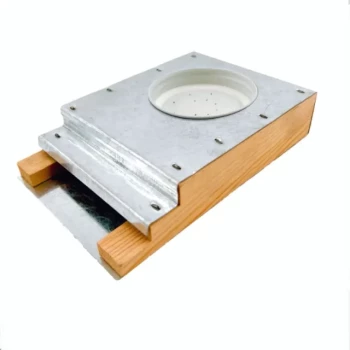
Internal hive-top feeders are high-capacity reservoirs placed directly on top of the brood boxes, beneath the outer hive cover. They are primarily chosen for their ability to hold large quantities of syrup and the ease with which they can be refilled without disturbing the colony, though these benefits are counterbalanced by significant weight issues and a tendency to trap bees.
While hive-top feeders offer superior convenience by reducing refill frequency and utilizing hive warmth, they introduce serious maintenance challenges. The risk of drowning bees and the physical difficulty of moving heavy, liquid-filled trays make them a tool that requires careful handling.
The Operational Advantages
High Volume Capacity
The most significant benefit of an internal hive-top feeder is its large storage capacity.
Because they hold a substantial amount of syrup, they reduce the frequency of required visits to the apiary. This makes them ideal for beekeepers who cannot check their hives daily during heavy feeding periods.
Minimal Colony Disturbance
Refilling these feeders is notably non-intrusive.
You simply remove the outer hive cover to access the reservoir. This allows you to replenish feed without opening the brood nest or disrupting the colony's internal temperature and organization.
Thermal Efficiency
Because the feeder is situated directly above the cluster, heat rising from the brood nest warms the syrup.
This allows bees to access the feed even when outside temperatures drop, a distinct advantage over external feeders that may become too cold for bees to utilize.
Understanding the Trade-offs
The Drowning Hazard
Despite manufacturer claims, bee mortality is a persistent issue with these feeders.
While many designs incorporate floats, ladders, or roughened surfaces, bees frequently bypass these safeguards. It is common to find drowned bees inside the reservoir, which depletes the colony workforce.
Mobility and Handling Issues
Once filled, these feeders become extremely heavy and unstable.
If you need to move the feeder or inspect the boxes underneath, the syrup can easily slosh out. This not only creates a sticky mess but can also trigger robbing behavior from other hives attracted to the spilled sugar.
Sanitation and Spoilage
Without careful maintenance, the interior can become a breeding ground for mold.
If a mold inhibitor is not used, a paste consisting of syrup, mold, and dead bees can form inside the feeder. This creates an unhygienic environment that requires difficult cleaning to rectify.
Making the Right Choice for Your Goal
To decide if a hive-top feeder aligns with your management style, consider your specific constraints:
- If your primary focus is time management: The large capacity and infrequent refill schedule make this an excellent choice for maximizing efficiency.
- If your primary focus is ease of inspection: Be aware that you must empty or carefully lift a heavy, liquid-filled tray to access the frames below, which may complicate routine checks.
- If your primary focus is colony hygiene: You must be prepared to regularly clean the unit and use additives to prevent the buildup of mold and dead bees.
Select this feeder if you value volume and thermal efficiency over the agility of lighter, smaller feeding methods.
Summary Table:
| Feature | Advantages | Disadvantages |
|---|---|---|
| Capacity | Large volume; reduces refill frequency | Extremely heavy and unstable when full |
| Colony Impact | Minimal disturbance; heat stays in hive | Risk of bee drowning and mortality |
| Maintenance | Easy to refill from the top | Prone to mold and difficult to clean |
| Efficiency | Thermal efficiency; bees feed in cold | Can trigger robbing if syrup spills |
Scale Your Beekeeping Operation with HONESTBEE
Are you looking to optimize your apiary’s efficiency? At HONESTBEE, we specialize in supporting commercial apiaries and distributors with high-quality, high-capacity beekeeping solutions. From specialized hive-making and honey-filling machinery to a full spectrum of durable beekeeping tools and essential consumables, we provide everything you need to manage your colonies effectively.
Why partner with HONESTBEE?
- Comprehensive Wholesale Range: Access all your equipment from a single, reliable source.
- Industrial Strength: Our machinery is designed for the rigors of commercial honey production.
- Expert Support: We understand the needs of large-scale beekeepers and distributors.
Enhance your productivity and safeguard your colonies today. Contact us now to explore our wholesale catalog!
Related Products
- Professional In-Hive Bee Feeder HONESTBEE Frame for Beekeeping
- HONESTBEE Professional Hive Top Bee Feeder Feeding Solution
- Professional Hive Top Bee Feeder for Beekeeping
- HONESTBEE Round Hive Top Bee Feeder for Syrup
- 3.5L Plastic Beehive Frame Feeder Deep Frame Water Feeder for In Hive Use
People Also Ask
- When should beekeepers stop feeding their bees? Let Your Bees Tell You
- Why is the use of a beekeeping feeder for syrup supplementation important? Boost Colony Growth and Survival
- What are the common types of internal and external feeders used in beekeeping? Choose the Right Feeder for Your Hive
- What is a feeder in the context of beekeeping? Optimize Your Hive Nutrition and Growth
- How do specialized feeders contribute to effective artificial feeding? Scientific Apiary Management & Colony Health