The primary advantages of marking a queen bee are to make her easier to find, confirm her identity, and track her age. This simple act transforms hive inspections from a lengthy search into a quick, data-driven assessment, allowing beekeepers to manage their colonies with far greater precision and confidence.
Marking a queen bee is not merely for convenience. It is a fundamental management practice that provides critical data on queen age and status, enabling proactive decisions about colony health, productivity, and swarm prevention.

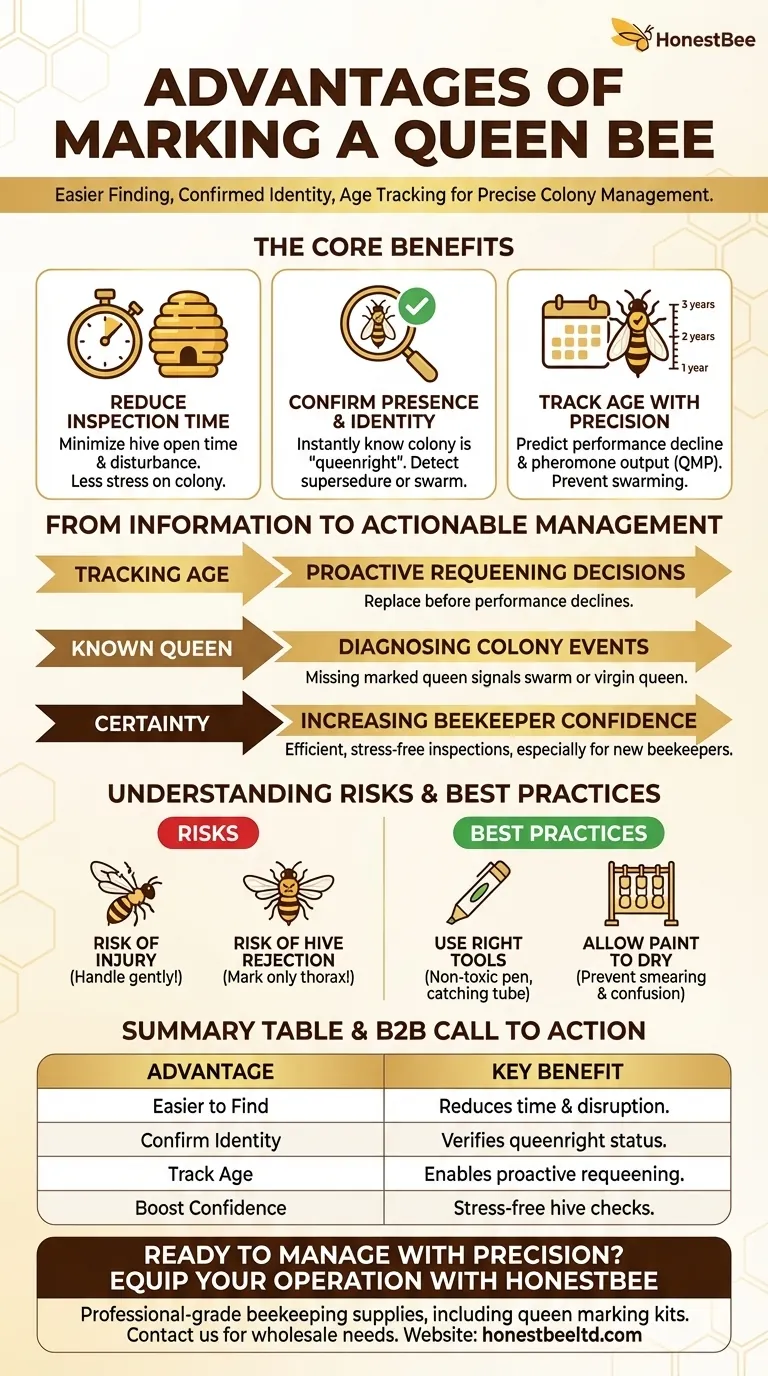
The Core Benefits of a Marked Queen
A small dot of paint on the queen's thorax provides an immediate return on investment by simplifying the most critical tasks in beekeeping. It fundamentally changes the dynamic of a hive inspection.
Drastically Reduce Inspection Time
Finding an unmarked queen in a hive of 50,000 bees can be a difficult and time-consuming task. A brightly colored mark makes her stand out immediately.
This speed is crucial because it minimizes the time the hive is open and disturbed. Less disruption means less stress on the colony, allowing them to return to their normal work of foraging and brood-rearing more quickly.
Confirm Her Presence and Identity
Seeing the marked queen gives you immediate confirmation that the colony is "queenright" and that the specific queen you introduced is still in charge.
If you inspect the hive and find an unmarked queen, you know instantly that a supersedure (the colony replaced her) or a swarm has occurred. This allows you to assess the new, unknown queen's quality without mistakenly attributing her performance to your original stock.
Track Her Age with Precision
Knowing the queen's age is one of the most powerful pieces of information a beekeeper can have. A queen's performance changes predictably as she ages.
Younger queens are more prolific egg-layers and produce more queen mandibular pheromone (QMP). This pheromone is vital for colony cohesion, morale, and suppressing the swarming impulse. As a queen ages, her laying rate and pheromone output decline, making the colony more likely to swarm and less productive.
From Information to Actionable Management
The data you gain from a marked queen directly translates into better, more proactive management decisions that prevent problems before they start.
Making Proactive Requeening Decisions
By tracking a queen's age, you can plan to replace her before her performance declines. Requeening a colony on your own schedule prevents the sudden drop in population and honey production that occurs when a colony is forced to raise an emergency queen.
Diagnosing Colony Events
If your marked queen disappears, it is a clear and unambiguous signal. This knowledge prompts you to immediately check for swarm cells or a new virgin queen, turning a potential disaster into a manageable situation.
Increasing Beekeeper Confidence
For new beekeepers, the struggle to find the queen can be a major source of anxiety. A marked queen provides immense peace of mind. The certainty of being able to find her makes inspections more efficient, educational, and enjoyable.
Understanding the Risks and Best Practices
Marking a queen is a safe procedure when done correctly, but it is not without risk. Carelessness can lead to injuring or even killing the queen, which could be catastrophic for the colony.
The Risk of Injury
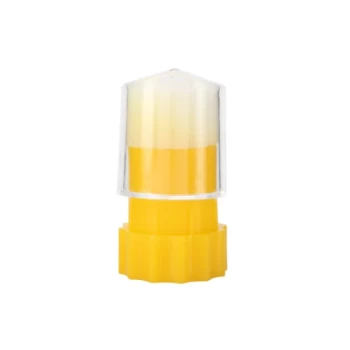
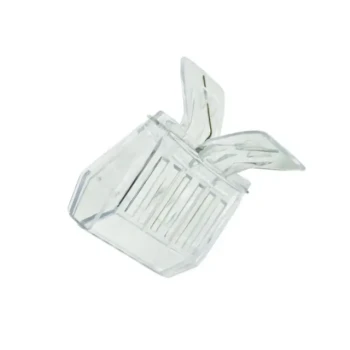
The queen is the single most important bee in the hive. It is essential to handle her gently, using a queen marking tube or cage to secure her without applying pressure. Picking her up by the wings requires a steady hand and calm demeanor.
The Risk of Hive Rejection
Proper application of the paint is critical. The mark should be a small dot on the thorax (the middle section of her body) only.
Getting paint on her antennae, eyes, wings, or joints can interfere with her senses and movement. If this happens, the other bees may perceive her as damaged and reject or kill her.
Using the Right Tools
Success requires the right equipment. You need a non-toxic, water-based queen marking pen of the correct color for the year. You also need a method to hold her still, such as a one-handed queen catcher or marking tube.
Allowing the Paint to Dry
After marking, the queen should be kept safely caged for a few minutes to allow the paint to dry completely. Releasing her with wet paint can cause it to smear onto other bees, confusing the colony and potentially leading to her rejection.
Making the Right Choice for Your Goal
Deciding to mark your queen depends on your beekeeping objectives, but the benefits are almost always worth the minimal effort.
- If your primary focus is efficiency and minimizing hive disruption: Marking is essential, as it drastically cuts down the time spent searching for the queen during inspections.
- If your primary focus is performance and swarm prevention: Marking is the only reliable way to track queen age, which is the key predictor of egg-laying rate and swarm likelihood.
- If you are a new beekeeper seeking confidence: Marking provides invaluable peace of mind and turns a stressful search into a quick confirmation, allowing you to focus on learning.
Ultimately, marking transforms the queen from a mystery into a known asset, empowering you to manage your colonies with data and precision.
Summary Table:
| Advantage | Key Benefit |
|---|---|
| Easier to Find | Drastically reduces inspection time and hive disruption. |
| Confirm Identity | Instantly verify if the colony is queenright or if supersedure/swarming occurred. |
| Track Age | Enables proactive requeening decisions based on queen performance and pheromone output. |
| Boost Confidence | Provides peace of mind, especially for new beekeepers, making hive checks efficient and stress-free. |
Ready to manage your apiary with precision and confidence?
Marking your queen bees is just the first step. Equip your operation with professional-grade tools from HONESTBEE. We supply durable, reliable beekeeping supplies and equipment—including queen marking kits, catchers, and more—designed for the demands of commercial apiaries and distributors.
Transform your hive inspections from a guessing game into a data-driven practice. Contact HONESTBEE today to discuss your wholesale needs and see how our equipment can enhance your productivity and colony health.
Visual Guide
Related Products
- Plastic Long Marker Device for Catching and Marking Bees Queen Bee Marking Tube and Cage
- Queen Bee Marking Tube Cage Bottle Catcher Holder with Clear Plastic Plunger Marker
- Plastic Queen Bee Catcher Marker Tube Holder for Queen Marking Bottle
- Queen Bee Catcher Plastic Bee Marker Bottle with Piston Marking Tube
- One Hand Yellow Queen Marking Catcher Tube Cage Beekeeper Tool Accessory for Queen Bee
People Also Ask
- Where on the queen bee's body should the mark be applied? Master the Art of Safe Queen Identification
- What are the primary objectives for marking a queen bee? Master Hive Management and Data Tracking
- Why is the physical marking of a queen bee important? Ensure Precise Colony Replacement Cycle Tracking
- How do you capture and immobilize a bee for marking? Master Safe Queen Handling for Your Apiary
- What are the different methods for applying a mark to a queen bee? Master Safe and Effective Queen Marking Techniques