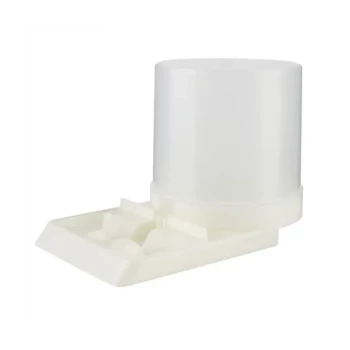
Precision-engineered polythene bags offer a sophisticated delivery system for supplementary honeybee diets by ensuring moisture retention, preventing feed leakage, and protecting nutritional integrity against external environmental stressors. By utilizing specific dimensions, such as 2 x 10 x 15 cm, beekeepers can place liquid or semi-solid diets directly adjacent to hive frames, facilitating easy consumption while minimizing interference from robbing bees.
Core Takeaway: For professional distributors and resellers, polythene bags represent a high-efficiency solution that preserves the nutritional value of bee supplements by acting as a moisture-stable, leak-proof barrier that simplifies hive management and feed monitoring.
Maximizing Nutritional Integrity and Feed Longevity
Superior Moisture Management
Polythene bags act as a high-performance physical barrier that prevents carbohydrate-protein feeds from losing moisture and hardening prematurely. Inside the high-temperature environment of a beehive, this ensures that supplements remain fresh and palatable for continuous consumption by worker bees.
Prevention of Clumping and Deterioration
The moisture-resistant properties of polyethylene isolate ingredients like sugar and yeast from external humidity, preventing clumping or nutrient degradation. This isolation is critical for avoiding resource waste and mitigating health risks to the colony caused by mold growth during periods of scarcity.
Extended Storage Stability
When paired with controlled low-temperature storage (approximately 5°C), polyethylene packaging inhibits microbial growth and protein degradation. This allows distributors to offer a stable, high-quality product that maintains its nutritional profile throughout critical feeding cycles, such as autumn preparation.
Streamlining Hive Management for Professional Operations
Precise Placement and Easy Consumption
The specific sizing of these bags allows for precise placement directly next to the beehive frames, ensuring nurse bees have immediate access. Bees can access the diet gradually by biting through the material or via pre-set perforations, which guides the feeding process in an orderly manner.
Reducing Interference and Robbing
The sealed nature of polythene delivery systems helps reduce interference from robbing bees from neighboring colonies. By containing the scent and access point of the supplemental diet, beekeepers can ensure that the intake remains accurately controlled and dedicated solely to the target hive.
Accurate Data Collection and Monitoring
For commercial operations and researchers, perforated bags allow for the precise measurement of weekly feed consumption. Residues can be easily removed and weighed at the end of a feeding period, providing the data necessary to calculate exact conversion efficiencies and colony health metrics.
Understanding Technical Trade-offs
Air Circulation and Hive Volume
While polythene bags are excellent for moisture retention, improper placement of oversized bags can potentially obstruct air circulation within the hive. It is essential to utilize standardized sizes, like the 2 x 10 x 15 cm format, to balance feed accessibility with necessary ventilation.
Material Durability and Disposal
High-quality polyethylene provides the necessary sealing properties but requires professional disposal or recycling protocols to maintain apiary hygiene. Distributors should ensure they source bags with high puncture resistance to prevent accidental leaks during transport and initial hive installation.
Temperature Sensitivity
While the bags protect the feed, the contents remain sensitive to extreme temperatures. Beekeepers must ensure that the feed inside the bags is not exposed to excessive heat before being placed in the hive, as this can still lead to some protein degradation despite the plastic barrier.
Choosing the Right Solution for Your Portfolio
As a full-spectrum provider of beekeeping supplies, selecting the correct delivery system is essential for maintaining your reputation for quality and reliability.
- If your primary focus is feed efficiency and waste reduction: Prioritize perforated polyethylene bags that offer a controlled-release system to prevent feed from drying out or being consumed too rapidly.
- If your primary focus is supply chain stability and shelf life: Invest in high-gauge polyethylene packaging that supports low-temperature storage and provides a total moisture barrier against environmental contaminants.
- If your primary focus is research-grade precision: Select bags that allow for easy residue removal and weighing, facilitating the accurate data collection required by commercial trials and professional apiaries.
Utilizing specialized polythene bags transforms supplementary feeding from a manual chore into a precise, nutrient-secure, and highly manageable professional process.
Summary Table:
| Feature | Key Benefit | Technical Advantage |
|---|---|---|
| Moisture Control | Prevents feed hardening & clumping | High-performance PE barrier |
| Design Precision | Facilitates easy consumption & placement | Standardized 2 x 10 x 15 cm size |
| Colony Security | Reduces robbing & scent leakage | Sealed, puncture-resistant material |
| Data Monitoring | Enables accurate consumption tracking | Easy residue removal & weighing |
| Storage Stability | Maintains protein & nutrient integrity | Low-temperature storage compatible |
Scale Your Apiary Supply Business with HONESTBEE
Maximize your profit margins and supply chain reliability with HONESTBEE, your premier partner for one-stop sourcing. We cater specifically to distributors, wholesalers, and commercial apiaries, offering a comprehensive full-spectrum product portfolio—from specialized hardware like honey-filling machines to high-demand consumables like precision-engineered polythene bags.
Why Partner with HONESTBEE?
- Professional Expertise: Deep industry knowledge to support your B2B growth.
- Premium Services: Dedicated OEM/ODM support and rapid response times.
- Efficient Fulfillment: Ultra-fast delivery to keep your inventory moving.
Contact our specialist team today to streamline your sourcing and enhance your product offerings!
References
- Hafiz Khurram Shurjeel, Nadia Saeed. Impact of Yeast Diet on the Number of Eggs and Larvae Produced in Honey Bee Colonies (Apis Mellifera L.) Apidae: Hymenoptera. DOI: 10.53560/ppasb(60-4)772
This article is also based on technical information from HonestBee Knowledge Base .
Related Products
- Plastic Transporting Bee Packages and Nuc Boxes for Beekeeping
- Conical Nylon Honey Strainer Filter Bag for Beekeeping and Honey Filtration
- Food Grade Plastic Honey Bucket Pail for Beekeeping
- Food Grade Plastic bee Foundation for Bee Frames
- HONESTBEE Entrance Bee Feeder Professional Hive Nutrition Solution for Beekeeping
People Also Ask
- What role do bee package boxes play in the commercial transport and expansion of honeybee colonies? - Logistic Essentials
- What are beekeeping boxes called? A Guide to Hive Bodies and Box Types
- How do standardized bee packages serve as a recovery mechanism for commercial beekeeping? Ensure Business Continuity
- What is the commercial value of using standardized bee packages? Drive Scalability in Large-Scale Apiaries
- Why is the timely introduction of high-quality bee packages critical? Save Your Apiary from Asian Hornet Invasions