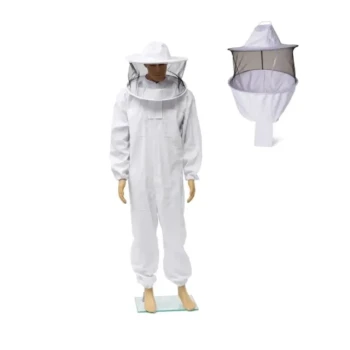
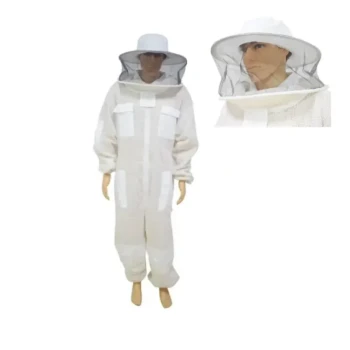
White beekeeping suits are the industry standard for two distinct functional reasons: they reflect solar radiation to assist with temperature regulation and present a neutral visual profile that keeps colonies calm. While they offer superior practicality in most environments, their primary disadvantage is susceptibility to visible staining, and they may be thermally inefficient in colder climates where heat retention is desired.
Core Takeaway The dominance of white in beekeeping gear is not a fashion choice but a safety and comfort calculation; white fabric minimizes the risk of overheating in direct sunlight and avoids triggering the innate defensive instincts bees have against dark-colored predators.
Thermal Regulation and Comfort
Reflecting Solar Radiation
Beekeeping is primarily a warm-weather activity often performed in direct sunlight. White fabric reflects sunlight, significantly reducing the amount of heat absorbed by the suit.
Preventing Overheating
Because full-body suits can suffer from low ventilation and trap body heat, the external reflection provided by white fabric is critical. It helps maintain a manageable internal temperature, preventing heat exhaustion during long inspections.
Impact on Bee Behavior
A Neutral Visual Presence
Bees have evolved to defend their hives against natural predators, many of which (like bears or badgers) have dark fur. White presents a neutral, non-threatening appearance to the colony.
Reducing Defensive Triggers
Wearing dark colors can inadvertently trigger a defensive response, causing bees to become agitated or aggressive. A white suit helps the beekeeper blend into the background of the apiary, keeping the colony calmer during manipulations.
Practical Maintenance Considerations
The Challenge of Staining
The most significant operational disadvantage of white gear is that it stains easily. Beekeeping involves propolis, pollen, grass, and dirt, all of which leave highly visible marks on white fabric.
Cleaning Protocols
To maintain a white suit, you must inspect it frequently and remove stains prior to washing. Using mild detergents and hanging the suit to dry in the shade is recommended to preserve the fabric's integrity.
Understanding the Trade-offs
Climatic Suitability
While white is ideal for summer, it is thermally inefficient in cold climates. If you manage hives in low-temperature regions, the heat-reflecting properties of white become a disadvantage; a darker suit that absorbs warmth would be functionally superior.
Availability vs. Specialization
White suits are widely available and come in various configurations. Seeking out darker suits for specific aesthetic or climatic reasons often requires finding specialized suppliers, as they are non-standard.
Making the Right Choice for Your Environment
To select the correct gear, weigh your local climate against the biological behavior of your bees.
- If your primary focus is working in hot weather: Choose a white suit to maximize heat reflection and reduce the risk of overheating.
- If your primary focus is colony temperament: Stick to white gear to ensure you do not visually trigger a defensive predator response from the bees.
- If your primary focus is cold-weather management: Consider a darker suit to utilize solar absorption for warmth, provided your bees are not overly aggressive.
Your protective gear should serve as a tool that enhances your safety through both physical barriers and biological understanding.
Summary Table:
| Feature | Advantage of White Suits | Disadvantage of White Suits |
|---|---|---|
| Thermal Control | Reflects solar radiation to prevent overheating | Inefficient at heat retention in cold climates |
| Bee Behavior | Neutral profile avoids triggering predator instincts | N/A |
| Visibility | Easy to spot the beekeeper in field conditions | Stains easily from propolis, pollen, and dirt |
| Availability | Widely available industry standard | Requires frequent cleaning to maintain appearance |
Elevate Your Beekeeping Operation with HONESTBEE
At HONESTBEE, we understand that high-quality protective gear is the foundation of a productive apiary. Whether you are a commercial beekeeper or a wholesale distributor, we provide the professional-grade tools and equipment you need to succeed.
Why partner with us?
- Comprehensive Wholesale Range: From premium white beekeeping suits and specialized hardware to advanced hive-making and honey-filling machinery.
- Industry Expertise: We supply essential consumables and unique honey-themed merchandise designed for the modern market.
- Built for Professionals: Our products are engineered for durability, safety, and efficiency in the field.
Ready to scale your business with the industry's most reliable equipment? Contact us today to explore our wholesale offerings and let us help you optimize your beekeeping performance.
Related Products
- White Cotton Beekeeping Jacket and Veil for Bee Keepers
- Professional Cotton Beekeeper Suit with Round Veil Design for Commercial Apiaries
- Premium Cotton Beekeeper Suit with Reinforced Fencing Veil
- Professional Beekeeper Suit with Square Folding Cotton Veil
- Beekeeping Jacket with Hood and Veil for Beekeepers
People Also Ask
- What are the features of an economical beekeeping jacket? Essential Protection for Budget-Conscious Beekeepers
- What are the pros of using a beekeeping jacket? Unlock Superior Comfort and Mobility for Your Apiary
- What factors should a new beekeeper consider when choosing between a jacket and a full suit? Security vs. Comfort
- What are the advantages of a beekeeping jacket? Superior Mobility & Comfort for Routine Hive Inspections
- When is a beekeeping jacket considered a more suitable choice than a full suit? Optimize Your Apiary Mobility