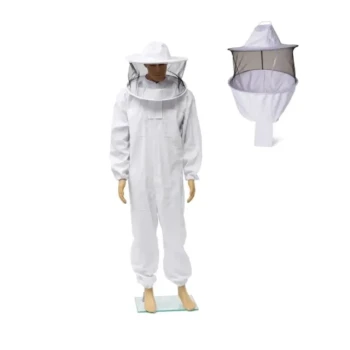
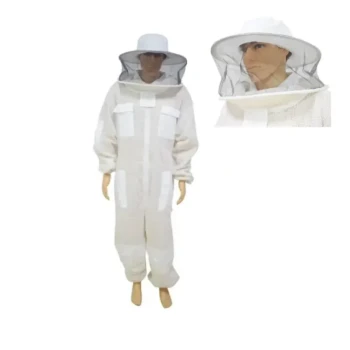
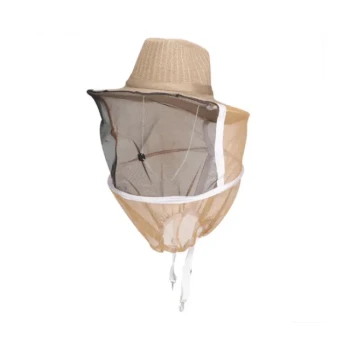
A beekeeping jacket is the most suitable option for quick hive inspections, routine maintenance tasks like feeding or equipment cleaning, and working in hot weather where preventing overheating is a priority. It is also the practical choice for beekeepers on a budget who already own thick trousers or protective lower-body gear.
While a full suit offers comprehensive armor, a jacket provides a necessary balance of protection and breathability for standard maintenance, allowing for greater mobility and comfort during shorter apiary sessions.
Optimizing for Task and Environment
Managing Heat Stress
In high temperatures, the primary danger to a beekeeper is often not stings, but heat exhaustion. Breathability is the jacket's greatest advantage.
Because it does not cover the legs, a jacket allows for better airflow and cooling compared to a full-body suit. This makes it essential for mid-summer inspections where a full suit might become unbearable.
Efficiency in Routine Maintenance
For non-invasive tasks, such as swapping feeders or cleaning outer equipment, a full suit can be cumbersome.
A jacket allows you to gear up quickly for these short-duration tasks. It provides sufficient upper-body protection without the time investment of donning a full coverall.
Cost and Resource Management
If you are working with budget constraints, a jacket is generally less expensive than a full suit.
This is a logical choice if you already possess heavy denim jeans or dedicated work trousers. You are effectively paying only for the protection you lack—the veil and upper body coverage—rather than redundant lower-body gear.
Evaluating Risk and Temperament
Experience and Comfort Levels
For many new beekeepers who do not harbor a significant fear of bees, a jacket offers an approachable entry point.
It provides a feeling of safety without the restriction of a "hazmat" style suit. However, beekeepers with high anxiety or a phobia of stings should opt for the psychological security of a full suit.
Colony Aggression
The temperament of your specific colony dictates your gear. A jacket is appropriate for docile, well-managed colonies.
If you are working with known aggressive genetics or during a dearth when bees are defensive, the exposed lower body of a jacket becomes a liability.
Understanding the Trade-offs
The Vulnerability of the Waist
The most significant mechanical weakness of a jacket is the waist seal.
Unlike a continuous full suit, a jacket relies on elastic to seal the gap between the fabric and your pants. If this rides up during bending or lifting, it creates an entry point for bees to crawl underneath.
Lower Body Exposure
A jacket leaves your legs dependent on whatever street clothes you are wearing.
Standard denim offers reasonable protection, but it is not sting-proof. If you kneel on a bee or if a colony becomes agitated near the ground, your legs remain a target.
The Limits of Protective Gear
It is critical to remember that no garment guarantees 100% immunity from stings.
Whether wearing a jacket or a full suit, safety protocols must still be followed. Relying solely on gear can lead to a false sense of security; handling technique remains your first line of defense.
Making the Right Choice for Your Apiary
The decision between a jacket and a suit ultimately comes down to the specific scenario of the day.
- If your primary focus is quick maintenance or heat management: Choose the jacket to maximize airflow and agility during routine, non-invasive tasks.
- If your primary focus is maximum security or aggressive colonies: Choose the full suit to ensure a complete seal and total body coverage, particularly for children or fearful beginners.
Select the gear that allows you to work calmly and confidently, as your composure is the most effective tool in the apiary.
Summary Table:
| Feature | Beekeeping Jacket | Full Beekeeping Suit |
|---|---|---|
| Best For | Quick inspections & routine maintenance | Deep inspections & aggressive colonies |
| Breathability | High (Excellent for hot weather) | Moderate to Low (Full body coverage) |
| Ease of Use | Fast to put on/off | More time-consuming to don |
| Protection | Upper body & head only | Comprehensive head-to-toe |
| Cost | Generally more affordable | Higher investment |
| Weak Point | Potential gap at waist seal | None (Continuous seal) |
Elevate Your Apiary Operations with HONESTBEE
At HONESTBEE, we understand that professional beekeepers and distributors need gear that balances safety with operational efficiency. Whether you are managing a commercial apiary or supplying the next generation of beekeepers, our comprehensive wholesale range has you covered.
Our Value to You:
- Full Spectrum Supply: From breathable protective jackets to heavy-duty machinery like honey-filling and hive-making machines.
- Industry Essentials: High-quality consumables and specialized beekeeping tools designed for durability.
- Global Distribution: We cater specifically to distributors and large-scale operations with competitive wholesale offerings.
Ready to upgrade your equipment or stock your inventory? Contact us today to discuss how our professional-grade beekeeping solutions can drive your success.
Related Products
- White Cotton Beekeeping Jacket and Veil for Bee Keepers
- Economy Polyester Beekeeping Jacket with Veil and Hat
- Beekeeping Jacket with Hood and Veil for Beekeepers
- Vented Beekeeping Jacket with Hood and Veil for Beekeepers
- Premium Cotton Beekeeper Suit with Reinforced Fencing Veil
People Also Ask
- What are the features of an economical beekeeping jacket? Essential Protection for Budget-Conscious Beekeepers
- What are the pros of using a beekeeping jacket? Unlock Superior Comfort and Mobility for Your Apiary
- What factors should a new beekeeper consider when choosing between a jacket and a full suit? Security vs. Comfort
- What are the advantages of a beekeeping jacket? Superior Mobility & Comfort for Routine Hive Inspections
- Why is a jacket with a hat veil recommended for beekeepers? Essential Protection for Your Face and Neck