Cross wiring is the critical reinforcement technique that secures wax foundation sheets within wooden beekeeping frames. It primarily serves to prevent the wax sheet from sagging or warping due to heat and gravity, ensuring that the bees build straight, uniform comb that remains manageable.
Core Takeaway Cross wiring acts as internal reinforcement, similar to rebar in concrete, transforming a fragile sheet of wax into a stable structure capable of withstanding the high centrifugal forces of honey extraction and the mechanical vibrations of transport.
Ensuring Structural Integrity
Withstanding Extraction Pressures
The most significant mechanical benefit of cross wiring is the added tensile strength it provides during harvest.
Honey is typically harvested using a centrifuge, which spins frames at high speeds to force the honey out. Without the internal support of cross wires, a standard wax comb is likely to blow out or collapse under this intense pressure.
Stability During Transport
Moving hives subjects the frames to vibrations and shocks.
Cross wiring anchors the comb securely to the frame, preventing the heavy, honey-filled wax from detaching or breaking loose during transit. This protects the colony from collapse and prevents the drowning of bees in loose honey.
Preventing Thermal Sagging
Beeswax becomes soft and pliable at hive temperatures, which can reach 95°F (35°C) in the brood nest.
Without horizontal or vertical wires to hold it in place, a sheet of foundation can slump or buckle under its own weight. Cross wiring keeps the sheet taut and centered regardless of the internal hive temperature.
Guiding Proper Comb Construction
Enforcing Straight Comb
Bees are naturally inclined to build comb, but they do not always build it in straight lines suitable for movable frames.
Cross wiring holds the foundation perfectly flat and straight. This acts as a definitive guide, forcing the bees to draw out the cells uniformly within the boundaries of the frame.
Ease of Management
Straight combs are essential for the "movable frame" concept to function.
When bees follow the straight guide provided by wired foundation, the resulting frames can be removed and inspected without damaging adjacent combs. This minimizes disturbance to the colony, reduces bee mortality, and lowers the risk of stings during inspections.
Understanding the Trade-offs
The Labor and Tool Requirement
Cross wiring is not a passive activity; it requires specific equipment and time.
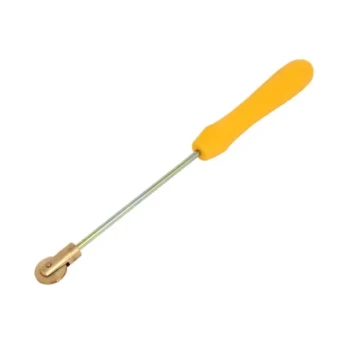
To do this correctly, you need a wiring device, eyelet punch, brass eyelets, tinned wire, and a spur embedder (or battery charger) to heat the wire. Compared to snapping in a plastic foundation, this process is significantly more labor-intensive.
Potential for Residual Toxins
While not a flaw of the wiring itself, the wax foundation you are securing may carry risks.
Some commercially available wax foundation contains residual toxins that have accumulated in the beeswax supply. These can combine with new environmental toxins brought in by foragers, potentially affecting bee cognition and colony health.
Plastic vs. Wax
Plastic frames offer an alternative that eliminates the need for cross wiring entirely.
Plastic frames are pre-molded, faster to assemble, and impervious to wax moths. However, many beekeepers prefer wired wax because it is a natural material that can be sterilized and melted down, despite the extra assembly effort required.
Making the Right Choice for Your Goal
Deciding whether to invest the time in cross wiring depends on your specific beekeeping philosophy and operational scale.
- If your primary focus is honey production: You must use cross wiring (or plastic foundation) to ensure your combs survive the centrifugal force of the extractor.
- If your primary focus is natural comb building: Cross wiring provides the necessary compromise, offering a natural wax surface while ensuring the stability required for modern frame inspection.
- If your primary focus is rapid assembly: You should consider plastic frames to avoid the labor-intensive process of embedding wires and installing eyelets.
Cross wiring is the industry standard for wax foundation because it balances natural materials with the mechanical durability required for modern beekeeping.
Summary Table:
| Benefit Category | Primary Advantage | How It Works |
|---|---|---|
| Structural Strength | Extraction Durability | Prevents comb blowout during high-speed centrifugal honey harvesting. |
| Thermal Stability | Prevents Sagging | Keeps wax taut and centered even at high hive temperatures (95°F/35°C). |
| Colony Management | Uniform Comb | Guides bees to build straight, movable combs for easier hive inspections. |
| Transport Security | Vibration Resistance | Anchors heavy honey-filled wax to prevent detachment during hive relocation. |
Maximize Your Apiary Efficiency with HONESTBEE
Building durable frames is the foundation of a productive honey harvest. At HONESTBEE, we specialize in supporting commercial apiaries and distributors with a comprehensive range of professional-grade beekeeping solutions.
Whether you need precision wire embedding tools, high-performance honey-filling machines, or bulk beekeeping consumables, our portfolio is designed to enhance your operational scale and efficiency. From specialized hive-making machinery to essential hardware, we provide the tools you need to succeed.
Ready to upgrade your wholesale supply?
Contact Us Today to discover how HONESTBEE can deliver superior value to your beekeeping business.
Related Products
- Assembled Wooden Bee Frames with Beeswax Foundation Ready to Use by HONESTBEE
- Professional Frame Preparation: The HONESTBEE Electric Wire Embedder
- HONESTBEE Wired and Assembled Wooden Bee Frames Foundation for a Thriving Hive
- Notebook Style Beeswax Foundation Mould Wax Foundation Mold
- Beeswax Foundation Sheets Beehive Foundation for Wholesale
People Also Ask
- Under what circumstances should bee frames be destroyed? Protect Your Apiary from American Foulbrood
- Do bee frames need foundation? Choose the Right Approach for Your Apiary
- How should frames be rearranged as a bee colony grows? Master Hive Expansion and Nest Management
- What types of bee frames can be cleaned and returned to service? A Guide to Safe Apiary Refurbishment
- How do you re-wax bee frames? A Simple Guide to Faster Comb Building