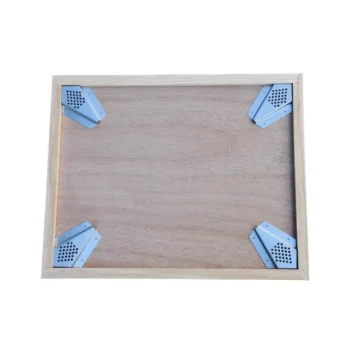
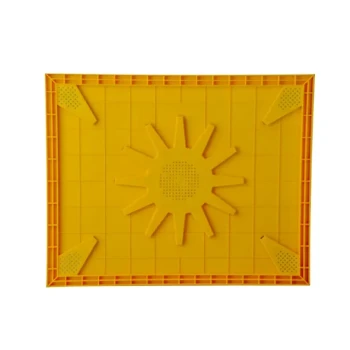
Installing ventilation accessories directly aids colony survival by maximizing airflow and facilitating the bees' natural evaporative cooling process. These tools significantly reduce the physiological stress on worker bees and physically protect the hive structure from thermal failure during periods of extreme heat.
By optimizing airflow, ventilation accessories transform hive management from a passive struggle against heat to an active support system. This lowers the energy cost of cooling for the bees, ensuring the colony remains productive and structurally sound even in peak summer temperatures.
The Mechanics of Hive Temperature Regulation
Enhancing Evaporative Cooling
Honey bees actively regulate their nest temperature, largely through evaporative cooling. Ventilation accessories, such as ventilated boards or mesh screens, significantly enhance the airflow required for this process to work efficiently.
Assisting Air Convection
High-efficiency designs, including bottom mesh screens and ventilated covers, are engineered to improve air convection. This allows hot air to escape more easily, preventing heat from becoming trapped within the hive enclosure.
Resource Allocation and Colony Productivity
Reducing Worker Bee Workload
In a standard hive, a significant portion of the colony's workforce must dedicate themselves to "fanning" wings to circulate air during heatwaves. Improved ventilation reduces the workload of these bees, as passive airflow assists their efforts.
Maintaining Foraging Activities
When fewer bees are required for temperature control, more workers are available for other tasks. This ensures the colony can maintain normal growth and foraging activities, continuing to gather resources even during the hottest seasons.
Structural Integrity and Brood Safety
Preventing Beeswax Failure
Internal hive temperatures must be managed carefully because beeswax has a melting point of 62-65°C. Enhanced ventilation prevents the internal environment from reaching these critical levels, thereby avoiding the softening, thermal deformation, or total collapse of honeycombs.
Protecting Developing Larvae
High heat is lethal to brood. By stabilizing the temperature, ventilation accessories prevent larval death due to overheating, ensuring the next generation of bees survives to maturity.
Understanding the Trade-offs
Seasonal Context is Key
While ventilation is critical during high-temperature periods, it is a tool specifically for heat management. It is important to remember that these accessories are designed to dissipate heat, not conserve it.
Balancing Airflow and Security
The goal is controlled heat dissipation. Ensure that while you are increasing airflow to prevent melting and stress, the accessories used (like mesh screens) maintain the physical security of the hive against pests.
Making the Right Choice for Your Goal
To apply this to your apiary management, consider your immediate objectives:
- If your primary focus is Colony Survival: Prioritize ventilation to keep internal temperatures below the beeswax melting point (62-65°C) to prevent catastrophic comb collapse and larval death.
- If your primary focus is Honey Production: Install ventilation to reduce the energy expenditure of worker bees, freeing them up to continue foraging rather than fanning the hive.
Properly ventilated hives allow your bees to focus their energy on productivity rather than mere survival.
Summary Table:
| Benefit Category | Key Advantage | Impact on Colony |
|---|---|---|
| Thermal Regulation | Enhances evaporative cooling & convection | Prevents internal temperatures from reaching the beeswax melting point (62-65°C). |
| Labor Efficiency | Reduces fanning workload | Frees up worker bees to maintain foraging and resource gathering rather than just cooling. |
| Brood Protection | Stabilizes internal environment | Prevents larval death due to overheating, ensuring the survival of the next generation. |
| Structural Safety | Prevents beeswax softening | Protects against thermal deformation and catastrophic honeycomb collapse. |
| Security | Managed airflow | Provides necessary ventilation while maintaining physical protection against external pests. |
Maximize Your Apiary Productivity with HONESTBEE
At HONESTBEE, we understand that for commercial apiaries and distributors, equipment reliability is the difference between a record harvest and colony loss. We provide a comprehensive wholesale range of professional beekeeping tools, from high-efficiency ventilated boards to advanced honey-filling machinery and specialized hive-making equipment.
Our industrial-grade solutions are designed to help your bees thrive in the most challenging climates, ensuring your operations remain profitable and your equipment durable. Whether you are scaling a commercial apiary or stocking a distribution network, we offer the full spectrum of essential consumables and honey-themed cultural merchandise to set you apart.
Ready to upgrade your equipment and secure your colony’s future?
Contact HONESTBEE Today for Wholesale Solutions
References
- Jamie Ellis, William H. Kern. Florida Beekeeping Management Calendar. DOI: 10.32473/edis-in848-2018
This article is also based on technical information from HonestBee Knowledge Base .
Related Products
- Australian Pine Wood Langstroth Screen Bottom Board for Wholesale
- Langstroth Screen Bottom Board for Beekeeping Wholesale
- Three-Layer Ventilated Beekeeper Suit with Structured Fencing Veil
- HONESTBEE 4-Way Metal Corner Wooden Bee Escape Board
- Stainless Steel Round Beehive Air Vents for Ventilation
People Also Ask
- How are screen bottom boards and sticky boards utilized to detect Varroa mites? Master Passive Apiary Monitoring
- What is the primary function of a screen bottom board? Achieve Accurate Varroa Mite Assessment in Your Apiary
- Why is the combination of a screen bottom board and a sticky trap board essential for monitoring Varroa mite? Guide
- What is the primary function of a standard screen bottom board when assessing honeybee grooming behavior? - Key Mite Data
- What role do screen bottom boards and monitoring inserts play in assessing Varroa mite mortality and maintaining hive hygiene in Langstroth hives?