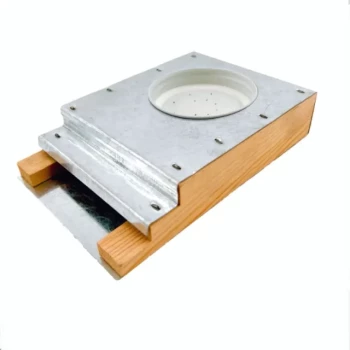
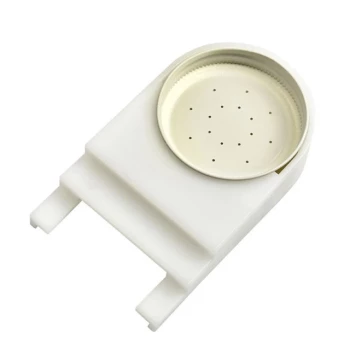
The Boardman feeder serves as a critical tool for precision apiary management, particularly in research settings involving wax production and energy conversion. Its defining technical advantage is the ability to replenish feed and monitor intake externally, eliminating the need to open the hive and disturb the colony’s internal environment.
The Boardman feeder’s primary value is the decoupling of nutrition management from hive inspection. It allows for high-precision data collection on feed consumption while maintaining the colony’s physical and thermal stability.
Operational Efficiency and Data Integrity
Preserving the Colony Environment
The most significant technical benefit of the Boardman feeder is its non-intrusive installation at the hive entrance.
Opening a hive disrupts nest activities, breaks propolis seals, and alters the internal temperature and humidity. By feeding from the exterior, technicians prevent these fluctuations, ensuring that the colony's behavior remains natural during the observation period.
Precision in Data Collection
For processes that require strict accounting of energy input versus output—such as wax production analysis—data accuracy is paramount.
The Boardman feeder enables technicians to accurately record feed consumption for individual colonies. Because the feed container is visible and accessible from the outside, operators can measure exact uptake rates without the variables introduced by internal feeder manipulation.
Understanding the Trade-offs
Vulnerability to Robbing
While the Boardman feeder excels at accessibility and measurement, it presents security challenges compared to other methods.
Supplementary data indicates that Top Feeders are specifically designed to minimize the risk of "robbing" by other colonies, a common issue when forage is scarce. Because Boardman feeders are located at the entrance, they may expose the feed scent more openly than internal top feeders, potentially attracting competitor bees or pests.
Volume and Access Limitations
Top feeders are noted for providing an efficient way to deliver large volumes of syrup or honey directly to the cluster through the inner cover.
In contrast, the Boardman feeder is generally limited by the size of the external jar. It is a tool optimized for measurement and maintenance, rather than bulk feeding or security during high-risk seasons.
Making the Right Choice for Your Goal
When designing your feeding protocol, align the equipment with your specific technical requirements:
- If your primary focus is data precision and stability: Utilize the Boardman feeder to track consumption rates and minimize variables caused by hive disruption.
- If your primary focus is volume and security: Consider a Top Feeder to maximize feed delivery while protecting the colony from robbing during resource-scarce periods.
Select the tool that prioritizes your data requirements while respecting the seasonal behavior of the apiary.
Summary Table:
| Feature | Boardman Feeder | Top Feeder |
|---|---|---|
| Installation | External (Hive Entrance) | Internal (Under Outer Cover) |
| Hive Disturbance | Zero (No need to open hive) | Moderate (Requires opening top) |
| Monitoring | Visual / Instant External View | Requires Opening Hive |
| Main Advantage | Precise Data & Stability | High Volume & Security |
| Best Use Case | Research & Intake Tracking | Bulk Feeding & Robbing Prevention |
Scale Your Apiary Operations with HONESTBEE
Are you looking to optimize your commercial honey production or expand your distribution inventory? HONESTBEE provides the industry's most comprehensive range of beekeeping solutions tailored for professional apiaries and global distributors. From precision-engineered Boardman and Top feeders to high-capacity honey-filling machines and specialized hive-making hardware, we supply the tools you need for maximum efficiency.
Partner with HONESTBEE to access:
- Premium wholesale beekeeping tools and machinery.
- Essential industry consumables in bulk.
- Expert support for commercial-scale energy and production management.
Contact us today to receive our full wholesale catalog!
References
- Marcela Pedraza Carrillo, Ricardo de Oliveira Orsi. <b>Energetic feedings influence beeswax production by <i>Apis mellifera</i> L. honeybees. DOI: 10.4025/actascianimsci.v37i1.24191
This article is also based on technical information from HonestBee Knowledge Base .
Related Products
- Boardman Entrance Bee Feeder Durable Galvanized Steel and Wood Construction for Beekeeping
- Classic Boardman Entrance Bee Feeder Hive Front Feeding Solution
- Professional Hive Front Entrance Bee Feeder
- Professional Hive Top Bee Feeder for Beekeeping
- HONESTBEE Entrance Bee Feeder Efficient Hive Front Liquid Feeding Solution for Beekeeping
People Also Ask
- What types of bee feeders are available for beginners? Start with the Simple Entrance Feeder
- How does a bee entrance feeder work? A Simple Guide to Convenient Hive Feeding
- What is a bee entrance feeder and what are its drawbacks? Essential Guide to Hive Security and Feeding Efficiency
- What are the advantages and disadvantages of using an entrance feeder for bees? Balance Convenience and Hive Security.
- How to make an entrance feeder for bees? A DIY Guide for Safe & Effective Feeding