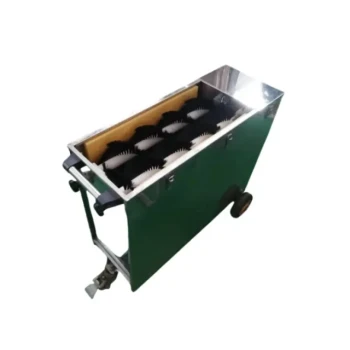
The technical operation of industrial-grade bee smokers is grounded in two specific biological disruptions: pheromone masking and the induction of a survival response. During hive shifting, these devices emit smoke to physically shield and neutralize the volatile alarm pheromones that coordinate colony defense. Simultaneously, the presence of smoke triggers a "false fire" instinct, compelling bees to gorge on honey reserves, which induces lethargy and significantly lowers aggression levels.
The primary value of the bee smoker lies in its ability to interrupt the colony's defensive communication network while simultaneously creating a physical state of docility through food consumption.
The Biological Mechanisms of Control
Pheromone Signal Masking
Honeybees rely heavily on chemical signals to communicate threats. When a hive is disturbed during loading, guard bees release alarm pheromones to signal a collective attack.
The smoke produced by an industrial smoker acts as a physical shield. It permeates the hive environment and masks these chemical markers.
By disrupting this communication channel, the colony cannot effectively organize a defensive response, ensuring the safety of the personnel handling the hives.
The Engorgement Response
Beyond communication disruption, smoke exploits the bees' evolutionary response to forest fires. Upon detecting smoke, bees instinctively prepare to abandon the hive.
To prepare for this potential migration, they consume large quantities of honey. This engorgement physically weighs the bees down and makes it difficult for them to bend their abdomens to sting.
The result is a colony that is lethargic, docile, and significantly easier to manage during the critical pre-operation phase.
Operational Requirements for Hive Shifting
Controlled Cold Smoke Generation
For professional operations, specifically in nomadic beekeeping where colonies are moved across regions, the quality of the smoke is paramount.
Industrial smokers are designed to produce "controlled cold smoke." This distinction is critical because hot smoke can singe wings and cause permanent damage to the colony.
Cool smoke effectively disrupts pheromones without adding thermal stress to an already stressful transport situation.
Stabilization for Transport
Hive shifting involves loading colonies onto specialized transport trailers. This process introduces vibrations and disturbances that naturally agitate the bees.
Applying smoke is an essential pre-operation step that stabilizes the colony before the first hive is lifted.
This ensures that once the bees reach their destination for pollination, they are healthy enough to resume activity quickly rather than recovering from defensive exhaustion.
Understanding the Trade-offs
The Risk of Over-Smoking
While smoke is a vital tool, there is a technical upper limit to its application. Excessive smoke can escalate from a calming agent to a suffocation hazard.
If the smoke density is too high inside the transport vehicle or hive, it may cause panic rather than sedation, counteracting the goal of stabilization.
Thermal Management
The operator must maintain the smoker fuel to ensure the output remains cool.
If the fuel burns too quickly or the bellows are worked too aggressively, the smoke temperature rises. This introduces a risk of overheating the hive interior, which can melt wax components or harm the brood.
Making the Right Choice for Your Goal
To execute a successful hive relocation, you must balance the intensity of the smoke with the needs of the colony.
- If your primary focus is Personnel Safety: Ensure the smoke is applied immediately upon opening or approaching the hive to effectively mask the initial release of alarm pheromones.
- If your primary focus is Colony Health: Verify that your smoker is producing thick, cool white smoke to induce the feeding response without causing thermal injury or respiratory distress.
Mastering the use of the smoker is the first line of defense in maintaining a calm, productive apiary during high-stakes logistical operations.
Summary Table:
| Mechanism | Action Taken | Result for Hive Shifting |
|---|---|---|
| Pheromone Masking | Neutralizes alarm chemicals | Disrupts colony defense and prevents collective attacks |
| Engorgement Response | Triggers honey consumption | Induces lethargy/docility, making bees easier to handle |
| Cold Smoke Tech | Maintains low output temperature | Protects bee health (wings/brood) from thermal damage |
| Colony Stabilization | Pre-operation application | Calms bees before transport vibrations agitate them |
Elevate Your Commercial Apiary with HONESTBEE
At HONESTBEE, we understand that successful nomadic beekeeping and large-scale distribution require more than just tools—they require precision engineering. We specialize in catering to commercial apiaries and distributors, providing a comprehensive wholesale range of industrial-grade beekeeping machinery and essential consumables.
Whether you need specialized hive-making and honey-filling machines to scale your production or high-performance smokers to protect your colony during critical shifts, our portfolio is designed to enhance your operational efficiency and safety.
Ready to upgrade your professional beekeeping equipment? Contact HONESTBEE Today to discuss our wholesale offerings and how we can support your business growth.
References
- Catherine Phillips. Following beekeeping: More-than-human practice in agrifood. DOI: 10.1016/j.jrurstud.2014.06.013
This article is also based on technical information from HonestBee Knowledge Base .
Related Products
- Professional Bee Smoker with Elongated Spout and Durable Bellows for Beekeeping
- Heavy-Duty Bee Smoker with Durable Plastic Bellows for Beekeeping
- Premium Traditional Copper Bee Smoker with Bellows
- Heavy Duty Manual Bee Smoker Blower for Beekeeping
- European Stainless Steel Bee Smoker for Honey Bee Hive
People Also Ask
- What roles do bee smokers and precision tools play in honey harvesting? Master Safety and Quality Control
- Why is a professional bee smoker considered an essential tool for hive management and safety? Master Colony Control.
- Why is the use of professional bee smokers and specialized fuel essential? Protect Honey Purity & Colony Safety
- What is the mechanism by which a professional bee smoker assists in colony management? Boost Hive Safety and Efficiency
- How do professional bee smokers facilitate bee management? Enhancing Forest Beekeeping Safety and Efficiency