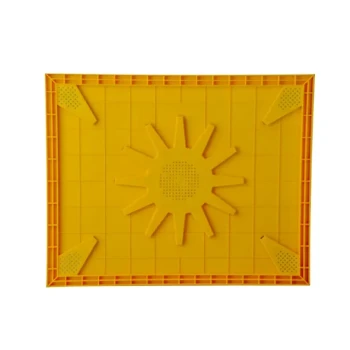
Glass collection plates are uniquely suited for bee venom harvesting due to a specific combination of surface hardness, chemical inertness, and non-porosity. These characteristics allow for the non-lethal collection of high-purity venom by preventing stinger penetration and ensuring that the liquid venom dries into recoverable crystals without reacting with the substrate.
Core Takeaway Glass acts as the ideal interface for venom harvesting because it solves the two biggest challenges in the industry: keeping the bees alive and keeping the product pure. Its hard surface prevents lethal stinger loss, while its chemical stability ensures the venom crystallizes without contamination or absorption.
Ensuring Colony Survival
The primary ethical and operational concern in venom harvesting is the health of the bee colony. The physical properties of glass are critical to making the process sustainable.
Surface Hardness and Smoothness
Glass is sufficiently hard to prevent the bee's barbed stinger from penetrating the surface.
Because the stinger does not get stuck in the material, the bee can successfully retract it after discharging venom.
This non-destructive interaction ensures the bee survives the process, maintaining the biomass and productivity of the colony.
Preserving Chemical Purity
Bee venom is a high-value raw material often used for pharmaceutical applications. The collection surface must maintain the integrity of bioactive components like melittin and apamin.
Chemical Inertness
Glass is chemically stable and inert.
It does not react with the moist venom during the drying process.
This ensures that the chemical composition of the venom remains unaltered, preventing contamination from the collection plate itself.
Non-Porous Hygiene
Glass provides a completely non-permeable surface.
This prevents the liquid venom from soaking into the plate, which would result in product loss and potential cross-contamination.
Furthermore, the non-porous nature of glass makes it easy to sanitize effectively, meeting the rigorous hygiene standards required for pharmaceutical-grade materials.
Optimizing Production Efficiency
Beyond biology and chemistry, glass plates offer mechanical advantages that streamline the harvesting workflow.
Efficient Crystallization
The high flatness of glass plates allows liquid venom to spread evenly.
This facilitates rapid natural air-drying, transforming the liquid into solid crystals efficiently.
Ease of Recovery
Once the venom has crystallized, the smooth glass surface allows for easy removal.
Operators can use specialized scraping tools to recover the dried venom with minimal effort.
This low-friction surface minimizes raw material loss during the collection phase, ensuring high recovery rates.
Understanding the Trade-offs
While glass is the superior material for chemical and biological reasons, it introduces operational risks that must be managed.
Fragility and Handling
The primary drawback of glass is its brittleness compared to synthetic alternatives.
Operators must handle plates with extreme care during the scraping and cleaning processes to avoid breakage.
A broken plate not only destroys the equipment but can contaminate an entire batch of expensive venom with micro-shards, rendering it unusable.
Making the Right Choice for Your Goal
Glass collection plates are the industry standard, but understanding why helps you optimize your workflow.
- If your primary focus is Colony Sustainability: Rely on glass for its hardness, as it prevents stinger embedding and ensures a non-lethal harvest.
- If your primary focus is Product Purity: specific utilization of high-quality glass is non-negotiable to prevent chemical reactions and ensure pharmaceutical-grade hygiene.
- If your primary focus is Yield Efficiency: Leverage the smoothness of glass to maximize the recovery of dried crystals through physical scraping.
By utilizing glass, you align your operation with the highest standards of animal welfare and product quality.
Summary Table:
| Feature | Benefit for Harvesting | Impact on Quality/Process |
|---|---|---|
| Surface Hardness | Prevents stinger penetration | Ensures non-lethal collection & colony survival |
| Chemical Inertness | No reaction with bioactive compounds | Maintains high-purity venom (Melittin/Apamin) |
| Non-Porous Surface | Prevents liquid absorption | Maximizes yield and ensures easy sanitization |
| High Flatness | Promotes even liquid spreading | Facilitates rapid and uniform crystallization |
| Low Friction | Allows for smooth scraping | Ensures easy recovery of dried venom crystals |
Elevate Your Venom Production with HONESTBEE
Maximize your apiary's potential with professional-grade harvesting equipment. At HONESTBEE, we specialize in supporting commercial apiaries and distributors with a complete wholesale range of beekeeping tools and machinery.
Whether you need precision glass collection plates, honey-filling machines, or specialized hive-making hardware, we provide the industrial-strength solutions required to maintain pharmaceutical-grade purity and colony health.
Ready to scale your operation? Contact us today to explore our comprehensive wholesale offerings!
References
- Enas Nour-El-Deen, Ahmad Shaheen. Influence of Electric Amplitude and the Frequency Level combinations on Venom Productivity of Honey Bee Colonies in Egypt. DOI: 10.21608/ejarc.2024.340545
This article is also based on technical information from HonestBee Knowledge Base .
Related Products
- 8 Frame and 10 Frame Propolis Trap Collector Screen for Propolis Collection
- Full Set Beekeeping Electronic Bee Venom Collector Machine Device for Bee Venom Collecting
- HONESTBEE Multi Exit Plastic Bee Escape Board for Efficient Honey Harvesting
- 30 cm Plastic Entrance Hole Bee Pollen Trap and Collector
- Food Grade Plastic Honey Bucket Pail for Beekeeping
People Also Ask
- Why is a specific wooden frame required when installing a propolis screen? Optimize Your Propolis Harvest Efficiency
- What are the advantages of using propolis collector screens? Elevate Your Harvest to Pharmaceutical Purity
- How do propolis collection screens work? Discover material specs for commercial harvesting equipment
- How does the mesh size of a propolis collection screen influence the efficiency of propolis harvesting? Optimize Yields!
- How do commercial-grade plastic screens compare to custom fine-mesh screens? Maximize Your Propolis Yield & ROI