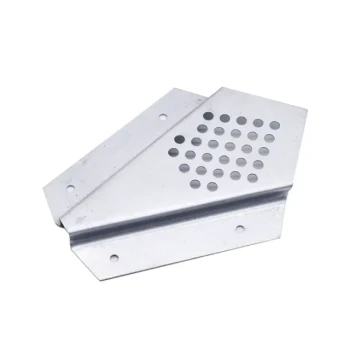
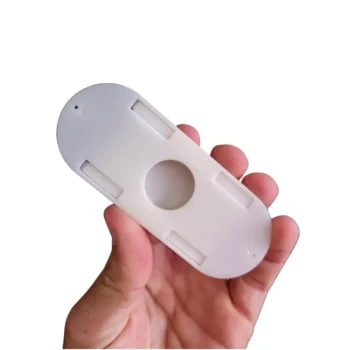
A one-way screen funnel serves as a precision traffic control mechanism within the beehive architecture. It is a specialized hardware component connected to specific hive entrances that enforces unidirectional movement. By physically permitting bees to re-enter the colony while blocking their ability to leave through that same channel, it allows for strict management of foraging activity without trapping bees outside.
The core value of this component is its ability to decouple hive entry from hive exit. This ensures that while pollination schedules can be strictly enforced by closing primary exits, foraging bees are never stranded outside the hive.
The Mechanics of Directional Control
Physical Structure and Function
The funnel operates on a simple but effective physical principle. Its geometric design creates a channel that is easily navigated in one direction—returning to the hive—but presents a physical barrier to bees attempting to move in the opposite direction.
Integration with Hive Entrances
This component is typically installed at specific auxiliary points or modified entrances. It works in tandem with the hive's primary entrance blocking mechanisms.
Managing Traffic Flow
When the primary entrance is blocked to stop deployment, the funnel remains active. This creates a "return-only" loop that filters bees back into safety.
Operational Benefits in Controlled Environments
Enforcing Pollination Schedules
In agricultural settings like greenhouses, pollination must often occur within specific time windows. The one-way screen funnel allows operators to "turn off" the deployment of new foragers instantly by blocking main exits, effectively ending the pollination shift on command.
Preventing Bee Stranding
Without a one-way return valve, blocking a hive to stop pollination would trap currently active foragers outside. This component ensures that bees remaining in the greenhouse or field can self-rescue and return to the colony even after the "doors are locked."
Understanding the Trade-offs
Reliance on Clear Pathways
Because this is a passive hardware component, it relies entirely on the physical screen remaining clear. Debris or propolis buildup within the funnel can obstruct the return path, potentially trapping bees outside despite the design.
Behavioral Acclimation
Bees rely on spatial memory for hive entry. While the funnel is effective, significant changes to entrance hardware can temporarily confuse returning foragers until they acclimate to the specific entry point provided by the funnel.
Optimizing Hive Hardware for Your Goals
To maximize the utility of direction-control hardware, consider your specific management objectives:
- If your primary focus is Precision Agriculture: Utilize the funnel to strictly define pollination windows, closing the main exit 30-60 minutes before the desired end time to allow stragglers to return.
- If your primary focus is Colony Retention: Ensure the funnel is inspected regularly for blockages, guaranteeing that every bee deployed has a viable path back to the cluster.
By effectively implementing a one-way screen funnel, you transform the beehive from a passive box into a controllable agricultural instrument.
Summary Table:
| Feature | Functionality | Key Benefit |
|---|---|---|
| Unidirectional Flow | Permits re-entry while blocking exit | Precise management of forager deployment |
| Geometric Design | Passive physical barrier mechanism | Reliable traffic control without electronic power |
| Schedule Enforcement | Decouples entry and exit points | Allows for strict pollination time-window control |
| Safety Mechanism | Active return loop when exits are blocked | Prevents worker bees from being stranded outside |
Elevate Your Commercial Beekeeping Operations with HONESTBEE
At HONESTBEE, we specialize in empowering commercial apiaries and distributors with the high-performance hardware needed for precision agriculture. From specialized one-way screen funnels and hive-making machinery to honey-filling systems and essential consumables, we provide a comprehensive wholesale catalog designed to scale your business.
Whether you are managing pollination schedules in greenhouses or distributing top-tier equipment to local markets, our team is ready to supply the tools and expertise you need to succeed.
Ready to optimize your yield? Contact us today to explore our full spectrum of beekeeping solutions!
References
- Beatriz de Jesus Rodrigues, Daniel Nicodemo. An easy-to-manage two-entrance honey bee hive system for greenhouse pollination that improves fruit production. DOI: 10.33448/rsd-v10i11.20029
This article is also based on technical information from HonestBee Knowledge Base .
Related Products
- Heavy Duty Metal Corner Bee Escape for Reliable Hive Clearing
- Langstroth Screen Bottom Board for Beekeeping Wholesale
- Stainless Steel Round Beehive Air Vents for Ventilation
- Professional Durable Two-Piece Plastic Bee Escape
- 8 Frame and 10 Frame Propolis Trap Collector Screen for Propolis Collection
People Also Ask
- What are some common types of bee escapes and how are they typically mounted? Optimize Your Honey Harvest Efficiency
- What is the primary function of a bee escape? Simplify Your Honey Harvest with Stress-Free Hive Management
- How can a bee escape be adapted for use in a Warre hive? Effective Customization Methods for Successful Harvesting
- How can bees be cleared off honey supers in a Langstroth hive? Use a Gentle Bee Escape
- How long should a bee escape be placed before harvesting honey? The 24-48 Hour Guide to a Stress-Free Harvest