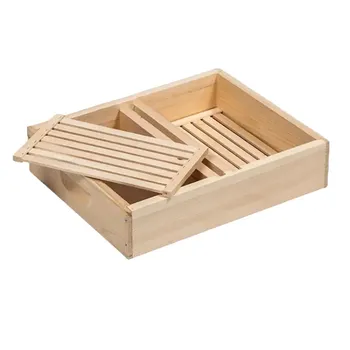
For rooftop and elevated apiaries, heavy-duty ratchet straps are the essential wind-security equipment. They should bind the bottom board, hive bodies, supers, and cover into one stable unit, with locking mechanisms that resist loosening under repeated gusts. Supplementary cover weights, sturdy stands, roof-compatible anchoring solutions, and windbreaks further reduce the risk of hive displacement, colony damage, and falling debris.
The core requirement is a complete wind-control system—not a single strap: secure every hive component, stabilize the hive base, protect the roof membrane, and reduce direct wind exposure without compromising inspection access.
Essential Equipment for Wind-Secure Rooftop Hives
Heavy-Duty Ratchet or Cargo Straps
Use weather-resistant, heavy-duty hive straps or cargo crank straps with reliable ratchet-locking mechanisms.
The strap should run around the complete hive stack, including the bottom board, hive bodies, supers, and top cover. This prevents individual boxes or lids from separating when wind pressure changes suddenly.
Locking Hardware and Redundant Tie-Downs
Ratchet straps should remain locked during normal operation and be checked after severe weather.
For exposed sites, distributors and operators should consider a redundant securing method, such as a second strap or approved anchoring arrangement, rather than relying on one point of restraint.
Cover Weights
A heavy hive-cover weight can help prevent the lid from lifting, particularly when the top cover is not mechanically integrated with the hive stack.
Weights must be stable, weather-resistant, and positioned so they do not obstruct inspections or create a handling hazard. They should support the primary strap system rather than replace it.
Stable Hive Stands and Roof-Protective Supports
Use a sturdy hive stand that keeps the hive level and stable while distributing its load across the roof surface.
Stands or pallet-style supports can also raise hives away from damp roof membranes and direct cold contact. Where applicable, use protective feet or pads designed to avoid puncturing or damaging the roof surface.
Equipment That Reduces Wind Exposure
Windbreak Screens
Install windbreaks around the apiary to reduce direct gusts during bee flight and hive operation.
Suitable solutions may include purpose-built screens, straw-bale barriers, plywood panels, or burlap structures. They must be firmly secured and arranged so they do not become airborne debris themselves.
Controlled Hive Orientation
Positioning is part of the protection system. Hives should be located well away from roof edges and placed where surrounding structures or windbreaks reduce exposure without blocking safe access.
Avoid creating narrow, turbulent channels between barriers, parapets, or rooftop equipment.
Protected Entrances and Covers
Hive equipment should be sound, with no holes or leaks that could allow unintended bee escape.
During transport or handling, entrances and tops may require secure screening or mesh closures to keep components together and prevent bees from escaping in elevators, corridors, or service areas.
Equipment and Infrastructure for Safe Handling
Pneumatic-Tire Transport Carts
A transport cart with pneumatic tires can reduce vibration while moving hive bodies, supers, and other heavy equipment across rooftops or through buildings.
This is especially valuable for distributors and professional operators supplying standardized equipment for space-constrained urban sites.
Compact, Modular Hive Components
Standardized, modular wooden hive equipment simplifies replacement, transport, inspection, and seasonal relocation.
Before purchasing or supplying equipment, confirm that hive dimensions are compatible with building doors, elevators, roof access points, and available storage areas.
Safe Access and Handling Provisions
No equipment package compensates for an unsafe access route. Rooftop apiaries should not depend on fire escapes, tall ladders, or narrow roof hatches for moving heavy honey supers.
Fire escapes should never be used as hive locations, both because of safety risks and because such placement may violate legal requirements.
Site Protection Beyond the Tie-Down System
Roof Load and Placement Verification
Before installation, verify that the roof can support the combined weight of the hives, honey, stands, equipment, and personnel.
Hives should be positioned at a safe distance from edges and away from routes used for routine building maintenance or emergency access.
Shade and Temperature Management
Rooftop environments can experience elevated temperatures as well as strong winds and freezing conditions.
Shade structures such as plywood or burlap screens can moderate exposure, provided they are securely installed and do not interfere with ventilation, inspections, or wind safety.
Nearby Watering Equipment
A protected water source with safe perching material helps prevent bees from seeking water on neighboring properties.
Watering equipment is not a wind restraint, but it is an important part of a complete rooftop-apiary setup, particularly during warm weather.
Understanding the Trade-offs
More Restraint Can Reduce Accessibility
Additional straps, weights, and barriers improve stability but can slow inspections and complicate honey-super removal.
Select systems that can be released and re-secured quickly without requiring operators to work in unstable positions.
Heavy Weights Are Not a Substitute for Anchoring
Rocks or heavy cover weights may stop a lid from lifting, but they do not reliably bind the full hive stack together.
The complete hive should be secured with locking straps; weights should be treated as supplementary protection.
Windbreaks Can Become Hazards
An inadequately secured screen, tarp, or plywood panel can become dangerous airborne material during a storm.
Every windbreak must be structurally stable, weather-resistant, and evaluated as part of the rooftop’s overall wind exposure.
Roof Protection Must Not Be Overlooked
A heavy stand can stabilize a hive while damaging the roof membrane if its feet concentrate load or rub against the surface.
Use suitable protective supports and confirm compatibility with the building’s roofing system before deployment.
Product Quality Matters in B2B Supply
Low-quality buckles, webbing, stands, or fasteners can fail after repeated exposure to ultraviolet light, moisture, temperature changes, and tension.
For wholesale and reseller programs, prioritize traceable, weather-resistant products with consistent specifications and dependable replenishment availability.
How to Apply This to Your Project
The best equipment package depends on wind exposure, roof construction, access restrictions, and the number of colonies being installed.
- If your primary focus is wind restraint: Specify heavy-duty, weather-resistant ratchet straps with locking mechanisms, and use them to bind the entire hive stack from the bottom board through the cover.
- If your primary focus is cover protection: Combine the main strap system with stable, weather-resistant cover weights that do not obstruct inspection access.
- If your primary focus is roof protection: Use sturdy hive stands or pallet-style supports with roof-compatible pads that distribute load and protect the membrane.
- If your primary focus is colony comfort: Add securely installed windbreak screens, shade structures, and a protected water source near the apiary.
- If your primary focus is commercial supply: Build a standardized product portfolio covering straps, stands, protective pads, windbreak materials, carts, screens, and replacement hardware, supported by rapid fulfillment and consistent technical service.
- If your primary focus is installation safety: Verify structural capacity, roof-edge clearance, legal access, and safe transport routes before delivering or placing any equipment.
A well-designed rooftop apiary combines reliable tie-down hardware, stable roof-compatible supports, controlled wind exposure, and safe operating access.
Summary Table:
| Equipment | Purpose | Key Considerations |
|---|---|---|
| Heavy-duty ratchet straps | Bind hive components together | Weather-resistant, locking mechanism, redundant tie-downs |
| Cover weights | Prevent lid lifting | Stable, weather-resistant, not a substitute for straps |
| Sturdy hive stands | Level support, roof protection | Roof-compatible pads, distribute load |
| Windbreak screens | Reduce wind exposure | Securely anchored, not a hazard |
| Pneumatic-tire carts | Safe transport | Reduce vibration, maneuverability |
| Modular hive components | Easy handling and replacement | Compatible with access routes |
| Shade structures | Temperature moderation | Secure, non-intrusive |
| Watering equipment | Prevent bee seeking water elsewhere | Safe perching material |
Secure your rooftop apiary with HONESTBEE's wholesale beekeeping equipment. From heavy-duty ratchet straps to roof-compatible stands and windbreak materials, we supply a full spectrum of tools and machinery for commercial apiaries. Benefit from one-stop sourcing, OEM/ODM support, rapid response, and ultra-fast delivery. Contact us today to discuss your wind-security needs and boost your supply reliability — Get in touch!
Related Products
- Metal Hive Feet Bee Hive Stand for Ant Protection
- HONESTBEE Square Top Hive Bee Feeder Top Bee Feeder
- Steel Round Disc Entrance Reducer for Flexzion Bee Hive Nuc Box Gate
- Professional Hive Top Bee Feeder for Beekeeping
- Telescopic Beehive Outer Cover Lid Roof with Galvanised Sheeting for Langstroth Hive and Beehive Outer Cover
People Also Ask
- What are the benefits of elevating a bee hive with a stand or base? Protect Your Colony and Your Back
- How does a beehive stand protect against predators and pests? Essential Strategies for Colony Security
- How should the height of a beehive stand be determined? Find Your Ergonomic Sweet Spot
- What to stand a beehive on? The Best Foundation for a Healthy, Manageable Apiary
- How do beehive stands and ground installation methods affect beekeeping productivity in extreme climates? Maximize Yields