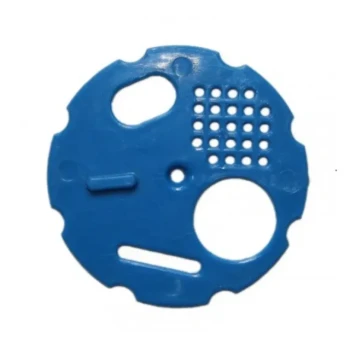
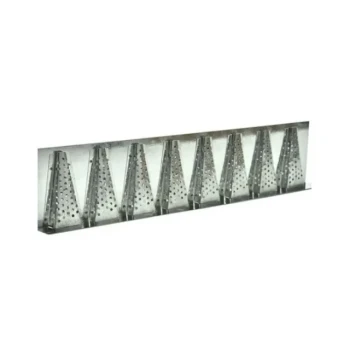
An entrance reducer is a simple but critical wooden barrier positioned between the bottom board and the first hive body to manually regulate the size of the hive's opening. It allows you to adjust the entrance width to match the colony's immediate needs, balancing internal temperature regulation with physical security against intruders.
By effectively scaling the "front door" of the hive, the entrance reducer helps the colony conserve heat during cold months and defend resources during periods of vulnerability, while allowing for maximum traffic during peak honey production.
The Dual Purpose: Climate and Defense
Managing Internal Temperature
The primary function of the entrance reducer is to control air circulation. By restricting the opening, you limit the volume of cold air entering the hive, allowing the cluster to maintain necessary warmth with less energy expenditure. Conversely, removing the reducer allows for maximum ventilation to prevent overheating.
Bolstering Colony Defense
A wide entrance is difficult for a small or weakened colony to guard effectively. The reducer acts as a force multiplier, narrowing the defensible space so fewer guard bees can protect the hive against wasps, robber bees from other colonies, and pests like mice. This is particularly vital for new colonies that have not yet established a large population.
Seasonal Application Strategy
Winter: Maximum Conservation
During winter, the priority is heat retention and excluding drafts. You should use the smallest notch on the reducer. This minimizes airflow to help the cluster stay warm and serves as a physical barrier against mice seeking shelter, though a metal mouse guard is often more effective for the latter.
Spring: Controlled Expansion
As the weather warms and the colony begins to build up, airflow needs increase. Switch to the larger notch during the spring months. This allows for increased ventilation and bee traffic while still offering some protection against fluctuating spring temperatures and potential robbers.
Summer: Peak Production
During hot weather and heavy nectar flows, ventilation and traffic flow are paramount. The entrance reducer should typically be removed completely. This prevents "traffic jams" at the entrance that slow down foraging and ensures the hive does not become dangerously hot.
Late Summer and Fall: The Danger Zone
As nectar sources dry up (a period known as a dearth), colonies become desperate and may attempt to rob weaker hives. You must re-install the reducer, typically on a medium or small setting. This prevents robbing by foreign bees and helps the colony defend its winter food stores.
Understanding the Trade-offs
The Bottleneck Effect
While restriction aids defense, it acts as a bottleneck during high-activity periods. Leaving a reducer on the smallest setting during a heavy nectar flow will cause congestion at the entrance, significantly reducing the colony's foraging efficiency and honey production.
Material Limitations
Most entrance reducers are made of wood. While effective against insects, determined pests like mice can sometimes chew through wooden reducers to gain entry. For areas with high rodent populations, relying solely on a wooden reducer for winter protection carries a risk compared to metal alternatives.
Making the Right Choice for Your Goal
To apply this effectively, assess the current state of your colony and the environment:
- If your primary focus is Overwintering: Use the smallest notch to conserve heat and minimize cold drafts.
- If your primary focus is Honey Production: Remove the reducer entirely to maximize ventilation and foraging traffic efficiency.
- If your primary focus is Colony Defense: Install the reducer (small or medium setting) to help young colonies or prevent robbing during a nectar dearth.
Effective beekeeping requires observing the traffic at the entrance and adjusting the reducer to maintain the balance between flow and security.
Summary Table:
| Season | Setting | Primary Goal | Benefit |
|---|---|---|---|
| Winter | Smallest Notch | Heat Retention | Minimizes drafts and excludes mice |
| Spring | Larger Notch | Growth Support | Increases airflow for a growing colony |
| Summer | Removed | Max Production | Prevents congestion and overheating |
| Fall | Small/Medium | Resource Defense | Protects honey stores from robbing bees |
Maximize Your Colony's Potential with HONESTBEE
Proper entrance management is just the beginning of a successful apiary. At HONESTBEE, we empower commercial apiaries and distributors with high-quality, durable beekeeping solutions. Whether you need precision-made hive components, advanced honey-filling machinery, or a steady supply of essential consumables, we provide the tools to scale your operation efficiently.
Our value to you:
- Comprehensive Wholesale Range: From specialized hardware to honey-themed merchandise.
- Industrial Efficiency: High-performance machinery designed for large-scale production.
- Reliable Partnership: Tailored equipment solutions for the modern distributor.
Ready to elevate your beekeeping business? Contact us today to discuss your wholesale needs!
Related Products
- Steel Round Disc Entrance Reducer for Flexzion Bee Hive Nuc Box Gate
- Beehive Entrance Reducer Guardian Metal Hive Entrance for Bees
- White Plastic 0.5L Beekeeping Entrance Feeder for Bees
- Beehive Entrance Discs Plastic Bee Entrance Disc for Bee Hives
- Professional Hive Front Entrance Bee Feeder
People Also Ask
- What is the purpose of an entrance reducer for a beehive? Strengthen Colony Defense and Prevent Robbery
- Why are entrance reducers used to counter hornet infestations? Protect Your Hive with Strategic Choke Points
- Why is it critical to maintain a smaller entrance for a newly established bee hive? Boost Colony Growth and Security
- Under what conditions should a beekeeper adjust the size of a beehive entrance? Seasonal & Defense Management Tips
- What is the function of an entrance reducer on a beehive? Strengthen Colony Defense and Climate Control