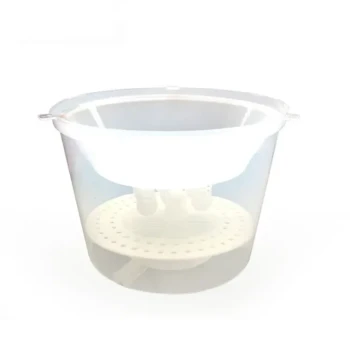
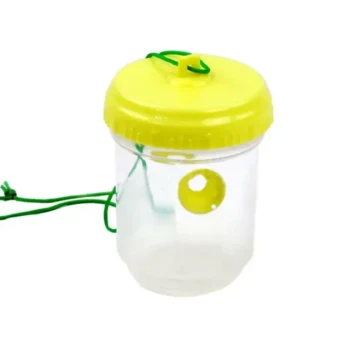
A high-efficiency Pollen Trap is a precision mechanical device designed to industrialize the collection of bee pollen. Installed directly at the beehive entrance, it utilizes a specialized sieve plate with calibrated pore sizes to gently strip pollen pellets from the hind legs of foraging bees as they return to the hive, depositing the material into a dedicated collection container.
By converting a natural biological behavior into a controlled production process, these traps enable the harvesting of massive volumes of clean raw material—potentially up to 36kg per colony annually—without disrupting the colony’s population dynamics or health.
The Mechanics of Commercial Extraction
Precision Sieve Technology
The core function of the trap relies on a mechanical barrier known as a sieve plate or grid.
The apertures in this grid are sized with exact precision. They are large enough to allow the worker bee to pass through uninjured but narrow enough to physically obstruct the pollen baskets (corbiculae) attached to their hind legs.
Automated Collection
As the bee squeezes through the pore, the pollen pellets are dislodged and fall immediately into a collection box located beneath the entrance.
This mechanism serves as the primary hardware interface that transitions bee pollen from a biological source into a scalable production workflow, allowing for the accumulation of raw material without manual intervention on individual bees.
Ensuring Purity and Quality
Filtration of Impurities
In large-scale harvesting, the purity of the initial raw material is critical for downstream processing. High-efficiency traps are designed to reduce the entry of internal hive impurities, such as wax debris or waste.
By intercepting the pollen at the entrance before it enters the brood nest, the trap ensures the material remains distinct from hive byproducts, providing a clean foundation for botanical classification and chemical analysis.
High-Bottom Ventilation
Advanced configurations, known as "High-bottom" traps, are installed approximately 40cm above the hive floor.
This elevation is crucial for commercial quality control. It enhances ventilation around the gathered pollen and isolates it from ground dust and biological waste, significantly lowering the risk of microbial contamination.
Operational Considerations and Trade-offs
Managing Colony Health
While high-efficiency traps are non-destructive, they function by withholding resources from the hive.
However, the primary reference notes that when properly designed, these devices do not disrupt normal population dynamics. To balance harvest volume with colony welfare, operators typically deploy traps during peak foraging windows (e.g., 6:00 AM to 11:00 AM) rather than continuously.
Equipment Complexity vs. Yield
Standard entrance traps are simple to deploy but may be more susceptible to ground contamination.
High-performance models capable of reaching annual yields of 36kg per colony often require more complex installation parameters (such as elevated positioning) to maintain that volume without compromising hygiene standards.
Optimizing Your Harvest Strategy
To implement high-efficiency pollen traps effectively, match the equipment configuration to your specific production goals.
- If your primary focus is Volume: Prioritize "high-performance" trap designs with optimized aperture layouts to target yields approaching 36kg per colony annually.
- If your primary focus is Purity: Implement High-bottom trap configurations to maximize ventilation and minimize microbial counts and dust contamination.
- If your primary focus is Research: Utilize standard sieve traps to collect non-destructive samples for botanical origin identification and chemical composition analysis.
The high-efficiency pollen trap is the definitive tool for scaling pollen production from a hobbyist activity to a viable commercial enterprise.
Summary Table:
| Feature | Function & Impact | Commercial Benefit |
|---|---|---|
| Precision Sieve Plate | Gently strips pollen pellets from foraging bees | Enables automated, high-volume collection |
| High-Bottom Design | Elevates collection 40cm above hive floor | Maximizes ventilation and prevents contamination |
| Entry Interception | Captures pollen before it enters the brood nest | Ensures superior purity and reduces wax debris |
| Controlled Workflow | Allows harvesting without harming colony health | Scalable production for industrial apiaries |
Elevate Your Commercial Pollen Production with HONESTBEE
To compete in the global market, commercial apiaries and distributors require professional-grade equipment that balances high yield with biological safety. HONESTBEE specializes in providing the full spectrum of beekeeping tools and industrial machinery designed for scale. From high-efficiency pollen traps and hive-making machines to automated honey-filling systems, our comprehensive wholesale offering ensures your operation stays productive and hygienic.
Ready to scale your apiary's output? Our team is here to supply the hardware and consumables you need to thrive. Contact us today to discuss your wholesale requirements and see how our industrial-grade solutions can optimize your harvest.
References
- Ofijan Tesfaye. Floral Origin Determines the In Vitro Antibacterial Activity of Bee Pollen Collected From Western Oromia, Ethiopia. DOI: 10.1002/fpf2.70018
This article is also based on technical information from HonestBee Knowledge Base .
Related Products
- High-Efficiency Diamond Maze Bee Escape for Clearing Supers
- Removable Plastic Pollen Trap With Ventilated Tray for Bees Pollen Collector
- 30 cm Plastic Entrance Hole Bee Pollen Trap and Collector
- Plastic Bee Pollen Trap Strips Comb Catcher Collector
- Professional Multi-Component Bucket Wasp Trap
People Also Ask
- What are some common types of bee escapes and how are they typically mounted? Optimize Your Honey Harvest Efficiency
- How can a bee escape be adapted for use in a Warre hive? Effective Customization Methods for Successful Harvesting
- How can bees be cleared off honey supers in a Langstroth hive? Use a Gentle Bee Escape
- What is a bee escape and why is it used in beekeeping? A Guide to Gentle Honey Harvesting
- What is the primary function of a bee escape? Simplify Your Honey Harvest with Stress-Free Hive Management