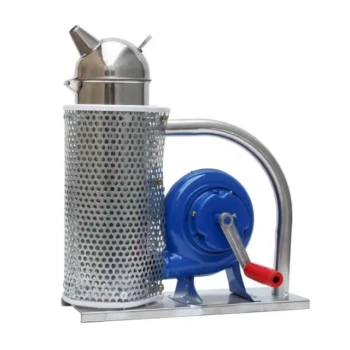
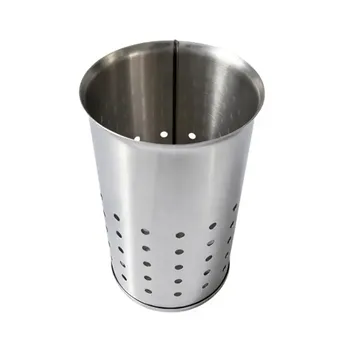
A professional bee smoker serves a dual biological function designed to pacify the colony. Its primary role is to release controlled smoke that masks the specific alarm pheromones honeybees emit when threatened. Simultaneously, this sensory input triggers a feeding instinct, prompting bees to consume stored honey, which physically and behaviorally reduces their defensive capabilities.
The smoker does not merely "stun" the bees; it disrupts the colony's chemical communication network. By blocking alarm signals and inducing a distracted feeding state, it transforms a potential defensive swarm into a manageable colony, ensuring safety for both the apiarist and the hive.
The Biological Mechanisms of Control
Interrupting Chemical Signals
Honeybees rely heavily on pheromones to communicate danger. When a hive is opened, guard bees release alarm pheromones to trigger a collective defense response.
The smoke acts as an olfactory "static," masking these chemical signals. This prevents the alarm from spreading throughout the colony, keeping the general population unaware of the intrusion.
Triggering the Survival Instinct
The presence of smoke simulates a natural threat, such as a forest fire. This induces a survival response where bees retreat to the honeycomb to engorge themselves on stored resources.
The Sedative Effect of Engorgement
Once the bees consume the stored honey, they become physically heavier and more lethargic. A distended abdomen makes it difficult for a bee to bend its body to sting effectively. This creates a state of induced calm, significantly reducing aggressive behavior.
Operational Utility in the Apiary
Enhancing Technician Safety
By neutralizing the colony's defensive response, the smoker allows the technician to work safely. This is critical for complex tasks like finding the queen, inspecting brood health, or harvesting honey frames without being swarmed.
Protecting the Colony
The smoker is as much a safety tool for the bees as it is for the beekeeper. When a honeybee uses its stinger, it typically dies shortly after.
By keeping the bees calm and preventing a mass attack, the smoker minimizes the number of bees lost during an inspection. It ensures the interaction remains a maintenance procedure rather than a battle.
Understanding the Trade-offs and Risks
The Importance of Smoke Temperature
Not all smoke is beneficial. The goal is to produce cool, white smoke (often referred to as "clean" smoke).
Hot or dark smoke indicates high combustion temperatures, which can singe the bees' wings or melt the wax within the hive. This agitates the colony rather than calming it.
The Risk of Over-Smoking
Using a smoker requires restraint. Excessive smoke can panic the bees, driving them out of the hive or contaminating the flavor of the honey. The objective is to mask pheromones, not to choke the colony.
Equipment Maintenance
A smoker is a mechanical tool that requires care. Over time, creosote builds up in the nozzle.
To ensure the device delivers a consistent, cool puff of smoke, it requires regular cleaning (at least yearly). A clogged smoker may fail mid-inspection, leaving the technician vulnerable when the colony is open.
Making the Right Choice for Your Goal
- If your primary focus is Personnel Safety: Prioritize masking pheromones immediately upon opening the hive to prevent the initial alarm signal from triggering a defensive wave.
- If your primary focus is Colony Welfare: Use cool, white smoke sparingly to disrupt defense mechanisms without causing thermal injury or unnecessary stress to the bees.
- If your primary focus is Equipment Longevity: Commit to a yearly maintenance schedule to prevent carbon buildup and ensure the smoker produces the correct temperature of smoke.
The bee smoker is not a weapon of suppression, but a tool of communication that allows humans and bees to interact without conflict.
Summary Table:
| Feature | Biological/Operational Function | Impact on Colony |
|---|---|---|
| Pheromone Masking | Blocks alarm signals (isopentyl acetate) | Prevents a collective defensive swarm response |
| Feeding Instinct | Triggers survival response to consume honey | Bees become lethargic and physically harder to sting |
| Safety Mechanism | Neutralizes aggression during inspections | Protects the beekeeper and minimizes bee mortality |
| Smoke Quality | Cool, thick white smoke (clean combustion) | Calms the hive without causing thermal wing damage |
Elevate Your Apiary Operations with HONESTBEE
At HONESTBEE, we understand that professional beekeeping requires precision tools that prioritize both efficiency and colony health. As a leading global supplier for commercial apiaries and distributors, we provide a comprehensive range of high-quality equipment—from heavy-duty bee smokers and protective gear to advanced honey-filling machines and hive-making hardware.
Whether you are scaling your commercial production or stocking your distribution warehouse, our wholesale solutions are designed to support your growth with reliable, industrial-grade beekeeping essentials.
Ready to optimize your yield and equipment durability?
Contact HONESTBEE Today to explore our full product portfolio and secure competitive wholesale pricing for your business.
References
- Grégoire Paraïso, Zackari Orou-Goura. Déterminants Et Contraintes De La Pratique De L’apiculture Dans Les Communes De Djidja Et Zogbodomey Au Sud Du Bénin (Afrique De l’Ouest). DOI: 10.19044/esj.2016.v13n3p279
This article is also based on technical information from HonestBee Knowledge Base .
Related Products
- Professional Bee Smoker with Elongated Spout and Durable Bellows for Beekeeping
- Professional Replacement Bee Smoker Bellows for Beekeeping Equipment
- Heavy-Duty Bee Smoker with Durable Plastic Bellows for Beekeeping
- Premium Traditional Copper Bee Smoker with Bellows
- Stainless Steel Honey Bee Smoker Hive and Honeycomb Smoker for Beekeeping
People Also Ask
- What roles do bee smokers and precision tools play in honey harvesting? Master Safety and Quality Control
- Why is a professional bee smoker considered an essential tool for hive management and safety? Master Colony Control.
- Why is the use of professional bee smokers and specialized fuel essential? Protect Honey Purity & Colony Safety
- Why is a professional bee smoker essential for hive maintenance? Master Colony Control & Safety
- Why is a professional Smoker essential during routine apiary inspections? Enhance Safety and Operational Efficiency