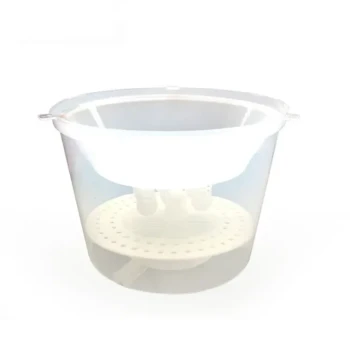
Outdoor pre-mounted pollen traps are precision mechanical devices installed at the entrance of a beehive to intercept foraging workers. By forcing returning bees to crawl through a specifically sized grid, the trap physically scrapes pollen pellets from their hind legs, collecting fresh, raw samples in a separate drawer without harming the insect.
Core Takeaway Pollen traps function as a critical bridge between environmental data and hive productivity. They allow for the systematic, non-destructive acquisition of bulk pollen, which is the foundational material required for analyzing local biodiversity, verifying botanical purity, and diversifying commercial hive products.
The Mechanical Function
The primary function of the trap is mechanical separation. It transforms the beehive entrance into a filtration system that separates the forager from its cargo.
The Precision Grid System
The core component is a grid with specific pore sizes (apertures). This design relies on high-precision engineering to strip the pollen load while allowing the bee to pass through safely.
Non-Destructive Collection
Unlike invasive sampling methods, these traps are designed to be non-destructive. They allow the colony to continue normal flight activity while diverting a portion of incoming resources into a collection box for easy retrieval.
Utility in Scientific Research
For researchers, the pollen trap is not just a harvesting tool; it is a data collection instrument.
Botanical Classification and Purity
As highlighted in the primary reference, these traps are essential for obtaining the physical foundation for botanical classification. The collected pellets provide a direct "snapshot" of the floral resources available in the surrounding environment.
Chemical Composition Analysis
Fresh samples are required to analyze volatile organic compounds (VOCs). The trap captures raw pollen before it is stored and fermented into "bee bread" inside the hive, ensuring the chemical profile remains unaltered for accurate testing.
Nutritional and Environmental Monitoring
Researchers use these traps to monitor diet composition, including lipid and fatty acid profiles. This allows for real-time monitoring of plant diversity in specific landscapes, such as intensive agricultural zones.
Utility in Commercial Beekeeping
For the beekeeper, the trap functions as a tool for economic leverage and product diversification.
Strategic Product Diversification
Pollen traps allow operations to move beyond honey production. They enable the harvest of high-nutrition bee pollen, a distinct and high-value commodity.
Maximizing Economic Yield
By deploying traps during peak blooming periods, beekeepers can capture maximum nutritional output. This significantly increases the economic revenue generated per unit of forest or agricultural land.
Understanding the Trade-offs
While highly effective, the use of pollen traps requires careful management to ensure data quality and colony safety.
Aperture Accuracy is Critical
The diameter of the grid holes is the single most important variable. If the aperture is too small, it causes physical injury to the bees; if too large, it fails to dislodge the pollen, rendering the trap useless.
Balancing Collection vs. Colony Health
Traps remove a vital protein source from the hive. While the method is technically non-destructive to the individual bee, the removal of pollen must be managed to ensure the colony retains enough nutrition for its own development.
Making the Right Choice for Your Goal
The specific application of a pollen trap depends on whether your objective is data granularity or commercial volume.
- If your primary focus is Scientific Analysis: Prioritize traps that allow for frequent, sterile collection to preserve volatile compounds (VOCs) and ensure accurate botanical classification.
- If your primary focus is Commercial Production: Focus on durable traps with high-capacity drawers designed for deployment during peak bloom to maximize yield without disrupting hive flow.
Success relies on using the trap not as a permanent fixture, but as a strategic tool for targeted collection windows.
Summary Table:
| Feature | Function & Purpose | Impact on Operations |
|---|---|---|
| Precision Grid System | Mechanical separation of pollen from bee legs | Ensures safe, non-destructive collection |
| Data Instrument | Provides snapshots of local floral resources | Facilitates botanical purity & VOC analysis |
| Product Diversification | Harvests raw pollen as a distinct commodity | Increases economic revenue per hive |
| Environmental Monitoring | Tracks nutritional profiles and biodiversity | Monitors landscape health and diet quality |
Maximize Your Hive’s Potential with HONESTBEE
Whether you are managing a large-scale commercial apiary or supplying the next generation of beekeeping professionals, HONESTBEE provides the precision tools you need to thrive. As a leading wholesaler and equipment manufacturer, we specialize in high-performance hive-making machinery, honey-filling solutions, and essential consumables designed for durability and efficiency.
Why partner with HONESTBEE?
- Comprehensive Wholesale Range: Access a full spectrum of beekeeping tools and equipment in one place.
- Industrial-Grade Machinery: Elevate your production with our specialized hardware and honey-themed cultural merchandise.
- Tailored for Growth: We cater specifically to distributors and commercial operations seeking quality and scale.
Ready to enhance your productivity and diversify your product line? Contact us today to explore our wholesale offerings!
References
- Vasilios Liolios, Fotini Papadopoulou. Volatile Profile of 16 Unifloral Pollen Taxa Collected by Honey Bees (Apis mellifera L.). DOI: 10.3390/insects16070668
This article is also based on technical information from HonestBee Knowledge Base .
Related Products
- 30 cm Plastic Entrance Hole Bee Pollen Trap and Collector
- Removable Plastic Pollen Trap With Ventilated Tray for Bees Pollen Collector
- Plastic Bee Pollen Trap Strips Comb Catcher Collector
- High-Efficiency Diamond Maze Bee Escape for Clearing Supers
- Professional Multi-Component Bucket Wasp Trap
People Also Ask
- What are the design principles and advantages of pollen traps in the collection of bee pollen? Boost Your Apiary Yield
- Why is frequent harvesting of bee pollen from traps necessary for quality control? Ensure Freshness and Prevent Mold.
- How often should bee pollen be harvested from a trap and why? Master Freshness and Prevent Spoilage
- What function do pollen traps serve in quantitative collection? Boost Your Apiary's Data & Production Efficiency
- What is the primary function of bee pollen traps? Optimize Your Pollen Harvest with Advanced Extraction Efficiency