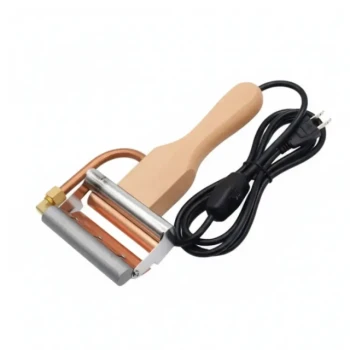
Professional cell piercing tools serve as the catalyst for the "pin-killed brood" experiment. These devices, typically utilizing precision insect needles (often 0.45 mm in diameter), are used to physically pierce capped brood cells to simulate the presence of diseased or dead larvae. This controlled damage triggers the colony's natural cleaning instinct, providing the basis for measuring hygienic behavior.
The Core Takeaway: These tools transform a biological trait into a measurable metric. By standardizing the damage inflicted on larvae, they allow breeders to quantitatively assess and select for genetic disease resistance based on how quickly a colony clears the dead brood.
Simulating Disease Threats
Triggering the Cleaning Instinct
The primary function of the tool is to mimic natural biological threats. By puncturing the cell cap and the larva inside, the tool simulates the presence of disease or parasites without introducing active pathogens to the hive.
Creating a Controlled Stimulus
To obtain useful data, the input must be consistent. Fine metal needles provide a standardized physical stimulus, ensuring that every pierced cell represents the exact same level of damage.
Defining the Test Scope
These tools are often used in conjunction with boundary markers, such as industrial-grade PVC pipes. While the pipe defines the area (e.g., 164 cells), the piercing tool performs the critical action of sacrificing the larvae to begin the test.
Quantifying Hygienic Genetics
Measuring Removal Speed
The tool facilitates the calculation of a "removal rate." Researchers measure the efficiency with which worker bees detect the damage, uncap the cells, and remove the dead larvae within a specific timeframe.
Identifying Disease Resistance
This removal rate is not just a behavior; it is a core technical parameter for breeding. Colonies that clear the "pin-killed" brood quickly demonstrate a high genetic resistance to larval diseases.
Enabling Comparative Analysis
Because the damage is standardized, results can be compared across different colonies. This allows commercial apiaries to scientifically categorize hygienic levels and identify the most robust genetic lines.
Operational Considerations and Limitations
The Requirement for Precision
The effectiveness of the test relies on the diameter of the needle (typically 0.45 mm). Using incorrect tools can cause trauma that does not accurately reflect the subtle signals of a diseased larva, potentially skewing the bees' response.
Destructive Testing
This method is inherently destructive. It requires the deliberate sacrifice of a small section of capped brood to evaluate the greater good of the colony's genetic potential.
Making the Right Choice for Your Goal
To effectively utilize professional cell piercing tools, align their use with your specific management objectives:
- If your primary focus is Commercial Breeding: Use these tools to identify and propagate "breeder queens" whose offspring demonstrate rapid removal rates, ensuring disease-resistant stock.
- If your primary focus is Scientific Research: Use the standardized needle diameter to create reproducible data sets for comparing hygienic behavior across different bee species or environmental conditions.
By converting the instinct to clean into a quantifiable data point, these tools allow you to breed bees that are genetically equipped to keep themselves healthy.
Summary Table:
| Feature | Function | Impact on Evaluation |
|---|---|---|
| Standardized Needle | Provides uniform 0.45mm punctures | Ensures consistent, reproducible stimuli for all test cells |
| Controlled Damage | Mimics larval death/disease | Triggers cleaning instinct without introducing live pathogens |
| Quantifiable Area | Used with boundary markers | Allows for accurate calculation of the % removal rate |
| Metric Conversion | Turns behavior into data | Enables scientific selection of disease-resistant genetic lines |
Scale Your Apiary with Science-Backed Solutions
At HONESTBEE, we understand that breeding disease-resistant stock is the foundation of a successful commercial operation. Whether you are a large-scale distributor or managing a commercial apiary, our comprehensive range of professional beekeeping machinery, specialized hardware, and essential consumables are designed to optimize your productivity.
From precision breeding tools to industrial-grade honey-filling machines, we provide the full spectrum of equipment needed to thrive in the modern beekeeping industry. Let us help you strengthen your genetic lines and streamline your honey production.
Contact HONESTBEE Today for Wholesale Solutions
References
- Л. П. Шамро, Т. М. Соловйова. БІОЛОГІЧНІ ОСОБЛИВОСТІ РОБОЧИХ БДЖІЛ СІМЕЙ ІЗ РІЗНОЮГІГІЄНІЧНОЮПОВЕДІНКОЮ. DOI: 10.31210/visnyk2014.02.17
This article is also based on technical information from HonestBee Knowledge Base .
Related Products
- JZBZ Style Push-In Cell Protector for Professional Queen Rearing Kits
- Retractable Chinese Queen Rearing Grafting Tools Equipment
- Double Head Beekeeping Grafting Tools for Beekeepers
- Professional Multi-Function Uncapping Fork with Ergonomic Rubber Grip
- Professional Bent Tine Honey Uncapping Fork with Ergonomic Grip
People Also Ask
- What is the necessity of using queen cell protectors or emergence cages during the late stages of honeybee queen rearing?
- What are some methods and types of queen cell protectors? Safeguard Your Queen Introduction Process
- What is the role of queen cell protectors and emergence cages? Secure Your Genetic Stock and Hive Stability
- What is the primary reason for using queen cell protectors? Secure Your Yield with Proven Protection
- What is the purpose of queen cell protectors in a hive? Secure Your Hive's Future with Professional Protection