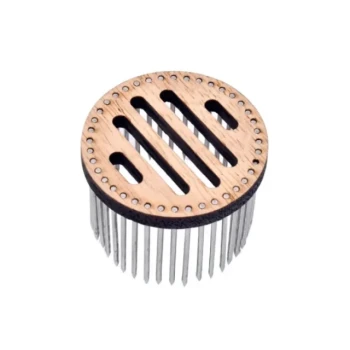
Standardized transport cages serve as essential precision carriers designed to facilitate the accurate weight measurement of drone bees without direct contact. By weighing the cage empty and then weighing it again containing a specific number of drones, researchers use the subtraction method to isolate the net weight of the insects and calculate a precise average.
The primary value of these cages is their ability to deliver operational consistency. They allow researchers to process large-scale samples efficiently while eliminating the physical damage often caused by handling individual insects.
The Mechanics of the Weighing Process
The Subtraction Method
The core function of the transport cage is to act as a constant variable in a differential equation. Researchers first record the precise weight of the empty standardized cage.
Calculating Net Weight
Once a specific number of newly emerged drones (typically around 15) are placed inside, a second measurement is taken. By subtracting the empty cage weight from the total, the exact mass of the biological sample is determined.
Deriving the Average
Because the cage holds a known quantity of drones, the net weight can be divided by the number of individuals. This yields a highly accurate average weight per drone, smoothing out minor fluctuations that might occur in single-subject weighing.
Ensuring Data Integrity and Safety
Preventing Physical Trauma
Direct handling of fragile insects like newly emerged drones can introduce stress or physical injury. The cage acts as a protective barrier, ensuring the subject remains unharmed during the transfer to the scale.
Eliminating Handling Variables
When bees are handled directly, external factors such as pressure or moisture transfer from hands can skew data. The cage ensures that the only mass being measured is the equipment and the subjects themselves.
Standardization for Scale
For studies requiring large sample sizes, consistency is vital. Using standardized cages ensures that every batch is measured under identical conditions, validating the comparison of data across different groups.
Understanding the Methodological Trade-offs
Loss of Individual Granularity
While batch weighing via cages is efficient, it produces an average weight. It does not capture the specific weight of a single outlier drone, potentially masking significant individual variances within the group.
Dependency on Uniformity
The accuracy of this method relies heavily on the "standardized" nature of the cages. If the cages themselves vary significantly in weight without being re-tared for every single measurement, the calculated net weight of the bees will be incorrect.
Implementing This Approach in Your Research
To maximize the utility of standardized transport cages, align your methodology with your specific data requirements:
- If your primary focus is operational efficiency: Utilize batch weighing with standardized cages to rapidly process large populations without risking damage to the specimens.
- If your primary focus is specific individual variance: Recognize that this method provides an aggregate average; you may need to supplement this with individual weighing if detecting outliers is critical.
By isolating the subject from the observer, standardized transport cages transform a delicate biological process into a repeatable, precise data collection operation.
Summary Table:
| Feature | Function in Data Collection | Primary Benefit |
|---|---|---|
| Subtraction Method | Acts as a constant variable to isolate net mass | High precision in biological weight |
| Batch Weighing | Enables processing of ~15 drones simultaneously | Operational efficiency and consistency |
| Protective Barrier | Prevents direct human-to-insect contact | Zero physical trauma or data skewing |
| Standardization | Uniform equipment across all test groups | Validates comparisons between samples |
Elevate Your Apiary Operations with HONESTBEE
At HONESTBEE, we understand that precision is the backbone of a successful beekeeping business. Whether you are managing a large-scale commercial apiary or operating as a distributor, we provide the industrial-grade tools you need to succeed.
Our comprehensive wholesale portfolio includes:
- Specialized Machinery: Advanced hive-making and honey-filling machines.
- Essential Equipment: From standardized transport solutions to professional-grade beekeeping tools.
- Industry Consumables: A wide array of essential supplies for daily operations.
- Cultural Merchandise: Unique honey-themed products to expand your market reach.
Ready to scale your production and improve data accuracy? Contact us today to discover how our professional beekeeping equipment and wholesale solutions can drive your business forward.
References
- Elhosseny E. Nowar. Determination of some Effects of Different Feeding Treatments on Honeybee Drones (Apis Mellifera l.).. DOI: 10.21608/assjm.2023.315274
This article is also based on technical information from HonestBee Knowledge Base .
Related Products
- Professional Queen Bee Introduction and Transport Cage
- Professional Queen Cage with Sliding Gate and Feeder Plug
- Professional Multi-Compartment Queen Cage with Sliding Lid
- JZBZ Style Professional Battery Box with 20 Shipping Cages
- Hexagonal Direct Comb Introduction Queen Bee Cage
People Also Ask
- Why are specialized queen bee cages used for the banking of mated queen bees? Maximize Commercial Apiary Storage Efficiency
- What is the mechanism of action for using temporary queen bee cages? Master Successful Queen Introduction
- How is a queen bee released from a queen cage? Ensure Safe Colony Integration & Hive Success
- What materials are required to install a queen bee's cage into a hive? Essential Tools for Successful Queen Integration
- How long should a queen bee stay in the cage before being released? Ensure a Successful Introduction