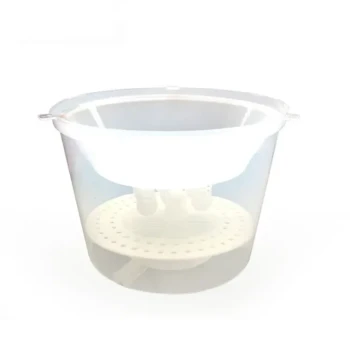
The function of the wooden pollen trap is to mechanically intercept and harvest pollen pellets from foraging bees as they enter the hive.
The device relies on internal vertical metal strips containing specific apertures of approximately 0.3 cm. As bees squeeze through these narrow openings, the metal edges create mechanical friction that scrapes the pollen loads off their legs without harming the insect.
Core Takeaway The wooden pollen trap converts the biological necessity of hive entry into an automated harvesting process. By utilizing precise physical apertures, it separates raw pollen from the vector (the bee) based solely on size and friction, allowing for quantitative monitoring and commercial collection.
The Mechanics of Separation
The Role of Vertical Metal Strips
The vertical metal strips are the primary active component of the trap. They do not merely guide the bees; they act as a physical sieve.
The apertures in these strips are calibrated to approximately 0.3 cm. This size is large enough to allow the bee's body to pass but too narrow to accommodate the pollen pellets attached to their hind legs.
Friction as a Tool
The mechanism works entirely through mechanical friction. As the bee navigates the metal strip, the edges of the aperture strip the pollen pellets away.
This process utilizes the bee’s natural forward movement to power the separation, requiring no external energy source.
Gravity-Fed Collection
Once dislodged, the pollen falls immediately away from the bee.
Beneath the metal strips, a fine wire mesh allows the pollen to drop into a dedicated collection drawer. This mesh prevents the bees from retrieving the pollen while keeping larger debris out of the sample.
Strategic Utility of the Trap
Quantitative Monitoring
For researchers and apiarists, the trap provides measurable data. By collecting samples over time, one can monitor the local flora and the colony's foraging efficiency.
Commercial Harvesting
The trap enables the collection of medicinal or nutritional supplements. Because the pollen is stripped before entering the hive proper, it retains a high degree of preliminary purity.
Colony Management
The trap helps prevent pollen oversaturation within the hive. By regulating the amount of pollen that enters, the beekeeper can ensure there is adequate physical space inside the colony for other essential activities.
Understanding the Trade-offs
Impact on Hive Resources
While effective for collection, the trap physically intercepts the colony's protein source.
Continuous use without management can lead to nutritional deficits for the brood. Most traps include a slide-out grille or lift mechanism to restore unimpeded access, allowing the colony to replenish its own stores.
Physical Impediment
The friction required to strip pollen creates a bottleneck at the hive entrance.
While designed to be non-destructive, forcing bees through 0.3 cm apertures is inherently intrusive. Bottom-mounted traps are generally preferred over top-mounted versions as they tend to cause less interference with flight frequency.
Making the Right Choice for Your Goal
When implementing wooden pollen traps, align your usage with your specific objectives:
- If your primary focus is scientific monitoring: Deploy the trap for fixed intervals to gather quantitative samples, then remove it to normalize hive activity.
- If your primary focus is commercial production: Ensure the collection tray is emptied frequently to maintain the "freshness" and physical integrity of the raw pollen.
- If your primary focus is colony health: Use the trap intermittently to prevent pollen oversaturation, but monitor brood health to ensure the hive retains enough protein for survival.
The wooden pollen trap is a precision filter that balances the colony's need for resources with the beekeeper's need for data and product.
Summary Table:
| Feature | Function & Specification |
|---|---|
| Primary Mechanism | Mechanical friction and physical sieving |
| Aperture Size | Approximately 0.3 cm (calibrated for worker bees) |
| Key Component | Vertical metal strips for pollen dislodgment |
| Collection Method | Gravity-fed into a mesh-protected drawer |
| Core Benefits | Quantitative monitoring, commercial harvest, & hive management |
| Management Tip | Use intermittently to prevent colony nutritional deficits |
Maximize Your Apiary's Productivity with HONESTBEE
At HONESTBEE, we specialize in empowering commercial apiaries and distributors with high-performance beekeeping solutions. Whether you are looking for precision pollen traps, specialized hive-making machinery, or advanced honey-filling equipment, our comprehensive wholesale catalog is designed to scale your operations.
Why partner with us?
- Full Spectrum Supply: From hardware to essential consumables and honey-themed cultural merchandise.
- Commercial Grade Quality: Equipment built to withstand the demands of professional beekeeping.
- Global Distribution Support: Tailored offerings to help distributors thrive in the competitive beekeeping market.
Ready to upgrade your equipment and boost your yield? Contact us today to explore our wholesale offerings and let's grow your beekeeping business together!
References
- H. Mahfouz. Studies on Seasonal Variation of Pollen Collected by Honeybee in North Sinai Governorate. DOI: 10.21608/jppp.2016.51749
This article is also based on technical information from HonestBee Knowledge Base .
Related Products
- Plastic Bee Pollen Trap Strips Comb Catcher Collector
- 30 cm Plastic Entrance Hole Bee Pollen Trap and Collector
- Removable Plastic Pollen Trap With Ventilated Tray for Bees Pollen Collector
- High-Efficiency Diamond Maze Bee Escape for Clearing Supers
- Stainless Steel Pollen Shovel with Wooden Handle
People Also Ask
- For what reasons do beekeepers collect bee pollen? Boost Hive Health and Unlock New Revenue Streams
- What are the design principles and advantages of pollen traps in the collection of bee pollen? Boost Your Apiary Yield
- What are the ideal weather conditions for installing a bee pollen trap? Ensure Colony Safety with Expert Timing
- Why is frequent harvesting of bee pollen from traps necessary for quality control? Ensure Freshness and Prevent Mold.
- What is the primary function of bee pollen traps? Optimize Your Pollen Harvest with Advanced Extraction Efficiency