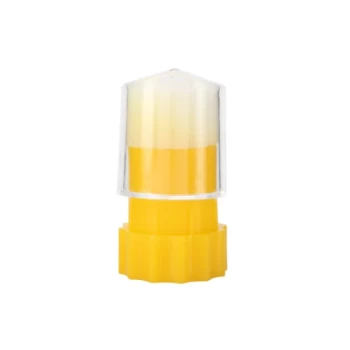
A bee pollen collector functions as a specialized mechanical sieve installed at the entrance of a beehive. Its primary role is to intercept and strip pollen loads from the hind legs of returning worker bees using a grid of specific pore structures. This equipment enables the continuous harvesting of clean, raw pollen samples without inflicting physical harm on the foraging insects.
By converting the hive entrance into a passive filtration system, the collector automates the separation of raw materials, ensuring the purity required for commercial processing while maintaining the operational integrity of the colony.
The Mechanics of Extraction
The Physical Barrier System
The core mechanism of a pollen collector (often called a pollen trap) is a grid or plate featuring precise aperture specifications.
As forager bees return to the hive, they are forced to navigate through these specific pore structures to enter.
Separation and Retention
Because the holes are sized specifically for the bee's body but not the added width of the pollen loads, the mechanical barrier gently scrapes the pollen pellets off the bees' hind legs.
Gravity then causes these detached pellets to fall through a screen into a designated collection box or drawer, isolating the harvest from the colony's traffic.
Strategic Value in Harvesting
Ensuring Raw Material Purity
The collector serves as the critical first step in obtaining high-quality bee products.
By stripping the pollen immediately upon the bee's return, the device minimizes contamination from inside the hive. This ensures the preliminary purity necessary for subsequent deep processing or botanical origin identification.
Non-Destructive Harvesting
A primary requirement of the collector is that it must be non-destructive.
The aperture design is engineered to separate the pollen without injuring the bee. This allows the workforce to continue foraging, ensuring that the harvesting process does not degrade the colony's population.
Understanding the Trade-offs
Balancing Harvest vs. Colony Health
While the collector is efficient, it interrupts the colony's natural food supply. Pollen is the primary protein source for hive development.
If a collector is left in place indefinitely, it can starve the brood and weaken the colony.
Timing and Efficiency
To mitigate nutritional risks, collectors should be deployed strategically during peak foraging periods, typically between 6:00 AM and 11:00 AM.
This maximizes the volume of pollen collected when flowers are most productive, while allowing bees to retain some pollen for the hive during off-peak hours or on days when the trap is removed.
Making the Right Choice for Your Goal
Whether you are managing a commercial operation or conducting scientific research, the application of the collector changes based on your objective.
- If your primary focus is Commercial Production: Prioritize collectors with large-capacity trays and use them during peak morning flows to maximize volume without compromising purity.
- If your primary focus is Colony Sustainability: Implement a rotational schedule where the collector is disabled or removed periodically to ensure the hive retains enough protein for brood development.
- If your primary focus is Scientific Sampling: Use the collector to obtain raw samples from specific timeframes to accurately analyze local floral sources and chemical composition.
The effective use of a bee pollen collector lies in balancing maximum yield with the biological needs of the hive.
Summary Table:
| Feature | Function & Impact |
|---|---|
| Mechanism | Precise grid apertures strip pollen from hind legs via mechanical friction. |
| Purity Control | Minimizes hive contamination by intercepting raw materials at the entrance. |
| Safety Design | Non-destructive pore structures allow bees to pass through without injury. |
| Harvest Strategy | Best used during peak morning flows (6 AM - 11 AM) to balance yield and nutrition. |
| Storage | Integrated collection drawers isolate pellets from debris and hive traffic. |
Scale Your Apiary Operations with HONESTBEE
At HONESTBEE, we understand the delicate balance between high-yield harvesting and colony sustainability. We provide commercial apiaries and distributors with professional-grade beekeeping tools, including precision-engineered pollen collectors, hive-making machinery, and honey-filling systems.
Whether you are looking to source essential industry consumables or invest in specialized hardware to streamline your production, our comprehensive wholesale offering is designed to drive your success. Contact us today to discuss how our full spectrum of equipment and cultural merchandise can add value to your business.
References
- Maria Raphaella dos Santos Vasconcelos, Ana Maria Queijeiro López. Physicochemical composition and antioxidant potential of bee pollen from different botanical sources in Alagoas, Brazil. DOI: 10.1590/1413-70542017414009317
This article is also based on technical information from HonestBee Knowledge Base .
Related Products
- Plastic Bee Pollen Trap Strips Comb Catcher Collector
- 30 cm Plastic Entrance Hole Bee Pollen Trap and Collector
- Removable Plastic Pollen Trap With Ventilated Tray for Bees Pollen Collector
- Heavy-Duty Ergonomic Grip Galvanized Pollen Shovel
- Stainless Steel Pollen Shovel with Wooden Handle
People Also Ask
- For what reasons do beekeepers collect bee pollen? Boost Hive Health and Unlock New Revenue Streams
- What are the design principles and advantages of pollen traps in the collection of bee pollen? Boost Your Apiary Yield
- What are the ideal weather conditions for installing a bee pollen trap? Ensure Colony Safety with Expert Timing
- Why is frequent harvesting of bee pollen from traps necessary for quality control? Ensure Freshness and Prevent Mold.
- What is the primary function of bee pollen traps? Optimize Your Pollen Harvest with Advanced Extraction Efficiency