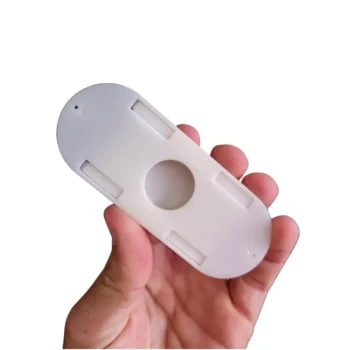
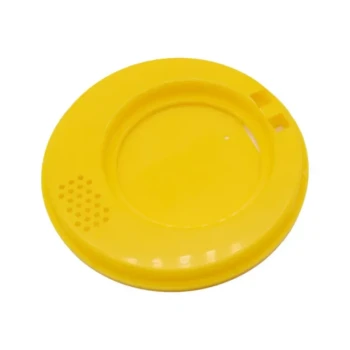
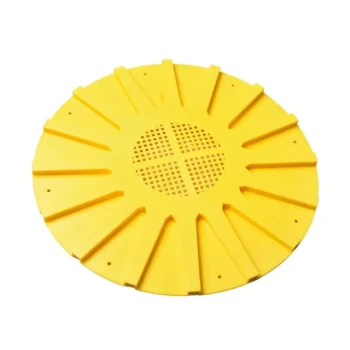
A standard pollen trap serves as a precision mechanical filter installed at the hive entrance to intercept foraging bees. Its primary function is to dislodge pollen pellets from the bees' hind legs using a specific aperture grid, allowing researchers to accurately quantify daily biomass intake and collect biological samples for detailed dietary analysis.
The pollen trap is more than a harvesting tool; it is a critical instrument for experimental control. It allows researchers to simultaneously measure what a colony intends to consume and, when necessary, restrict that consumption to isolate specific nutritional variables.
The Mechanics of Dietary Surveillance
Systematic Sampling of Intake
The most immediate function of the trap is the quantification of foraging success. By collecting the dislodged pollen in a bottom-mounted tray, researchers can measure the total daily weight of pollen entering the hive.
This data provides a direct metric of the colony’s nutritional influx. It allows for the correlation of biomass intake with external factors like weather patterns or landscape changes.
Palynological Identification
Beyond weight, the trap preserves the integrity of pollen loads for microscopic analysis. Researchers use these samples to identify specific plant species (palynology) represented in the diet.
This identification is essential for evaluating landscape enrichment strategies. It helps determine if the bees are actually visiting the intended floral resources provided by land managers.
Nutritional Profiling
The trapped pollen provides high-purity samples required for chemical assays. Researchers analyze these pellets to determine the colony's specific intake of lipids, fatty acids, and amino acids.
This establishes a nutritional baseline. It allows scientists to assess whether the available flora provides a balanced diet or if the colony suffers from specific nutrient deficiencies.
Controlling the Experimental Environment
Excluding External Variables
In controlled feeding studies, the trap functions as an exclusion device. By preventing natural pollen from entering the hive, researchers ensure the colony relies solely on provided protein supplements.
This creates a controlled environment within the hive. It eliminates the "noise" of unknown natural pollen, allowing for precise cause-and-effect analysis of artificial diets or specific protein substitutes like Azolla pinnata.
Simulating Environmental Stress
Researchers use the trap to artificially limit protein intake, simulating a "pollen-poor" environment. By restricting access to natural forage, they can study the physiological impacts of malnutrition.
This is particularly useful for assessing how nutritional stress affects specific biological metrics. Common applications include studying drone development and the colony's overall reproductive quality under duress.
Establishing Control Groups
The trap facilitates the creation of accurate biological baselines. The natural pollen collected is often processed into "control patties" to be fed to a control group of bees.
This allows for a strictly controlled comparison. Researchers can compare the performance of bees fed a novel diet against bees fed local, natural pollen collected from the exact same environment.
Operational Considerations and Trade-offs
Mechanical Obstruction
While effective for data collection, the trap relies on physical obstruction. The aperture grids (often 5.0mm) force bees to squeeze through, which can slightly alter traffic flow at the entrance.
Balancing Collection vs. Health
There is a trade-off between maximizing sample size and maintaining colony health. Continuous use of a trap restricts the colony's protein supply.
If the goal is purely sampling, the trap must not be left active indefinitely without monitoring, or the colony may suffer from the very nutritional deficiencies the researcher is attempting to study.
Applying This to Your Project
When designing your experimental protocol, the role of the pollen trap changes based on your specific hypothesis:
- If your primary focus is Landscape Assessment: Use the trap to quantify total biomass and perform palynological ID to validate which plants are actually supporting the colony.
- If your primary focus is Testing Artificial Diets: Engage the trap to rigorously exclude natural pollen, forcing the colony to consume only the experimental protein substitute.
- If your primary focus is Nutritional Physiology: Use the trap to collect samples for lipid and amino acid profiling to correlate specific nutrient levels with colony health outcomes.
Ultimately, the pollen trap transforms the beehive from an open biological system into a measurable and controllable research unit.
Summary Table:
| Research Function | Primary Mechanism | Key Insight/Data Outcome |
|---|---|---|
| Dietary Surveillance | Mechanical aperture grid (5.0mm) | Daily biomass intake & foraging success rates |
| Palynological ID | Sampling of dislodged pellets | Floral resource mapping & landscape efficiency |
| Nutritional Profiling | Chemical assay of collected pollen | Baseline levels of lipids, fatty acids, and amino acids |
| Environmental Control | Exclusion of natural forage | Evaluation of protein supplements & artificial diets |
| Stress Simulation | Artificial protein restriction | Physiological impact of malnutrition on drone development |
Elevate Your Research and Apiary Operations with HONESTBEE
At HONESTBEE, we specialize in empowering commercial apiaries, distributors, and research institutions with the high-precision tools necessary for modern beekeeping. From specialized pollen traps and hive-making machinery to advanced honey-filling systems, our comprehensive wholesale portfolio covers the full spectrum of industry equipment and consumables.
Whether you are scaling a commercial operation or conducting rigorous nutritional studies, our team provides the hardware and expertise to optimize your results. Contact us today to discuss your equipment needs and discover how our global supply chain and premium merchandise can add value to your business.
References
- Cédric Alaux, Mickaël Henry. A ‘Landscape physiology’ approach for assessing bee health highlights the benefits of floral landscape enrichment and semi-natural habitats. DOI: 10.1038/srep40568
This article is also based on technical information from HonestBee Knowledge Base .
Related Products
- 30 cm Plastic Entrance Hole Bee Pollen Trap and Collector
- Plastic Bee Pollen Trap Strips Comb Catcher Collector
- Removable Plastic Pollen Trap With Ventilated Tray for Bees Pollen Collector
- High-Efficiency Diamond Maze Bee Escape for Clearing Supers
- HONESTBEE Professional Telescopic Pole Bee Swarm Catcher
People Also Ask
- What are the design principles and advantages of pollen traps in the collection of bee pollen? Boost Your Apiary Yield
- Why is frequent harvesting of bee pollen from traps necessary for quality control? Ensure Freshness and Prevent Mold.
- How often should bee pollen be harvested from a trap and why? Master Freshness and Prevent Spoilage
- What function do pollen traps serve in quantitative collection? Boost Your Apiary's Data & Production Efficiency
- What is the primary function of bee pollen traps? Optimize Your Pollen Harvest with Advanced Extraction Efficiency