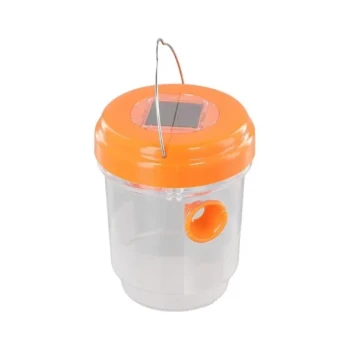
The operational mechanism of hornet traps and biological lure consumables relies on the principles of chemical communication, utilizing simulated pheromones or food signals to deceive and capture predators. Within an apiary warning system, these devices function as advanced scouts, monitoring fluctuations in pest density to detect threats before they escalate into large-scale attacks on honeybee colonies.
While these traps provide immediate physical relief by reducing predator numbers, their strategic value lies in data generation. They serve as an early-warning indicator, signaling the beekeeper to implement more intensive physical or chemical control measures before the apiary is overwhelmed.
The Science of Attraction
Exploiting Chemical Signals
The core technology behind effective hornet traps is the use of simulated pheromones. These chemical signals mimic the natural communication markers used by hornets, effectively tricking them into entering the trap.
Utilizing Food Signals
In addition to pheromones, these systems often employ food signals or biological baits. As noted in supplementary contexts, organic matter such as meat can be used to attract carnivorous predators looking for protein to feed their larvae.
The Capture Mechanism
Once the hornet is lured in by the chemical or biological signal, the physical structure of the trap prevents escape. This containment allows for precise identification and counting of the pests.
The Early Warning Function
Monitoring Pest Density
The primary operational goal in a warning system is not just killing hornets, but monitoring changes in density. By tracking how many hornets are captured over a specific period, beekeepers can gauge the severity of the local threat level.
Preempting Mass Attacks
Hornets often send scouts before launching a coordinated slaughter of a honeybee colony. These traps are designed to intercept these early invaders, providing a critical window of time to react before a full invasion force arrives.
Strategic Defense Implications
Triggering Escalation
The data provided by these traps serves as a decisive reference point. When capture rates spike, it signals the beekeeper to transition from passive monitoring to intensive physical or chemical control measures.
Reducing Predatory Pressure
Beyond intelligence gathering, the traps perform a vital physical control function. By constantly removing predators from the environment, they directly decrease the density of hornets surrounding the apiary, relieving immediate stress on the honeybee colonies.
Understanding the Trade-offs
Maintenance of Consumables
Biological lures and simulated pheromones are consumables with a finite lifespan. For the warning system to remain accurate, these lures must be replaced regularly to maintain the potency of the chemical signal.
Detection vs. Eradication
It is critical to understand that while traps reduce numbers, they are primarily diagnostic tools in high-pressure environments. Relying solely on traps during a massive infestation without implementing the secondary "intensive measures" they signal for may result in colony loss.
Making the Right Choice for Your Apiary
To effectively utilize hornet traps and lures within your warning system, consider your immediate management goals:
- If your primary focus is Early Detection: Prioritize high-quality simulated pheromone lures that can detect even low levels of scout activity to give you maximum reaction time.
- If your primary focus is Density Reduction: Combine the warning system with robust biological baits (like meat) to physically remove as many predators as possible while preparing secondary defenses.
By treating these traps as intelligence tools rather than simple catchers, you transform them from passive devices into active defenders of your apiary's future.
Summary Table:
| Feature | Mechanism/Function | Strategic Value |
|---|---|---|
| Attraction Signal | Simulated pheromones & biological food baits | Tricks predators into trap entry via chemical mimicry |
| Capture Method | Physical containment structure | Prevents escape for precise identification and counting |
| Monitoring | Pest density tracking | Detects scout hornets to signal early-warning threats |
| Maintenance | Regular replacement of consumables | Ensures consistent signal potency and system accuracy |
| Outcome | Data-driven defensive escalation | Reduces predatory pressure and prevents mass hive attacks |
Secure Your Colonies with HONESTBEE’s Professional Defense Solutions
Don't wait for a mass attack to compromise your commercial apiary. HONESTBEE provides distributors and large-scale beekeeping operations with the high-performance tools needed to stay ahead of predators. From advanced hornet traps and biological consumables to heavy-duty beekeeping machinery and hive-making equipment, we offer a comprehensive wholesale portfolio designed for resilience and efficiency.
Why partner with HONESTBEE?
- Full Spectrum Supply: Access everything from specialized honey-filling machines to essential industry consumables.
- Commercial Expertise: We cater specifically to the needs of professional apiaries and global distributors.
- Strategic Advantage: Our products are engineered to provide both physical protection and critical data for hive management.
Contact HONESTBEE Today to Secure Your Wholesale Order
References
- Т. В. Коновалова. The species composition of wasps-pests of honeybees Apis mellifera L.. DOI: 10.30917/att-vk-1814-9588-2018-1-8
This article is also based on technical information from HonestBee Knowledge Base .
Related Products
- Compact Multi-Funnel Hanging Wasp Trap
- Reusable Aluminium Beetle Trap for Small Hive Beetles Silver Bullet
- Removable Washable Hive Beetle Trap Attractants for Small Hive Beetles
- HONESTBEE Professional Telescopic Pole Bee Swarm Catcher
- HONESTBEE Collapsible Tiered Bee Swarm Catcher for Beekeeping
People Also Ask
- What are the practical advantages of using professional wasp traps and protective equipment in apiary management? Scale Up
- Why replace sugar syrup bait in wasp traps every three days? Ensure Maximum Attraction and Catch Rates
- What is the importance of deploying hornet traps around an apiary for maintaining colony stability? Protect Your Yields.
- What are the advantages of placing hornet traps on the tops of beehives? Maximize Hive Defense Against Predators
- What is the technical purpose of placing expanded clay balls in a hornet trap? Optimize Your Apiary Monitoring