The primary function of a honey refractometer is to accurately measure the moisture content within honey. By quantifying the specific percentage of water, this optical instrument allows beekeepers to determine exactly when honey is ripe for harvest and safe for long-term storage without the risk of spoilage.
While visual cues like capped wax cells are helpful, they are not infallible indicators of ripeness. A refractometer provides the definitive data point needed to ensure honey meets quality standards, effectively preventing the fermentation that destroys flavor and shelf-life.
The Critical Role of Moisture Control
Preventing Fermentation
The most urgent reason to use a refractometer is to assess the risk of yeast activity. If honey contains too much water, natural yeasts can thrive and cause the honey to ferment.
This results in "baker’s honey," which is characterized by a sharp, yeasty, or acetic acid taste. Once fermentation begins, the honey is generally considered spoiled for table use and must be discarded or repurposed.
Meeting Industry Standards
For commercial apiaries, moisture control is not optional; it is a matter of compliance. Legal regulations for selling honey often stipulate a strict moisture content limit, typically requiring levels to be below 21%.
Using a refractometer ensures that every batch harvested meets these strict legal requirements. It serves as a quality control checkpoint that validates the product is fit for sale.
Balancing Storage Qualities
A reading from a refractometer helps predict the physical behavior of the honey over time. Beekeepers generally aim for an ideal moisture range between 14% and 18%.
A lower reading suggests the honey will store well without spoiling, though it increases the likelihood of crystallization. Conversely, higher readings serve as an early warning system for potential spoilage issues.
Optimizing the Harvest
solving the Uncapped Cell Dilemma
A common misconception is that honey is only ready when the bees have capped the honeycomb cells with wax. However, bees may leave cells uncapped due to a lack of wax resources or because they intend to use the honey as an immediate food source.
A refractometer allows a beekeeper to test the nectar in these uncapped frames. If the reading confirms the moisture is low enough, the frame can be safely harvested regardless of the visual appearance.
Eliminating Guesswork
For both amateur and professional beekeepers, reliance on intuition can lead to costly mistakes. Harvesting too early results in a watery product that degrades quickly.
The refractometer replaces estimation with precision. It offers a low-cost, easy-to-use alternative to complex laboratory techniques like isotope ratio mass spectrometry or liquid chromatography (HPLC).
Understanding the Trade-offs
The Crystallization vs. Fermentation Balance
While the primary goal is often to lower moisture to prevent spoilage, there is a trade-off in texture. Pushing for extremely low water content (well below 17%) significantly increases the rate at which honey crystallizes.
Beekeepers must use the data from the refractometer to find the "sweet spot." You are looking for a percentage that is low enough to inhibit yeast, but not so low that the product solidifies immediately, unless creamed honey is the goal.
Making the Right Choice for Your Goal
To get the most value out of this tool, apply the readings to your specific objective:
- If your primary focus is Commercial Sales: Ensure every batch reads below 21% (or your local legal limit) to adhere to strict industry regulations.
- If your primary focus is Long-Term Storage: Aim for a reading between 14% and 18% to maximize shelf stability and prevent fermentation.
- If your primary focus is Harvest Efficiency: Use the device to test uncapped frames, allowing you to harvest ripe honey even if the bees haven't finished capping it.
Ultimately, a honey refractometer transforms beekeeping from a practice of estimation into a science of precision, ensuring the hard work of the colony is never wasted.
Summary Table:
| Moisture Level | Assessment | Action / Consequence |
|---|---|---|
| Below 17% | Low Moisture | Highly stable; increased risk of rapid crystallization. |
| 17% - 18.6% | Ideal Range | Perfect balance for long-term storage and texture. |
| 18.7% - 21% | Marginal | Safe for short-term sale; may require monitoring. |
| Above 21% | High Moisture | High risk of fermentation; does not meet most commercial standards. |
Elevate Your Honey Quality with HONESTBEE Precision Equipment
Don't let fermentation ruin your harvest. At HONESTBEE, we empower commercial apiaries and distributors with the professional-grade tools needed to ensure every jar meets the highest standards.
Our comprehensive wholesale selection includes:
- Testing & Processing: High-precision refractometers and honey-filling machines.
- Beekeeping Infrastructure: Hive-making machinery and durable hardware.
- Consumables & Merchandise: A wide array of essential industry supplies and honey-themed cultural goods.
Whether you are scaling your production or supplying a retail network, HONESTBEE delivers the machinery and expertise to maximize your efficiency and product value.
Ready to upgrade your apiary’s performance? Contact us today to explore our wholesale solutions!
Related Products
- Digital Honey Refractometer for Precision Measurement of Optimal Honey Quality
- Precision Honey Refractometer Instrument for Quality Assessment
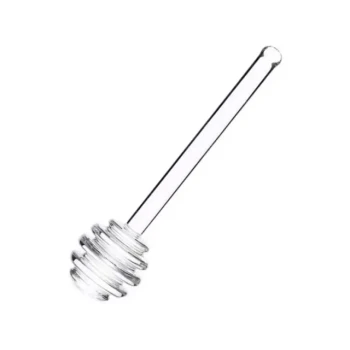
- Premium Heat-Resistant Glass Honey Dipper
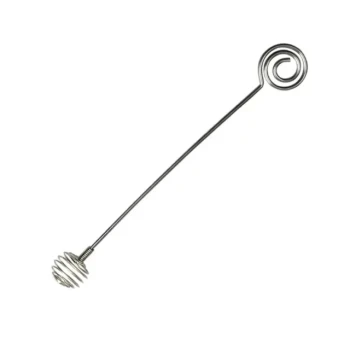
- Modern Stainless Steel Honey Dipper Stirrer
- Heavy Duty 304 Stainless Steel Honey Dipper
People Also Ask
- What role do high-precision refractometers play in determining the maturity and quality of honey? Ensure Honey Purity.
- Do the color and viscosity of honey affect its refractometer reading? Mastering Moisture Measurement Accuracy
- How is the reading taken from a honey refractometer? A Guide to Accurate Moisture Measurement
- Why is a honey refractometer considered essential for commercial beekeepers? Ensure Honey Quality and Profitability
- What is the best way to store a honey refractometer? Preserve Accuracy and Extend Its Lifespan