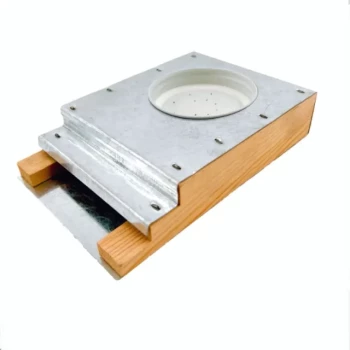
The primary function of supplementary honeybee feed is to directly support the physiological capabilities of the bees required for Royal Jelly secretion. By providing specific proteins, amino acids, and vitamins through yeast-based additives, these feeds fuel the glandular activities of nurse bees, ensuring consistent, high-quality production even when natural pollen sources are scarce.
Supplementary feeding acts as a critical nutritional bridge, transforming raw inputs like medical dry yeast and syrups into the biological building blocks required for Royal Jelly. It stabilizes production variables, allowing the colony to maintain high output regardless of external environmental limitations.
The Physiological Impact of Nutritional Intervention
Fueling Glandular Secretion
The core requirement for Royal Jelly production is a robust supply of proteins and amino acids. Supplementary feeds, specifically those containing medical dry yeast or yeast extracts, provide these essential macronutrients.
This intake directly strengthens the physiological constitution of the honeybees. By fortifying the bees' internal resources, the feed supports the hypopharyngeal glands, which are responsible for secreting Royal Jelly.
Stabilizing Production Amidst Scarcity
Natural pollen sources fluctuate due to weather and seasonal changes. Supplementary feeding serves as a buffer against these environmental variables.
By intervening with nutrient-rich cakes or liquids, beekeepers ensure stable production levels. This allows for the maximization of production efficiency without relying solely on the unpredictability of nature.
The Role of the Delivery System
High-Concentration Syrup as a Carrier
While yeast provides the protein, high-concentration syrup acts as the essential liquid delivery vehicle. It is frequently used to administer mineral supplements, such as citrates, into the hive.
The syrup ensures that these trace elements and nutrients are uniformly distributed throughout the colony. This guarantees that every bee receives the necessary nutrition to sustain vital biological activities.
Simulating Nectar Flow for Population Growth
Syrup feeding mimics the availability of natural carbohydrate sources found during a nectar flow. This artificial abundance triggers specific biological responses within the hive.
It provides a continuous stimulation that encourages the queen to lay eggs. This results in rapid population growth, ensuring a maximized workforce of bees is available to support production cycles.
Understanding the Trade-offs
Protein vs. Carbohydrate Balance
A common pitfall is confusing the roles of different supplements. Syrup alone simulates a nectar flow and boosts population (energy), but it does not provide the materials necessary for Royal Jelly production (protein).
To produce Royal Jelly, the colony requires building blocks, not just fuel. Relying solely on sugar syrup without the inclusion of yeast or protein extracts will increase the population but may fail to support the glandular secretion required for high-quality jelly.
Dependency on Timing
The effectiveness of supplementary feeding is highly dependent on timing relative to natural blooms.
These systems are most effective during nectar dearth periods or the incentive period before a main bloom. Using them effectively requires precise management to ensure the colony peaks exactly when production is needed, rather than expending resources too early.
Making the Right Choice for Your Goal
To maximize the efficacy of your supplementary feeding program, align your inputs with your specific production targets:
- If your primary focus is Royal Jelly Quality: Prioritize feeds rich in medical dry yeast and amino acids to directly support glandular secretion and protein synthesis.
- If your primary focus is Colony Population: Utilize high-concentration syrup systems to simulate a nectar flow and stimulate the queen to increase egg-laying activity.
Strategic nutrition transforms your hive from a passive gathering unit into a controlled, high-output production environment.
Summary Table:
| Supplement Type | Key Components | Primary Function | Impact on Colony |
|---|---|---|---|
| Yeast-Based Cakes | Medical dry yeast, Amino acids, Proteins | Fuel hypopharyngeal glands | High-quality Royal Jelly secretion |
| High-Concentration Syrup | Carbohydrates, Mineral supplements | Simulate nectar flow | Increased queen laying & population growth |
| Mineral Additives | Citrates, Trace elements | Uniform nutrient delivery | Sustained vital biological activities |
Maximize Your Royal Jelly Yield with HONESTBEE Professional Solutions
At HONESTBEE, we understand that commercial success in Royal Jelly production requires more than just nature—it requires precision. We provide commercial apiaries and distributors with a comprehensive wholesale range of specialized beekeeping tools, from hive-making machinery to advanced honey-filling systems and essential industry consumables.
Whether you are looking to scale your operations or supply high-quality equipment to your local market, our portfolio is designed to enhance efficiency and output. Contact us today to discover how our professional-grade equipment and industry expertise can transform your beekeeping business!
References
- Sawsan Elmohandes, Asmaa Fawzy. Determination of Amino Acids in Royal Jelly Produced by Honeybees (ApismelliferaL.), Fed on Brewer’s Yeast and Yeast Extract Diets. DOI: 10.21608/jppp.2016.51090
This article is also based on technical information from HonestBee Knowledge Base .
Related Products
- HONESTBEE Professional Entrance Bee Feeder Hive Nutrition Solution
- HONESTBEE Entrance Bee Feeder Professional Hive Nutrition Solution for Beekeeping
- HONESTBEE Round Hive Top Bee Feeder for Syrup
- HONESTBEE Entrance Bee Feeder Efficient Hive Front Liquid Feeding Solution for Beekeeping
- HONESTBEE Professional Hive Top Bee Feeder Feeding Solution
People Also Ask
- What types of bee feeders are available for beginners? Start with the Simple Entrance Feeder
- What are the advantages and disadvantages of using an entrance feeder for bees? Balance Convenience and Hive Security.
- How does a bee entrance feeder work? A Simple Guide to Convenient Hive Feeding
- What is a bee entrance feeder and what are its drawbacks? Essential Guide to Hive Security and Feeding Efficiency
- How to make an entrance feeder for bees? A DIY Guide for Safe & Effective Feeding