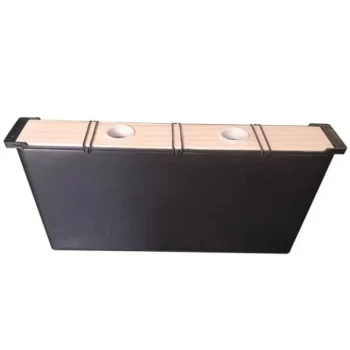
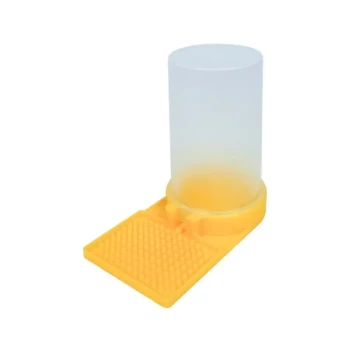
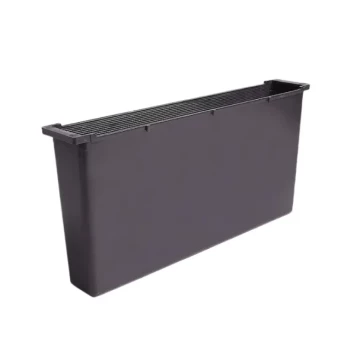
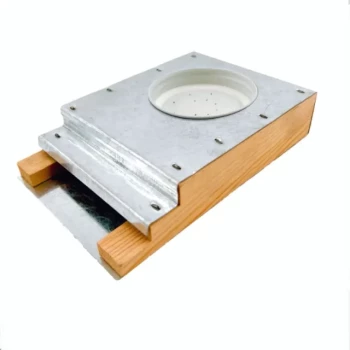
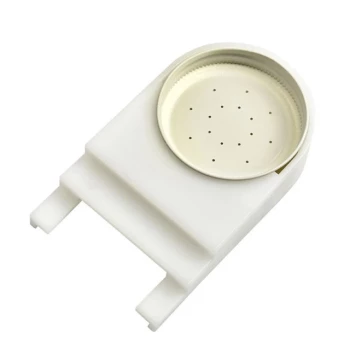
The primary technical value of professional feeders lies in their sealed or semi-sealed design, which effectively contains the volatile scents of supplemental feeds like sugar or corn syrup. By mechanically minimizing the diffusion of these aromas, professional feeders prevent scout bees from detecting the food source, thereby neutralizing the trigger for large-scale robbing behavior before it can begin.
Core Insight: Robbing is fundamentally a crime of opportunity driven by scent detection. Professional feeders solve this by isolating the food source within a closed system, ensuring resources are consumed internally by the colony rather than broadcasting an invitation to neighboring competitors.
The Mechanics of Scent Containment
Minimizing Volatile Diffusion
Standard or makeshift feeding methods often expose syrup to the open air, allowing sweet scents to drift across the apiary. Professional feeders utilize a sealed or semi-sealed architecture to trap these volatile compounds.
This containment ensures that the scent profile of the feed remains locked inside the feeder mechanism. By restricting airflow over the syrup, the feeder drastically reduces the "scent footprint" of the hive.
Preventing Scout Bee Detection
The biological precursor to robbing is the successful discovery of resources by a scout bee. These scouts patrol the environment looking for high-calorie, easily accessible sugar sources.
If a scout cannot detect the scent of the syrup, they cannot report its location to their colony. Professional feeders effectively "hide" the food in plain sight, breaking the communication chain that leads to recruitment and subsequent raiding parties.
The Biological Context of Robbing
Breaking the Escalation Cycle
Robbing is not an instantaneous event; it is an escalation. Once a scout recruits other foragers, the activity can quickly spiral into a large-scale robbing frenzy.
Professional feeders act as a preventative barrier at the earliest stage of this cycle. By denying the initial olfactory cue, they maintain order within the production environment and prevent the chaotic aggression associated with resource competition.
Complementary Hive Defense
While the feeder manages the scent of the food, the overall security of the hive relies on a defensible perimeter.
As noted in supplementary technical context, reducing hive entrances aids guard bees in physically repelling intruders. However, the feeder serves as the root-cause solution by preventing the scent leakage that attracts those intruders in the first place.
Understanding the Trade-offs
Equipment Complexity
Professional feeders are engineered devices, meaning they introduce a higher level of complexity compared to open feeding or simple jar methods.
Using them requires adherence to proper installation protocols to ensure the seal is effective. A poorly secured professional feeder can still leak scent, negating its primary technical advantage.
Maintenance and Monitoring
Because these feeders are often internal or enclosed to maintain their seal, visual monitoring of syrup levels may be less intuitive than with transparent, external feeders.
Beekeepers must develop a routine to check levels without breaking the colony's seal unnecessarily, as frequent opening of the hive can release the very scents the feeder is designed to contain.
Making the Right Choice for Your Apiary
To effectively prevent robbing and maintain colony health, align your equipment choices with your management goals:
- If your primary focus is preventing robbing: Prioritize professional feeders with sealed designs to eliminate the scent trails that attract scout bees.
- If your primary focus is physical colony defense: Combine professional feeders with reduced hive entrances to maximize the efficiency of your guard bees.
- If your primary focus is urban biosecurity: Ensure all equipment gaps are sealed to prevent honey scent leakage, protecting the biological security of the surrounding environment.
Effective apiary management is not just about feeding your bees; it is about feeding them without signaling their resources to the rest of the ecosystem.
Summary Table:
| Feature | Professional Feeders | Traditional/Open Feeding |
|---|---|---|
| Mechanism | Sealed/Semi-sealed architecture | Open exposure to air |
| Scent Profile | Contained volatile compounds | High scent diffusion |
| Scout Prevention | Blocks olfactory cues | Attracts scout bees via aroma |
| Robbing Risk | Minimal (Source hidden) | High (Triggers raiding frenzy) |
| Hive Defense | Complements guard bees | Overwhelms guard bees |
Secure Your Apiary Productivity with HONESTBEE
Don’t let robbing behavior compromise your honey yields or colony health. HONESTBEE provides professional-grade beekeeping equipment designed for the rigorous demands of commercial apiaries and global distributors. From scent-trapping professional feeders and hive-making machinery to specialized honey-filling equipment and industry consumables, we offer the full spectrum of tools needed to scale your operations.
Partner with HONESTBEE today to access wholesale pricing and precision-engineered solutions.
References
- A. Sherif, Alyaa A. Gazzy. OBSERVATION ON THE ROBBING BEHAVIOR IN TWO HONEYBEE HYBRIDS (CARNIOLAN AND ITALIAN) IN KAFR EL SHEIKH GOVERNORATE. DOI: 10.21608/mjapam.2017.127018
This article is also based on technical information from HonestBee Knowledge Base .
Related Products
- HONESTBEE Entrance Bee Feeder Professional Hive Nutrition Solution for Beekeeping
- HONESTBEE Professional Hive Top Bee Feeder Feeding Solution
- Professional In-Hive Frame Bee Feeder by HONESTBEE
- Professional Hive Front Entrance Bee Feeder
- HONESTBEE Professional Entrance Bee Feeder Hive Nutrition Solution
People Also Ask
- What types of bee feeders are available for beginners? Start with the Simple Entrance Feeder
- What are the advantages and disadvantages of using an entrance feeder for bees? Balance Convenience and Hive Security.
- What is a bee entrance feeder and what are its drawbacks? Essential Guide to Hive Security and Feeding Efficiency
- How does a bee entrance feeder work? A Simple Guide to Convenient Hive Feeding
- How to make an entrance feeder for bees? A DIY Guide for Safe & Effective Feeding