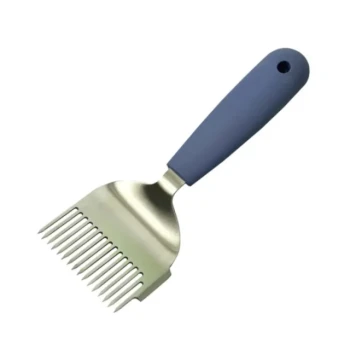
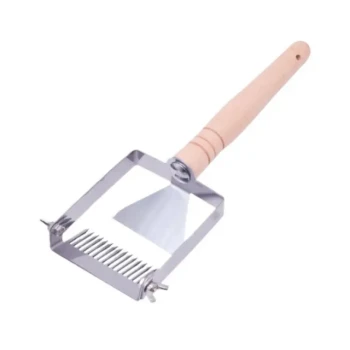
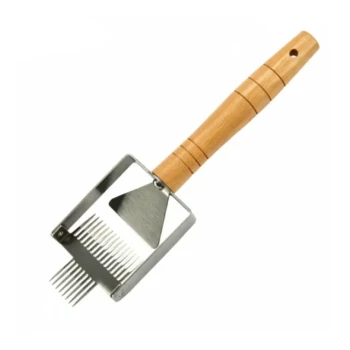
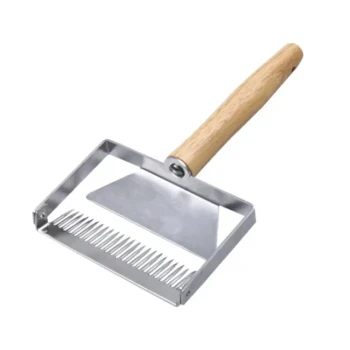
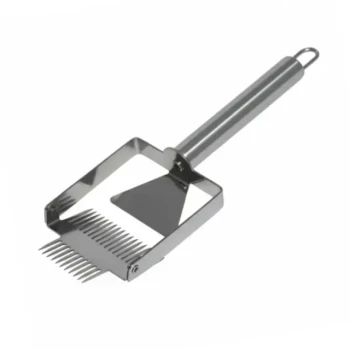
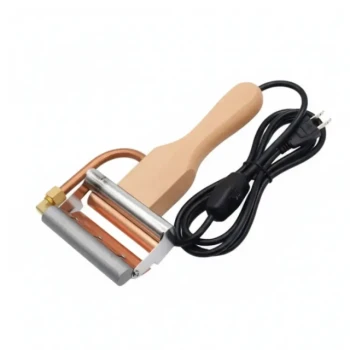
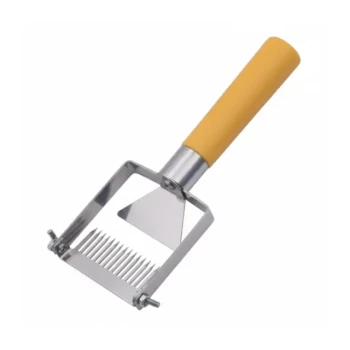
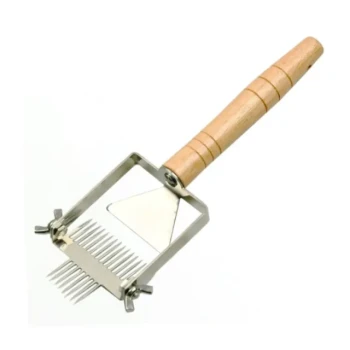
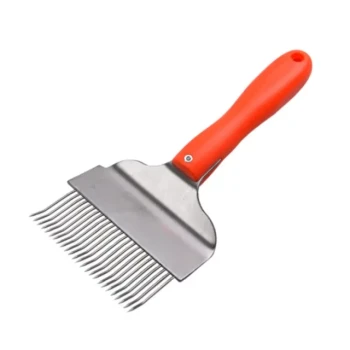
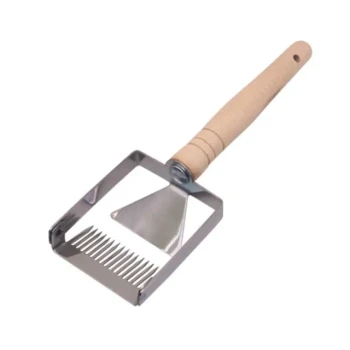
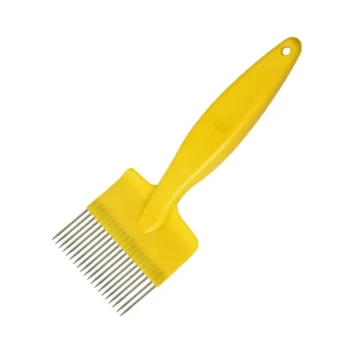
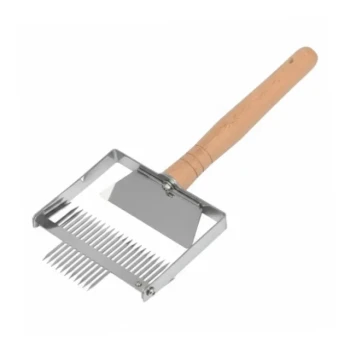
Drone Brood Uncapping Tools are specialized instruments designed to expose drone larvae for visual inspection during hive assessments. By using devices such as multi-tined forks to physically open capped cells, beekeepers can conduct destructive sampling to detect Varroa destructor mites that are reproducing inside the brood.
Core Insight Because Varroa mites have a strong biological preference for reproducing within drone brood, standard inspections of adult bees often underestimate mite levels. Uncapping tools bridge this gap by revealing hidden infestations currently in the reproductive stage.
The Science Behind the Strategy
Exploiting Mite Behavior
Varroa destructor mites do not distribute themselves evenly throughout a hive. They exhibit a distinct preference for drone brood (male bee larvae) over worker brood.
The Trap Mechanism
Because drone cells are larger and have a longer development period, they act as a magnet for mites seeking to reproduce. This concentration of parasites makes drone brood an ideal location for targeted monitoring.
Revealing the Invisible
Standard hive inspections generally focus on mites attached to adult bees (phoretic mites). However, a significant portion of the mite population exists under the wax cappings of sealed brood, making them invisible to the naked eye without intervention.
The Role of the Tool in Monitoring
Facilitating Destructive Sampling
Uncapping tools are designed for "destructive sampling." This means the inspector intentionally sacrifices a specific patch of drone larvae to gain data on the colony's health.
Efficient Extraction
The tool, often a fork with multiple tines, is dragged across the brood area. This action rips open the cell caps and lifts the larvae out, allowing for immediate visual examination.
Visual Confirmation
Once the larvae are exposed and extracted, the contrast between the white larvae and the reddish-brown mites makes detection straightforward. This provides definitive proof of whether the mites have successfully infiltrated the brood for reproduction.
Understanding the Trade-offs
Loss of Potential Bees
As the name implies, destructive sampling kills the developing bees in the tested area. While drones are less critical to colony survival than workers, this is still a loss of colony resources.
Scope Limitations
Uncapping provides a "spot check" rather than a comprehensive census. It confirms presence and estimates density in that specific area, but it must be extrapolated to understand the total hive infestation level.
Distinction from Control Methods
It is important to distinguish this monitoring technique from drone brood removal.
- Removal (Control): Involves removing an entire frame of drone comb to lower the overall mite population (as noted in supplementary contexts).
- Uncapping (Monitoring): Involves opening a small section to measure the infestation rate.
Making the Right Choice for Your Goal
Incorporating drone uncapping into your workflow allows for more precise Integrated Pest Management (IPM).
- If your primary focus is Early Detection: Use the uncapping tool to check small patches of drone brood early in the season to identify if mites have begun reproducing before they overwhelm the worker brood.
- If your primary focus is Assessing Treatment Urgency: Use the tool to supplement alcohol washes; a low wash count but high drone infestation indicates a future population explosion is imminent.
By revealing what is hidden under the cappings, you move from guessing about mite levels to knowing the reality of the infestation.
Summary Table:
| Feature | Description | Benefit for Beekeepers |
|---|---|---|
| Targeted Brood | Focuses specifically on drone larvae (male bees) | Higher mite detection rate due to Varroa biological preference |
| Mechanism | Multi-tined fork for destructive sampling | Provides immediate visual evidence of reproductive mites |
| Accuracy | Reveals hidden mites under wax cappings | Supplements phoretic mite counts for better IPM decisions |
| Strategic Use | Used during routine hive inspections | Enables early detection of mite population explosions |
Scale Your Apiary Success with HONESTBEE
Protecting your colonies requires precision tools and reliable equipment. At HONESTBEE, we specialize in supporting commercial apiaries and distributors by providing a comprehensive wholesale range of beekeeping essentials.
Whether you need specialized drone uncapping forks, high-efficiency honey-filling machines, or durable hive-making hardware, our portfolio is designed to enhance your operational productivity. From professional-grade machinery to essential industry consumables and honey-themed cultural merchandise, we deliver the quality your business deserves.
Ready to optimize your wholesale supply chain? Contact our expert team today to discuss your requirements!
References
- Robert Owen, Jean‐Pierre Y. Scheerlinck. Varroa destructor detection in non-endemic areas. DOI: 10.1007/s13592-021-00873-7
This article is also based on technical information from HonestBee Knowledge Base .
Related Products
- Professional Multi-Function Uncapping Fork with Ergonomic Rubber Grip
- Automatic Honey Frame Uncapper Machine for Beekeeping
- Lightweight Plastic Uncapping Roller with Tines
- Professional Multi-Function Uncapping Fork with Integrated Blade for Beekeeping
- Double Sided Adjustable Honey Uncapping Fork with Plastic Handle
People Also Ask
- What is the primary use of an uncapping fork in beekeeping? A Guide to Precision Honey Harvesting
- What is the use of an uncapping fork? A Precision Tool for Hive Management and Honey Harvesting
- What is the original purpose of an uncapping fork? Mastering Precision Honey Extraction and Comb Preservation
- How is an uncapping fork used to uncap honey frames? Precision Techniques for Perfect Honey Extraction
- What is an uncapping fork? A Precision Tool for Efficient Honey Harvesting