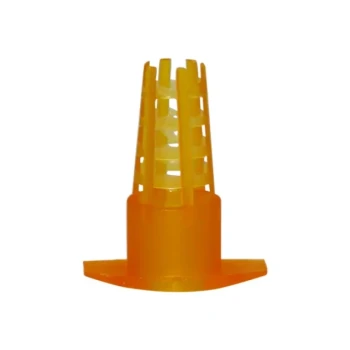
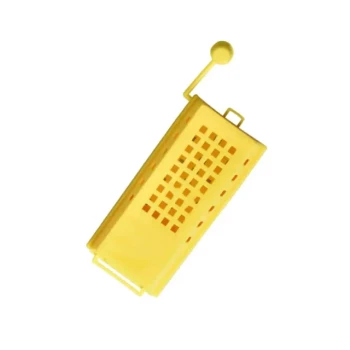
Artificial queen cell cups serve as the fundamental triggers for converting a honeybee colony into a royal jelly production unit. Specifically, in the modified Doolittle grafting method, these standardized acrylic or plastic cups simulate the natural environment of a queen cell, prompting worker bees to fill them with royal jelly to nurture transferred larvae.
Core Insight: Artificial cups bridge the gap between biological instinct and industrial efficiency. By standardizing the receptacle, producers can induce maximum secretion of royal jelly across thousands of cells simultaneously, transforming a natural behavior into a scalable, harvestable resource.
The Mechanism of Induced Production
Simulating the Biological Environment
The primary role of the artificial cup is to mimic nature.
In a natural hive, bees only rear queens (and secrete massive amounts of jelly) under specific, limited conditions. The artificial cup tricks the colony into believing it needs to rear dozens or hundreds of queens simultaneously.
The Role in the Doolittle Method
These cups are the essential consumables for the modified Doolittle grafting method.
Technicians transfer larvae of a specific age into these cups. Because the cup resembles a queen cell, the worker bees instinctively treat the larva as a potential queen rather than a worker.
Triggering Mass Secretion
Once the larvae are grafted into the cups, the worker bees' biological response is immediate.
They are induced to secrete large quantities of royal jelly to feed the larvae. This creates a surplus of jelly within the cup, which is the primary product harvested in commercial operations.
Why Standardization Matters
Enabling Large-Scale Operations
Natural queen cells are irregular in location and shape. Artificial cups, particularly those made of acrylic or plastic, provide mechanical uniformity.
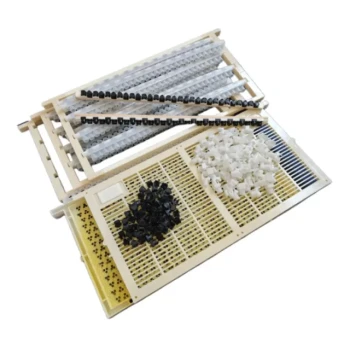
This allows for the arrangement of large numbers of cells on grafting frames. This density is critical for increasing the biological output per honeybee colony.
Facilitating Efficient Harvesting
The precise dimensions of artificial cups are not just for the bees; they are for the producers.
Standardized sizes allow for high-efficiency mechanical or semi-mechanical collection of the jelly. This transforms harvesting from a delicate manual task into a systematic industrial process.
Understanding the Trade-offs
Durability vs. Acceptance
While acrylic and plastic cups offer durability and reusability, they introduce a challenge regarding biological acceptance.
Natural beeswax cups have the highest biocompatibility. Worker bees accept them readily, leading to maximum production rates. Industrial plastic cups, while stronger, often have lower initial acceptance rates because they feel "foreign" to the bees.
The Necessity of Surface Treatment
To mitigate the acceptance issue, plastic cups often require a beeswax coating.
This treatment simulates the natural texture and scent of the hive. It allows producers to leverage the mechanical strength of plastic while maintaining the high royal jelly yields associated with natural wax.
Making the Right Choice for Your Goal
The choice of cup material and preparation dictates the efficiency of your operation.
- If your primary focus is Scalability and Automation: Utilize high-quality plastic or acrylic cups, as their rigid structure supports repeated use and mechanical harvesting.
- If your primary focus is Larval Acceptance: Ensure your plastic cups are treated with a beeswax coating to mimic natural texture and maximize the bees' willingness to deposit jelly.
Ultimately, the artificial cup is the critical interface that aligns the biological instincts of the bee with the production requirements of the apiary.
Summary Table:
| Feature | Natural Queen Cells | Artificial Acrylic/Plastic Cups |
|---|---|---|
| Purpose | Spontaneous queen rearing | Industrial-scale royal jelly production |
| Scalability | Low (irregular placement) | High (uniform frame arrangement) |
| Durability | Single-use/Fragile | High (reusable and rigid) |
| Acceptance Rate | Maximum (natural scent) | Moderate (requires beeswax coating) |
| Harvest Method | Manual/Delicate | Mechanical or semi-mechanical |
| Primary Benefit | Biological perfection | Efficiency and systematic output |
Elevate Your Royal Jelly Production with HONESTBEE
As a global leader in commercial beekeeping solutions, HONESTBEE empowers commercial apiaries and distributors with the high-performance tools needed to scale operations. Our comprehensive wholesale portfolio includes premium-grade acrylic queen cell cups, specialized hive-making machinery, and precision honey-filling systems designed for maximum efficiency.
Whether you are looking to enhance larval acceptance with our industry-tested consumables or automate your processing facility, we provide the expertise and hardware to drive your success. Contact us today to discuss your wholesale needs and discover how our end-to-end beekeeping equipment can transform your production yields.
References
- Maria Josiane Sereia, Vagner de Alencar Arnaut de Toledo. Quality of royal jelly produced by Africanized honeybees fed a supplemented diet. DOI: 10.1590/s0101-20612013005000039
This article is also based on technical information from HonestBee Knowledge Base .
Related Products
- Brown Nicot Queen Cell Cups for Breeding Queen Bees Beekeeping
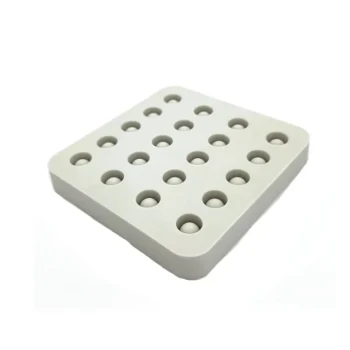
- High-Efficiency 20-Cell Silicone Mold for Beeswax Bee Queen Cup Production
- JZBZ Push-In Queen Cell Cups for Beekeeping
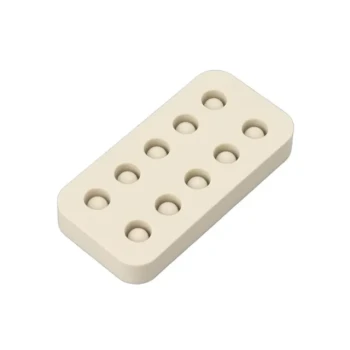
- 10-Cell Silicone Beeswax Bee Queen Cups Forming Mold
- JZBZ Type Wide Base Plastic Queen Cell Cups for Base Mounting and Queen Rearing
People Also Ask
- What role do specialized queen rearing tools play in developing mite-resistant honeybee stock? Master Genetic Selection
- What materials are used to make artificial queen cell cups for grafting? Beeswax vs. Plastic Guide
- What roles do specialized queen cell cups play in royal jelly production? Optimize Your Hive's Secretion and Yield
- How does the standardized depth of queen cell cups affect larval acceptance? Boost Success with 6mm Precision
- Why is a diluted royal jelly solution applied to queen cell cups? Boost Acceptance in Artificial Grafting