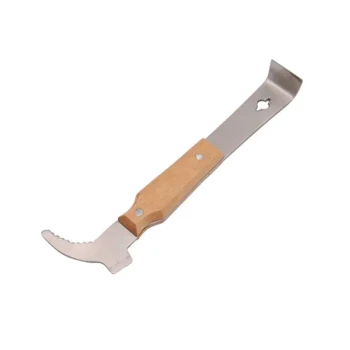
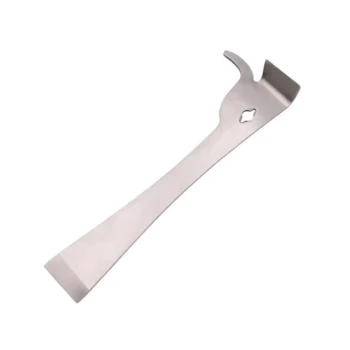
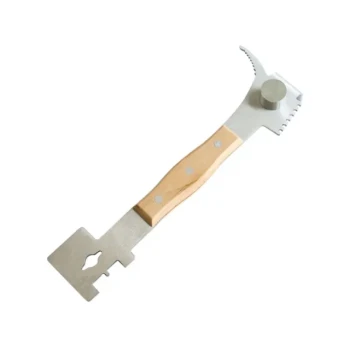
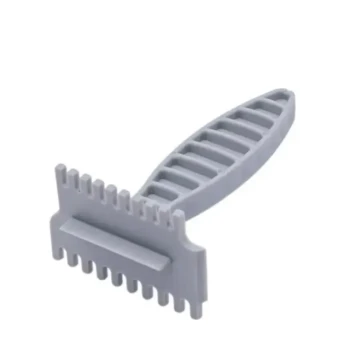
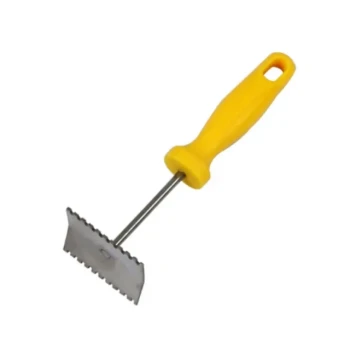
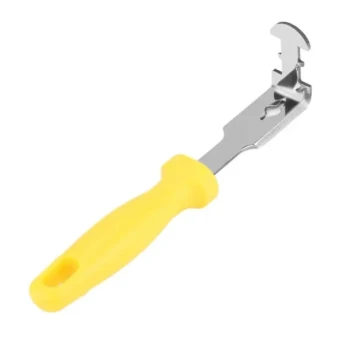
The significance of using specialized tools for cleaning and collecting beehive debris lies in their ability to function as a diagnostic instrument. Rather than serving a purely hygienic purpose, these tools enable the systematic analysis of hive waste to reveal the biological status of the colony. This process acts as a non-invasive early warning system, detecting pests like wax moth larvae and ants long before they are visible during a standard frame inspection.
Debris analysis transforms beekeeping from a reactive practice into a proactive science. It provides a factual baseline for colony health, ensuring that pest control strategies are driven by hard evidence rather than visual estimates or assumptions.
Turning Debris into Data
The Early Warning Mechanism
Routine visual inspections often miss the initial stages of an infestation. By the time you see pests on the comb, the colony may already be compromised.
Collecting debris allows you to identify microscopic evidence of distress. This offers a lead time that is critical for saving weak colonies before a population explosion of pests occurs.
Identifying Specific Biological Threats
Debris is not just trash; it is a footprint of the hive's ecosystem. Specialized tools help isolate specific indicators among the wax droppings.
You are looking for specific markers such as the frass of wax moth larvae, the presence of pseudoscorpions, or the remains of various ant species. Identifying these early allows for targeted intervention rather than broad-spectrum treatments.
Reducing Inspection Stress
Frequent full-hive inspections disrupt the colony's temperature and stress the bees.
Debris collection offers a non-invasive alternative for frequent monitoring. It allows you to gather vital health data without opening the hive body, maintaining the colony's internal stability while still keeping a finger on the pulse of its health.
Precision in Apiary Management
Factual Basis for Strategy
Effective management relies on data, not intuition. The primary reference highlights that debris analysis offers a factual basis for developing management strategies.
Instead of treating on a calendar schedule, you treat based on the actual presence of pests found in the debris. This prevents unnecessary chemical exposure.
Quantifying Pest Pressure
While debris collection identifies the type of pest, it can also indicate the severity of the pressure.
A sudden increase in specific debris types signals a rapid change in colony health. This data feedback loop enables you to scale your response immediately, shifting from monitoring to active treatment only when the data supports it.
Understanding the Trade-offs
Monitoring is Not Treatment
It is critical to distinguish between diagnostic tools and control tools.
Debris collection tools identify the problem, but they do not solve it. They must be paired with specialized application tools and medicines to actually eliminate the threat once identified.
The Requirement of Expertise
Collecting debris is useless if the beekeeper cannot interpret what they are seeing.
Success requires the knowledge to distinguish between normal hive waste (cappings, pollen) and pathological waste (pest feces, body parts). Without this expertise, the data collected is liable to be misinterpreted, leading to missed diagnoses.
Making the Right Choice for Your Goal
To effectively manage your apiary, you must match your tooling to your specific objective:
- If your primary focus is Early Detection: Prioritize high-quality cleaning and collection tools to monitor debris for wax moths and ants without disturbing the hive.
- If your primary focus is Active Treatment: Shift to precision application tools and veterinary-grade medicines to deliver exact dosages that target pathogens without contaminating honey.
The most successful apiary management relies on debris collection to define the problem and precision application to deliver the cure.
Summary Table:
| Benefit | Description | Impact on Colony |
|---|---|---|
| Early Detection | Identifies pests like wax moths/ants via debris markers. | Prevents population explosions and colony collapse. |
| Non-Invasive | Collects health data without opening the hive body. | Reduces stress and maintains internal temperature. |
| Data-Driven | Provides a factual baseline for pest pressure levels. | Enables targeted intervention vs. calendar treatments. |
| Resource Mapping | Distinguishes between normal waste and pathology. | Ensures medicine is only used when strictly necessary. |
Maximize Your Colony Yield with HONESTBEE Precision Equipment
Don't leave your apiary's health to guesswork. HONESTBEE empowers commercial apiaries and distributors with the professional-grade tools needed to transform debris into actionable data. Whether you are scaling up production with our honey-filling machines or maintaining hive integrity with our comprehensive range of beekeeping hardware and consumables, we provide the end-to-end solutions your business demands.
Partner with HONESTBEE for:
- Wholesale Efficiency: Full spectrum supply of machinery and specialized tools.
- Expert Support: High-quality hardware designed for large-scale pest monitoring and treatment.
- Diverse Portfolio: From industrial hive-making equipment to honey-themed cultural merchandise.
Contact HONESTBEE Today to Scale Your Operations
References
- Nirupama Sharma, Harish Kumar Sharma. DISEASES, PESTS AND OTHER NATURAL ENEMIES OF INDIAN HONEY BEE (Apis cerana F.) IN KATRAIN AREA OF KULLU VALLEY, HIMACHAL PRADESH. DOI: 10.18006/2018.6(5).895.897
This article is also based on technical information from HonestBee Knowledge Base .
Related Products
- HONESTBEE Professional Multi-Functional Hive Tool with Ergonomic Wood Handle
- Professional Multi-Function Stainless Steel Hive Tool
- Stainless Steel J Hook Hive Tool for Beekeeping
- Professional Stainless Steel Pry-Bar Hive Tool
- HONESTBEE Professional Mini J-Hook Hive Tool for Beekeeping
People Also Ask
- What are the benefits of a multi-functional hive tool? Streamline Your Apiary Workflow with One Tool
- What advantages do multi-functional hive tools offer? Maximize Your Apiary Efficiency and Workflow
- Why are professional hive tools considered indispensable? Master Beekeeping Maintenance with Precision Leverage
- What is the role of professional hive tools in routine apiary maintenance? Expert Tips for Hive Health and Longevity
- What specific functions does a multi-functional Hive Tool perform? Essential Lever & Scraper Roles for Hive Care