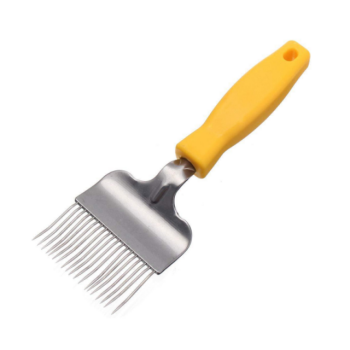
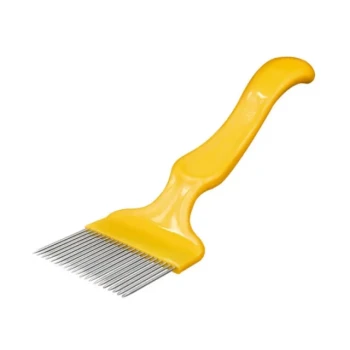
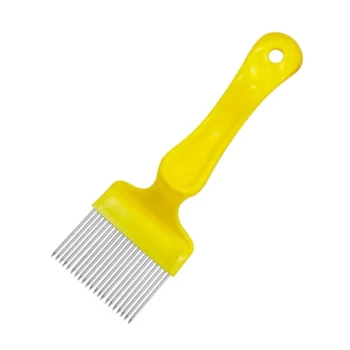
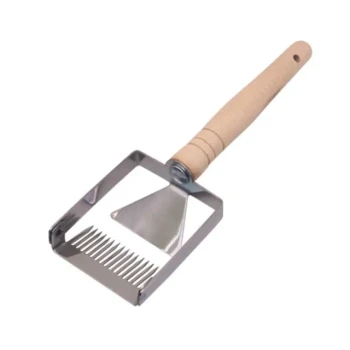
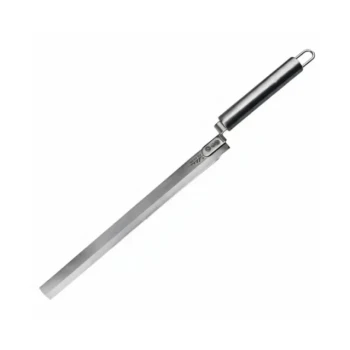
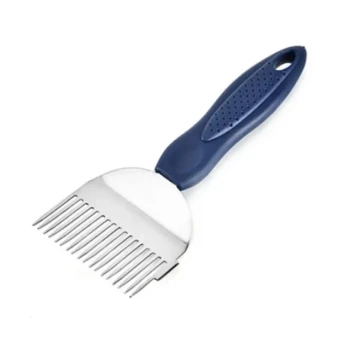
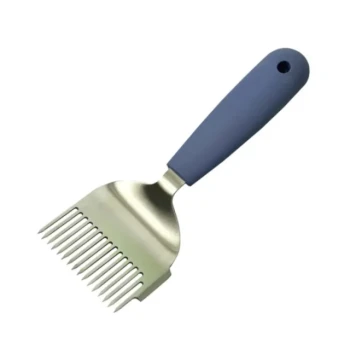
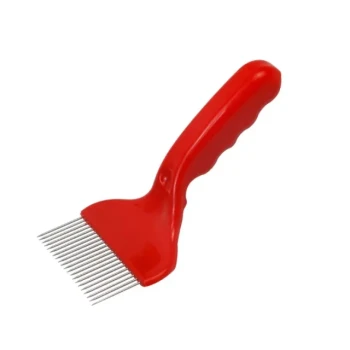
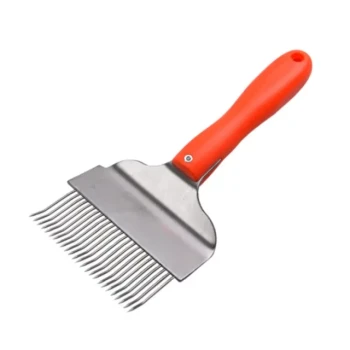
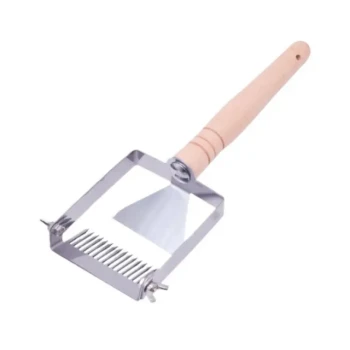
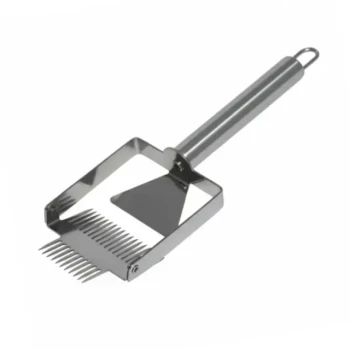
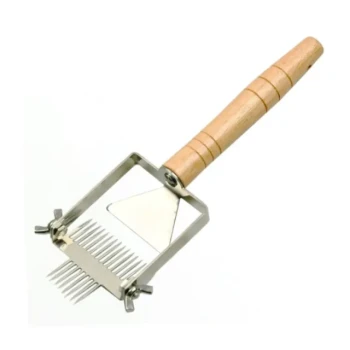
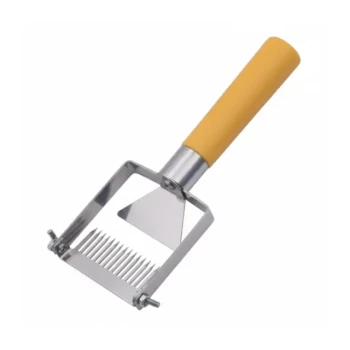
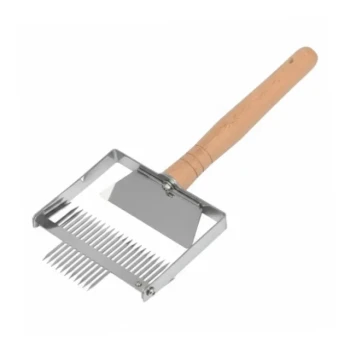
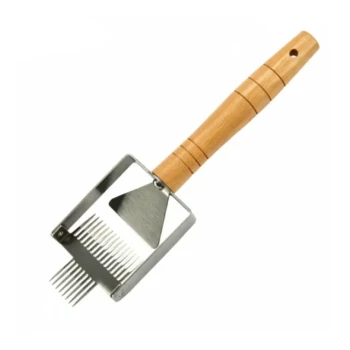
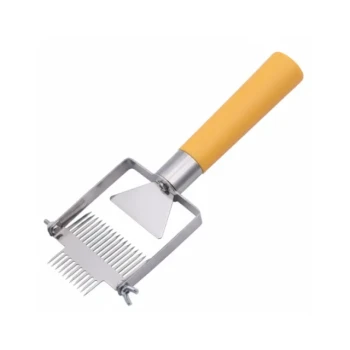
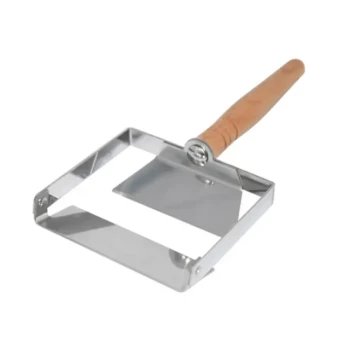
The specific utility of an uncapping comb in this context is to efficiently remove the wax seals from brood cells to expose hidden Varroa mites. By mechanically removing these cappings, researchers can visually access the larvae and parasites within, enabling the collection of essential "ground truth" data.
Core Insight: The uncapping comb acts as a gateway for high-quality data collection. Its primary value lies in generating the visual datasets required to train AI models, teaching them to recognize parasite signatures even within capped structures.
The Mechanics of Data Collection
Precision Access to Sealed Cells
The life cycle of the Varroa mite often occurs inside sealed brood cells, making them invisible to the naked eye. An uncapping comb allows for the removal of the wax cap without destroying the cell structure.
Protecting the Biological Sample
Unlike crude opening methods, a professional uncapping process is designed to spare the larvae inside.
Once the cap is removed, researchers can use tweezers to extract the larvae without causing injury. Preserving the physical integrity of the larvae is critical for accurately counting the mites and assessing their physical impact on the host.
Powering Advanced Detection Systems
Generating Training Data for AI
The primary scientific application of this tool is to facilitate the creation of robust Artificial Intelligence models.
To teach an AI to detect parasites, it requires vast amounts of verified data. The uncapping comb provides the physical access necessary to capture images and counts of mites that are usually hidden.
Improving Detection Across Development Stages
Parasite infestation looks different at various stages of bee development.
By using the comb to expose larvae at specific growth intervals, researchers can document the presence of parasites throughout the bee's life cycle. This data refines detection systems, ensuring they remain accurate regardless of the bee's developmental stage.
Understanding the Trade-offs
Invasiveness vs. Data Accuracy
While the uncapping comb provides definitive data, the process is inherently invasive.
Opening the cell disturbs the microclimate and typically results in the removal of the larvae for study. Therefore, this method is used for sampling and model training rather than routine hive health monitoring.
The Risk of Operator Error
The utility of the comb is dependent on the precision of the user.
If the comb is used too aggressively, it can damage the larvae. Damaged larvae make it difficult to determine if physical trauma was caused by the parasite or the extraction tool, thereby corrupting the data.
Making the Right Choice for Your Goal
To maximize the utility of an uncapping comb, align your technique with your specific research objective:
- If your primary focus is AI Model Training: Prioritize volume and variety; use the comb to expose larvae at multiple different developmental stages to create a diverse dataset.
- If your primary focus is Biological Impact Study: Prioritize precision; ensure the comb only removes the wax cap so that tweezer extraction leaves the larvae completely uninjured for detailed inspection.
Precision in uncapping is the prerequisite for accuracy in analysis.
Summary Table:
| Feature | Utility in Data Collection | Benefit for Researchers |
|---|---|---|
| Wax Seal Removal | Mechanically exposes hidden parasites | Provides visual access to Varroa mites |
| Cell Preservation | Maintains cell structure during opening | Enables non-destructive inspection of larvae |
| Dataset Generation | Creates visual ground truth for AI | Improves accuracy of automated detection models |
| Stage Documentation | Allows sampling at specific bee growth intervals | Tracks parasite impact across development stages |
Scaling Your Beekeeping Operations with HONESTBEE
Precision tools are the backbone of a successful commercial apiary. HONESTBEE specializes in empowering commercial beekeepers and distributors with a comprehensive range of professional-grade equipment. From essential beekeeping tools and consumables to advanced honey-filling and hive-making machinery, we provide the industrial-scale solutions you need to maximize productivity.
Whether you are expanding your wholesale portfolio or upgrading your processing facility, our team is ready to deliver high-quality hardware and honey-themed merchandise tailored to your business goals.
Ready to elevate your apiary's efficiency? Contact us today to explore our wholesale offerings!
References
- Yassine Kriouile, Lamine Bougueroua. Nested object detection using mask R-CNN: application to bee and varroa detection. DOI: 10.1007/s00521-024-10393-x
This article is also based on technical information from HonestBee Knowledge Base .
Related Products
- Professional Bent Tine Honey Uncapping Fork with Ergonomic Grip
- Professional Honey Uncapping Fork Tool with Customizable Tine Options
- Professional Customizable Honey Uncapping Fork with Adjustable Tine Options
- Professional Stainless Steel Uncapping Fork with Wooden Handle
- Professional All-Stainless Steel Uncapping Knife for Beekeeping
People Also Ask
- What is the design purpose of honey uncapping forks and honey uncapping tanks? Maximize Your Harvest Efficiency
- How does a honey uncapping fork supplement the use of an uncapping knife? Boost Your Honey Yield and Extraction Efficiency
- What are the essential tools for uncapping honey frames? Choose the Right Tool for Your Apiary
- What is the original purpose of an uncapping fork? Mastering Precision Honey Extraction and Comb Preservation
- What are the benefits and drawbacks of using an uncapping fork? Maximize Comb Preservation in Your Apiary