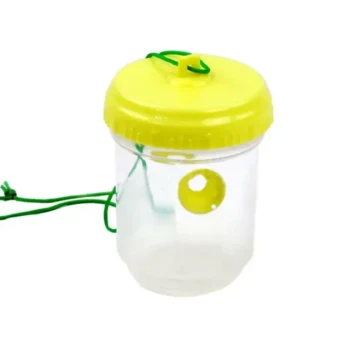
The technical purpose of adding soap to the liquid in bee collection traps is to drastically reduce the surface tension of the water. Without this surfactant, the natural cohesion of water molecules allows lightweight insects to land on the surface and fly away, whereas soapy water forces them to sink immediately upon contact. This ensures that every insect lured to the trap is successfully captured, preserving the accuracy of the sample.
While the colored trap acts as the lure, the soap is the mechanical trigger that prevents escape. It converts the liquid from a potential landing pad into a definitive capture medium, ensuring that capture rates reflect true population activity rather than just insect error.
The Physics of Insect Escape
Water's Natural Barrier
In its pure form, water exhibits high surface tension. The water molecules at the surface cohere strongly to one another, creating a microscopic "skin" or elastic membrane.
The Insect Advantage
Bees and other small insects are lightweight enough to exploit this tension. When they land on plain water, they do not break this surface film.
Instead, they can rest on top of the liquid, using the surface tension as a platform to push off and launch themselves back into the air, thereby escaping the trap.
The Mechanism of Surfactants
Breaking the Surface Tension
Soap acts as a surfactant (surface active agent). When introduced to the trap, soap molecules interject themselves between water molecules, significantly weakening the cohesive forces holding the surface together.
Immediate Submersion
The primary technical goal referenced is to ensure the insect sinks immediately.
Because the surface tension is compromised, the water can no longer support the weight of the bee. Upon contact, the insect breaks the surface and becomes submerged, neutralizing its ability to fly away.
The Critical Role in Data Accuracy
Preventing Sample Bias
The reference highlights that soap improves the accuracy of the bee sample collection process.
If a trap relies on water alone, it may only capture heavier or clumsier insects that accidentally break the surface. This creates a biased sample that does not accurately represent the biodiversity or population density of the area being studied.
Maximizing Capture Efficiency
By removing the possibility of escape, every successful "lure" results in a successful "capture." This efficiency is vital for researchers relying on precise counts to determine the effectiveness of the trap or the health of the local bee population.
Understanding the Pitfalls
The Risk of Dilution
A common pitfall in trap maintenance is allowing the soap concentration to become too low (often due to rain or evaporation).
If the concentration drops, surface tension may partially return. This creates a "semi-functional" trap that captures some insects but allows others to escape, rendering the resulting data unreliable.
Making the Right Choice for Your Goal
To ensure your collection efforts yield valid scientific data, consider the following recommendations:
- If your primary focus is Capture Efficiency: Ensure the soap concentration is high enough to create immediate wetting; if bubbles form easily, the tension is likely low enough to prevent escape.
- If your primary focus is Data Accuracy: Monitor traps frequently to ensure the solution has not been diluted by rainfall, as a return of surface tension will skew your population counts.
By effectively managing surface tension, you transform a passive container into a precision instrument for biological sampling.
Summary Table:
| Feature/Mechanism | Technical Purpose | Benefit to Collection |
|---|---|---|
| Surfactant Action | Breaks the water's surface tension | Prevents insects from landing and flying away |
| Immediate Submersion | Forces the insect to sink upon contact | Ensures every lured insect is successfully captured |
| Bias Prevention | Eliminates escape of lighter species | Provides an accurate representation of biodiversity |
| Efficiency Trigger | Converts liquid into a capture medium | Maximizes trap yield for researchers and apiaries |
Optimize Your Apiary Performance with HONESTBEE
Professional-grade monitoring and harvesting require the right equipment. At HONESTBEE, we empower commercial apiaries and distributors with a comprehensive wholesale selection of industry-leading solutions. From high-precision honey-filling machines and hive-making hardware to essential beekeeping tools and consumables, we provide everything you need to scale your operations efficiently.
Why partner with HONESTBEE?
- Full-Spectrum Supply: Access a complete range of machinery, hardware, and specialized beekeeping gear.
- Commercial Excellence: Tailored offerings for large-scale distributors and professional beekeepers.
- Beyond the Hive: We also supply unique honey-themed cultural merchandise to enhance your brand's reach.
Ready to elevate your beekeeping business? Contact us today to explore our wholesale catalog!
References
- Frédéric McCune, Valérie Fournier. Response of wild bee communities to beekeeping, urbanization, and flower availability. DOI: 10.1007/s11252-019-00909-y
This article is also based on technical information from HonestBee Knowledge Base .
Related Products
- 30 cm Plastic Entrance Hole Bee Pollen Trap and Collector
- Removable Plastic Pollen Trap With Ventilated Tray for Bees Pollen Collector
- Plastic Bee Pollen Trap Strips Comb Catcher Collector
- 8 Frame and 10 Frame Propolis Trap Collector Screen for Propolis Collection
- Black Plastic Beetle Barn Hive Beetle Trap for Beehives
People Also Ask
- What are the design principles and advantages of pollen traps in the collection of bee pollen? Boost Your Apiary Yield
- Why is frequent harvesting of bee pollen from traps necessary for quality control? Ensure Freshness and Prevent Mold.
- How often should bee pollen be harvested from a trap and why? Master Freshness and Prevent Spoilage
- What function do pollen traps serve in quantitative collection? Boost Your Apiary's Data & Production Efficiency
- What is the primary function of bee pollen traps? Optimize Your Pollen Harvest with Advanced Extraction Efficiency