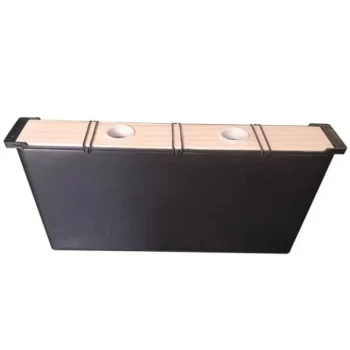
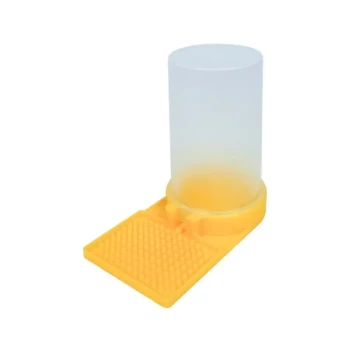
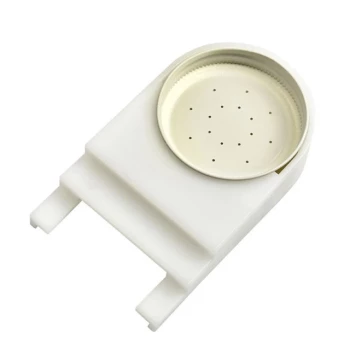
The primary technical purpose of installing a wire net on the base of a field honeybee feeder is to facilitate the immediate drainage of leaked liquids. By physically preventing sugar solutions from pooling on the feeder tray, the net ensures that any overflow passes through rather than remaining static and subject to environmental changes.
Core Insight: In experimental settings, a static pool of sugar solution is a variable, not a constant. Without drainage, evaporation rapidly increases the concentration of sugar and pesticides, potentially creating toxic "super-doses" that compromise the integrity of the data and the health of the colony.
The Physics of Concentration Control
The inclusion of a wire net is not merely a structural choice; it is a chemical control mechanism. It addresses the volatility of liquid solutions when exposed to open air.
Preventing Evaporative Concentration
When sugar solutions containing pesticides or other experimental compounds leak and pool on a solid surface, water begins to evaporate immediately.
As the water volume decreases, the solute (sugar and pesticide) remains, leading to a drastic spike in chemical concentration. The wire net eliminates the surface area required for this pooling, ensuring that the solution the bees consume remains at the exact target concentration prepared for the experiment.
Eliminating Abnormal Attraction
Honeybees are naturally drawn to higher sugar concentrations.
If leaked solution is allowed to pool and evaporate, the resulting sludge becomes significantly sweeter and more attractive than the standard feeder supply. This creates "abnormal attraction," causing bees to preferentially feed on the leaked, highly concentrated, and potentially more toxic residue rather than the controlled experimental diet.
Risks of Improper Drainage
Failing to install a wire net on the feeder base introduces uncontrolled variables that can invalidate experimental efficacy data.
The Risk of Toxicity Spikes
The most critical risk is the unintended exposure of honeybees to excessive risk.
An evaporated pool of solution can contain pesticide loads far exceeding the intended dosage. This can lead to increased mortality or physiological damage that is not representative of the actual experimental parameters, leading to false conclusions about the safety or effect of the substance being tested.
The Integrity of Consumption Data
Scientific rigor requires that every variable be isolated.
If bees are consuming inconsistent concentrations from a drip tray rather than the feeder, the resulting data regarding consumption rates and chemical effects becomes unreliable. The wire net ensures that the only source of nutrition—and chemical exposure—is the controlled supply within the feeder itself.
Making the Right Choice for Your Goal
When designing or selecting equipment for field studies involving honeybees and chemical solutions, consider the following technical priorities:
- If your primary focus is Data Accuracy: Ensure the feeder base allows for zero fluid retention to prevent evaporation from altering chemical concentrations.
- If your primary focus is Colony Safety: Use wire netting to prevent the accidental creation of high-toxicity feeding zones caused by leaks.
The wire net is a simple mechanical solution to a complex chemical problem, ensuring that the environment remains neutral and the data remains pure.
Summary Table:
| Feature | Technical Purpose | Benefit for Beekeeping/Research |
|---|---|---|
| Immediate Drainage | Prevents sugar solution from pooling on the base. | Eliminates "super-dose" toxicity caused by evaporation. |
| Concentration Control | Maintains stable sugar/pesticide ratios. | Ensures consumption data remains accurate and scientific. |
| Residue Prevention | Stops the formation of high-sugar "sludge." | Prevents abnormal attraction to leaked, hazardous liquids. |
| Environmental Neutrality | Isolates variables in field experiments. | Protects honeybees from unintended chemical overexposure. |
Precision Equipment for Professional Apiaries
At HONESTBEE, we understand that the right equipment is the difference between a thriving colony and a failed experiment. We cater to commercial apiaries and distributors with a comprehensive wholesale offering designed for durability and scientific accuracy.
From wire-bottom feeders and specialized hive-making machinery to industrial honey-filling machines and essential consumables, we provide the full spectrum of tools needed to scale your operations.
Ready to upgrade your equipment or stock your distribution business?
Contact HONESTBEE Today to discuss our wholesale solutions and how we can bring value to your beekeeping supply chain.
References
- V. Girolami, Andrea Tapparo. Effect of repeated intakes of a neonicotinoid insecticide on the foraging behaviours of Apis mellifera in field trials. DOI: 10.1007/s11356-022-22977-y
This article is also based on technical information from HonestBee Knowledge Base .
Related Products
- Professional Frame Preparation: The HONESTBEE Electric Wire Embedder
- HONESTBEE AC Powered Wire Embedder with Alligator Clips
- HONESTBEE Durable Frame Wiring Board with Integrated Tensioner
- HONESTBEE Adjustable Voltage Wire Embedder with Digital Display
- HONESTBEE Professional Frame Wiring Board and Jig
People Also Ask
- What is the primary function of an electric embedder? Secure Your Beeswax Foundation with Heat Fusion
- Why is wire embedding necessary for wax foundation sheets used in honey supers, and how is it properly executed? Essential Reinforcement for Reliable Honey Extraction
- What methods are used to embed wire into the foundation? A Guide to Stronger, More Durable Beehives
- What is the purpose of bee frame wire? Secure Wax Foundation and Reinforce Honeycomb
- What is the primary function of wired-beeswax foundation? Secure Stronger Combs & Faster Colony Growth