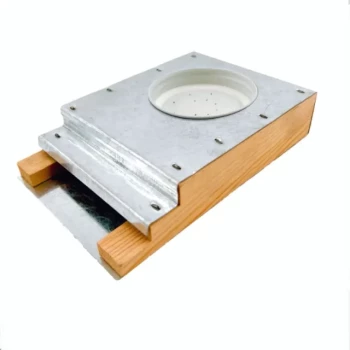
The technical rationale for using small-scale internal containers is driven by the need for precise biological alignment and rigorous data control. By placing feeders directly inside the hive, apiarists can administer specific quantities of protein supplements while protecting the feed from environmental degradation.
Using internal, small-scale containers mimics the natural storage instincts of the colony while offering a controlled environment that reduces moisture loss and simplifies the accurate measurement of feed consumption.
Aligning with Bee Biology
Mimicking Natural Behavior
Bees are instinctively programmed to seek protein sources within the safety of the hive structure. Internal feeders replicate this natural storage pattern.
This positioning reduces stress on the colony, as the food source feels native to their environment rather than foreign.
Ensuring Accessibility for Workers
Small containers placed internally provide immediate access for worker bees.
Because the bees do not have to exit the hive to forage for this supplement, energy expenditure is minimized, and uptake rates are often higher.
Maintaining Feed Integrity
Reducing Moisture Evaporation
A critical technical advantage of small-scale containers is their limited surface area.
This design significantly reduces the rate of moisture evaporation from the protein supplement.
Preserving Texture and Palatability
By retaining moisture, the feed maintains the correct consistency for consumption.
This prevents the supplement from drying out and becoming unpalatable or difficult for the bees to process.
Precision and Measurement
Facilitating Quantitative Analysis
For researchers or managers monitoring strict diets, these containers allow for a targeted and quantitative supply.
You can measure exactly how much protein is introduced to the hive, removing the guesswork associated with open feeding.
Simplifying Recovery and Weighing
The design facilitates the easy recovery of uneaten material.
Because the containers are easy to clean and handle, leftover feed can be weighed accurately to calculate precise consumption rates for analysis.
Understanding the Trade-offs
Managing Labor Intensity
While technically precise, small-scale containers naturally hold less volume than bulk feeders.
This requires more frequent intervention to refill the containers if the colony needs are high, potentially increasing labor time.
Assessing Disruption Risks
Frequent opening of the hive to replace or refill small internal containers can disrupt colony temperature and stability.
This method requires a balance between the need for fresh data/feed and the need to leave the hive undisturbed.
Making the Right Choice for Your Goal
To determine if this feeding method suits your operation, consider your primary objective:
- If your primary focus is Research and Analysis: This is the superior method, as it enables precise weighing of leftovers and accurate calculation of consumption rates.
- If your primary focus is Targeted Intervention: Use this approach to deliver high-quality, expensive supplements directly to weak colonies without waste.
- If your primary focus is Commercial Efficiency: Be aware that the labor required for refilling small containers may outweigh the benefits compared to bulk feeding methods.
Small-scale internal feeding moves protein supplementation from a general maintenance task to a precise, measurable scientific process.
Summary Table:
| Feature | Technical Advantage | Ideal Use Case |
|---|---|---|
| Placement | Mimics natural storage; reduces colony stress | Research & Analysis |
| Volume | Targeted & quantitative supply control | Weak Colony Intervention |
| Moisture Control | Reduces evaporation; maintains palatability | High-protein Paste Feeding |
| Data Accuracy | Easy recovery and weighing of leftovers | Scientific Consumption Studies |
Maximize Your Apiary Productivity with HONESTBEE
At HONESTBEE, we understand that precision feeding is the backbone of a healthy, productive apiary. Whether you are a commercial beekeeper looking for efficient hardware or a distributor supplying the industry's latest tools, we provide the comprehensive wholesale solutions you need.
Our portfolio ranges from hive-making and honey-filling machinery to high-quality beekeeping consumables and specialized internal feeders. We help commercial operations and distributors reduce waste and optimize colony health through superior equipment design.
Ready to scale your beekeeping operations? Contact us today to explore our full spectrum of professional tools and discover how HONESTBEE can deliver value to your business.
References
- Paulo Vítor Divino Xavier de Freitas, Carlos de Melo e Silva‐Neto. Feed supplementation in the diet of <i>Melipona rufiventris</i>. DOI: 10.1080/00218839.2020.1765483
This article is also based on technical information from HonestBee Knowledge Base .
Related Products
- In-Hive Dual Compartment Frame Bee Feeder for Targeted Colony Nutrition
- Professional In-Hive Bee Feeder HONESTBEE Frame for Beekeeping
- HONESTBEE Professional Entrance Bee Feeder Hive Nutrition Solution
- 3.5L Plastic Beehive Frame Feeder Deep Frame Water Feeder for In Hive Use
- Professional In-Hive Frame Bee Feeder by HONESTBEE
People Also Ask
- What are the advantages of using a frame feeder for bee colonies? Boost Growth and Prevent Robbing Efficiently
- Why should sugar syrup or dry sugar not be left out in the open when feeding bees? Avoid a Dangerous Feeding Frenzy
- What precautions should be taken when feeding bees inside the hive? Safeguard Your Colony from Robbing and Leaks
- How do in-hive feeders support honey bee colonies during autumn? Ensure Overwintering Success for Your Apiary
- How do high-quality in-hive feeders assist in managing bee colonies during pesticide contamination? Protect Your Apiary